
No products in the cart.

No products in the cart.

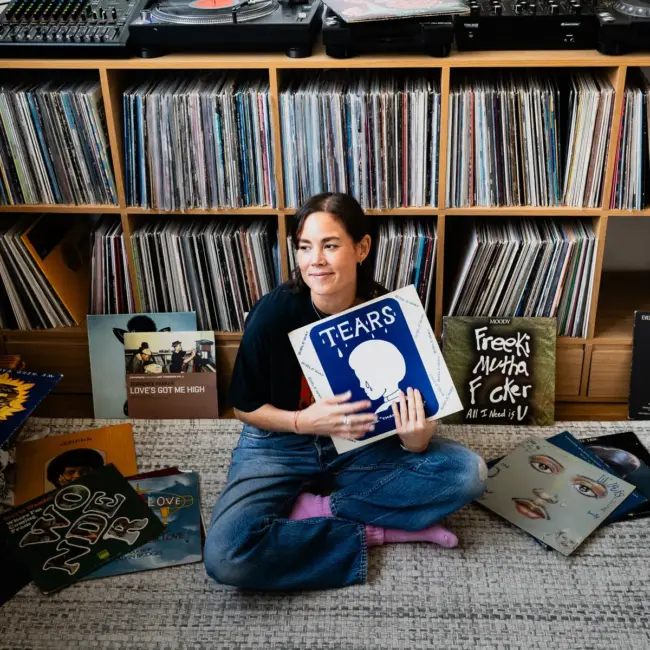
Louise Chen, DJ and vinyl record collector, is pictured at her Parisian apartment with shelves of vinyl records for Dust & Grooves Volume 2.

Louise Chen

House in the Home

BY Fiona MacPherson-Amador

Louise Chen is an iconic DJ whose incredible hard work has made her a crucial figure in the music scene at an impressively young age. She rose to success in 2012 after organising the renowned Girls Girls Girls club night at Social Club in Paris. Originally thinking it would be a one-off, Louise was thankfully wrong, and the concept developed into a collective celebrating club culture and women in the industry. Her record collection is made up of a spectacular array of house records, not in the least overshadowing her finds of soundtrack, soul, and an array of visual marvels.

Born in Luxembourg, Louise comes from a family well in tune with music and creativity. We spoke in early 2025 during her son’s downtime, and just like his mother, he is showing signs of curiosity in the musical field, of which he has a true insight. Through her record collection and musical objects, Louise is hopeful that her expertise can feed this curiosity: “He won’t have this plastic-fantasy picture-perfect image of what music is. It’s ugly. It’s a mess. It takes up space. It’s dusty. I’m interested in seeing my kid respond to the reality of it.”

Louise pursues an illustrious DJ career, including playing over 100 NTS shows. She continues to be a predominant presence, and particularly for young women in the musical realm, she is a true inspiration. We spoke about how younger generations should approach record collecting, music generating more music, and how having the right people around you nurtures creative confidence.

“Stories of music generating more music, and musicians generating more musicians, are always really beautiful to celebrate.”

How do you normally introduce yourself?

I’m Louise Chen. I’m half French, half Taiwanese. I used to be a touring DJ promoter, now I’m a stay-at-home DJ, and a mum. I guess that’s how I would describe myself.

You started making mixtapes with your dad when you were growing up. Did you grow up in a very musical household?

It was quite musical. My mum is the kind of parent who would always put on the radio and listen to the news chat and whatever was on, whereas my dad was an avid record collector. He was a total music nerd; he should have been a DJ. He comes from a family of singers, actors, and creative people. His older sister was a singer and actress who was really famous in Taiwan and Asia. Then his other sister was a TV show producer. I think my dad is a really good singer, and I think he’s always secretly wanted to go into showbiz a bit. But because he was the only boy in the family, he had to do the boring, serious jobs and do finance and banking.

He really loved music, and that’s why he used to send my mum and me cassette tapes, mixtapes in the ’90s when I was a kid. He saw that I was responsive to that and that I really enjoyed it, and I always wanted to show him music that I was into. He got me this sort of ghetto blaster with cassette tapes, CD, FM, and radio, all in one stereo so that I could record my own cassette tapes.

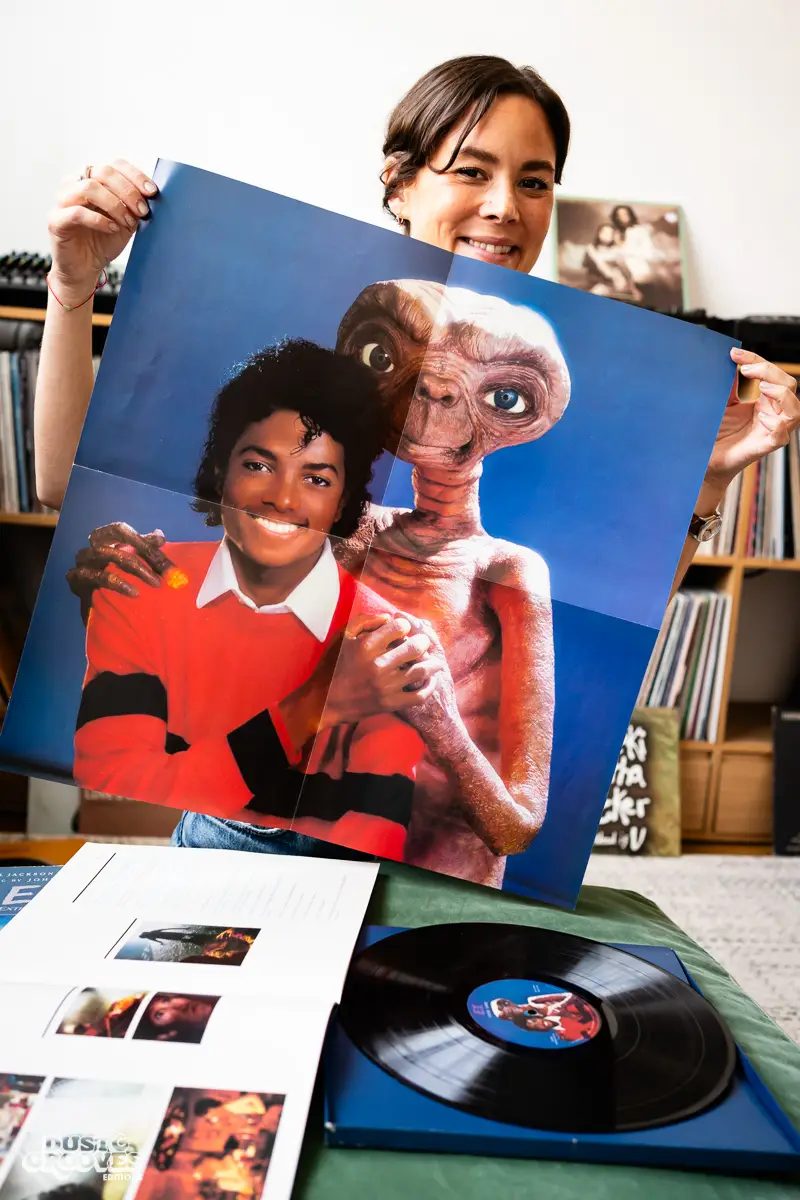
In your selection, you have the E.T. soundtrack, narrated by Michael Jackson. You said it was an important record that resonated with your childhood. Since becoming a mother, is this something that resonates more, or you think might pass down to your own child?

To continue reading this interview we humbly ask you to consider supporting Dust & Grooves by becoming a paying premium member.

Level Price Action
Premium

$5.00 per Month.

Select
Premium+

$25.00 per Month.

Select

Oh absolutely. I hope he’ll still be interested in my record collection and not completely bored of my story. The story with the E.T. record is that my dad would commute between Taipei and Europe when I was growing up, and my mum and I would try to go as much as possible as well. So on a trip to Taiwan, I think I must have been two or three years old. I was really ill, and so they had to take me to see a doctor, and I was bedridden for quite a while. The only thing that I could do, really, for my entertainment was to watch cartoons. And so my dad would go to the video rental and rent whatever cartoon they had—I probably watched Snow White 15 times. One day my dad was like, “Okay then, they’ve run out of cartoons. What can I show her?” So he got E.T., knowing that I was a bit young to watch it. The VHS was in English with Chinese subtitles, so it’s really by the power of sounding images that I understood the story and that I fell in love with it.

I watched that movie and just immediately became obsessed and wanted to watch it every day until it was time to leave Taiwan. So my dad went to the video store and begged them to sell him that video, even though it was completely illegal. He went in there all, “My kid’s going back to Europe, I don’t know when I’m going to see her next. She loves this movie so much. Please, please, please, let me buy it.” They let him, and I still have the VHS. I remained obsessed with it through childhood and then, as I grew up, saying the goodbyes with my father at the airport was always really hard. So the goodbye scene in E.T. became a signature reenactment. It was almost easier to use the scripted words than to come up with your own. I just didn’t really have the words for it.

As I grew up, every time I would re-watch E.T., something different would make me realize why I like it so much. But I think the soundtrack was a huge reason as to why I love it. Still to this day, if I hear the first few notes of John Williams’s score, I immediately well up. The scene where they’re on their bikes, I just really love it. I thought, “Actually, Elliott’s story is kind of my own.” Growing up in Luxembourg often felt like growing up in California and suburbia—if you’re not part of the cool kids, you can be a bit of an outsider, an oddball, and feel a bit like an alien. In E.T., Elliott finds it easier to befriend an alien than to befriend his brother’s mates. It sounds ridiculous, but is so relatable when you’re a kid. Whenever I’d find the VHS somewhere, I would just buy it, almost as a reflex—just the collector brain.

“Actually, Elliott’s story is kind of my own.” Growing up in Luxembourg often felt like growing up in California and suburbia—if you’re not part of the cool kids, you can be a bit of an outsider, an oddball, and feel a bit like an alien.”

E.T. The Extra-Terrestrial Narrated by Michael Jackson Produced by Quincy Jones Music by John Williams “E.T. is my favorite movie of all time, and on top of that, when I was a kid, Michael Jackson was the ultimate idol. When Steven Spielberg released E.T. in theaters, Michael Jackson became the King of Pop, recording with Quincy Jones. Around the same time, they also worked on this E.T. audiobook. There was controversy surrounding its release since Michael’s label wanted ‘Thriller’ to come out first. They recalled all the records from the shops and shelved them in the process. Getting my hands on this super rare record with the booklet and poster in mint condition will forever be the find of my life!”

Where did you pick up this copy of the record?

I eventually found the soundtrack in different versions because there’s the picture disc. I knew that this narrated-by-Michael-Jackson version existed, I’d just never seen it. I went to Toronto for a friend’s wedding around 2017, and I was only there for 48 hours. Just before going to the wedding, we were walking in a neighborhood, and I was like, “Oh, I think this is Cosmos, I’d love to stop by.” They used to have one in London, now called Yo-Yo. I walked in and I saw it right there behind the counter. I was like, “Well, that’s it. I need it.”

I went digging a little bit after I saw the E.T. record, so the shopkeeper said, “Oh, you know, you’re picking out some really good rare stuff, rare grooves. What are you after?” It’s funny, because this story is actually tied to one of my Weldon Irvine records. I was like, “Oh, well, you know, I’m looking for Time Capsule by Weldon Irvine, but I’m not keeping my hopes up.” He responded with, “Actually, let me call my boss in the sister shop. You should stop by.” As I dropped in, Jeff Mount, my friend at the counter from New York, was standing there—very serendipitous. It shows you how small the world is. But I think record collectors travel to the same places. We travel in very small circles, so the probability of running into each other is really quite high. Even if you’re in a city for 48 hours, the chances are that you will run into another record collector, or some, if you go to a record shop.


How do you think younger generations should try to get involved with this community?

I think what I really like about records is the object and the artwork—all the extra information and context you get on top of the music. Not only do you find music that you can’t find online, it’s music that you can’t find anywhere else at all. You also discover a lot more about photography or fashion; you can learn how they dressed in ’79, that’s really cool. I find it a very fun way to explore history, and also just find out about your own taste a little bit.

I think there’s something nice about records, because for my generation at least, they were still around when I was a kid, but CDs were replacing them. So to me, records always feel like what my parents were into. And then by the time I got into it, it was peak turntablism era, the early 2000s, so records were used to perform with and not just to listen to. Being able to see how many lives this format has had is very interesting. I just hope the next generation uses all the tools that they have to sharpen their curiosity and not the other way around.

I think what’s amazing is that if you’re 15 years old today, you can find something online or in the shop and then find out more about it online immediately afterwards. They can see that, actually, there are more records. You can check out labels, and then you can find out all this extra information that, back in the early 2000s and ’90s, you had to do research on. Even then, the process of doing research was much slower. You had to meet people who were into the same things as you, you had to read books, subscribe to magazines, and things like that.

I think these are all things that are important, but just the fact that now you can do it at four different speeds and check it online immediately is limiting. If you want more, you can buy a book about it, and then you can watch a documentary about it, and then you listen to the record, and you find a radio show on NTS that’s focused, and you find out there’s more about this producer, or about this songwriter, or about this singer, and then that leads you to other things. The quest is endless. I just hope that people are interested in the quest, essentially.

More material just means more depth, which is nice.

I hope that we move away from having records as an object of status. For example, if I have vinyl at home but then just have, like, Drake and Doja Cat, I feel like you may as well have a Spotify playlist.

“The quest is endless. I just hope that people are interested in the quest, essentially.”

Louise Chen, DJ and vinyl record collector, is pictured at her Parisian apartment with shelves of vinyl records for Dust & Grooves Volume 2.

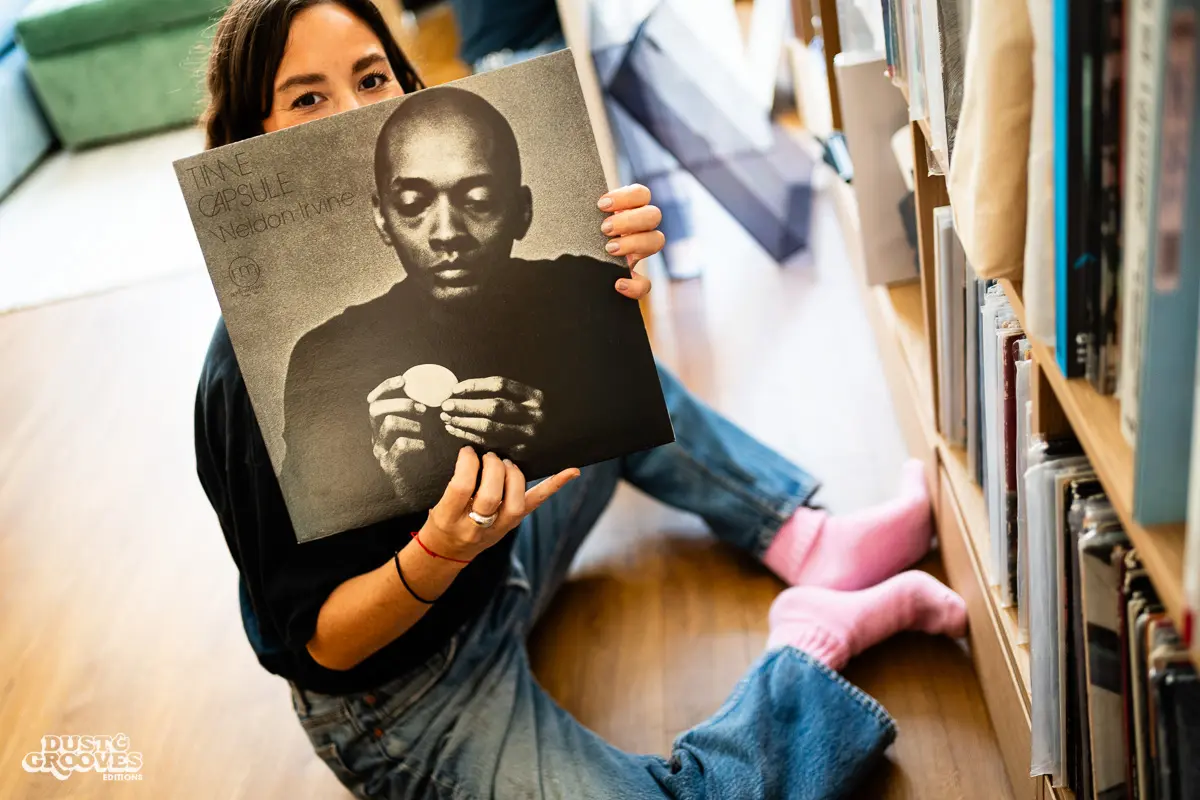
Weldon Irvine – Time Capsule
“This came out in 1973 on Weldon’s own imprint, Nodlew. It’s got all the elements of jazz and soul that would influence a whole generation of rappers and hip-hop producers. It’s a holy grail that always felt unattainable until one day, I walked into Cosmos Records in Toronto, where the shop owner, Aki, showed me a beautiful original copy. I couldn’t buy it then, but to see it and hold it was enough for me that day. I eventually bought a reissue a few years ago while in Japan.”
Let’s talk about your Weldon Irvine Time Capsule, which touches on what you said about the quest. It was a particularly special album in terms of influencing hip-hop. What is it about archiving a record like this that is important for understanding the music that can be traced back to it?

First of all, I think it’s really important with hip-hop and production to be able to place the point of origin for something. Second of all, seeing that from that point there are two outcomes that could have happened from a sample. It could have gone to court, or what happened here: Irvine was like, “Actually, I love this, please use my music.” If anything, he wanted to befriend some of the musicians.

For example, Q-Tip explains in one of his RBMA Fireside Chats interviews that Irvine actually taught him how to play the piano. When Irvine realized what Q-Tip was doing with production and how advanced his ear was, but that he couldn’t play an instrument, Irvine taught him how to play. He gave him more tools and more keys to go further in his musical quest. I think real recognize real, you know, and when Irvine recognized how curious and hungry for more this producer was, he was like, “Well, who am I? I don’t want to gatekeep him. I want to give him everything.” I think that’s one thing that’s very particular about Weldon Irvine, and that then later translated to other producers as well.

George Clinton is another example of an OG who’s always praised Kendrick Lamar. His view is, “I don’t understand what he says, but I can tell that he’s funky. I can recognize that there’s art there, and there’s skill, and there’s craft, and he can sample me all day long.” Stories of music generating more music, and musicians generating more musicians, are always really beautiful to celebrate.

In the case of this particular record, it was self-released on Irvine’s own label. It was an independent imprint which, at the time in the ’70s, was really, really hard to have. Weldon Irvine had a tragic end of life where he ended up pretty much broke and broken by the music industry. I feel like his music that lives on, especially the stuff that he’s released independently, is a way to celebrate his fight for artistic freedom.

Louise Chen, DJ and vinyl record collector, is pictured at her Parisian apartment with shelves of vinyl records for Dust & Grooves Volume 2.

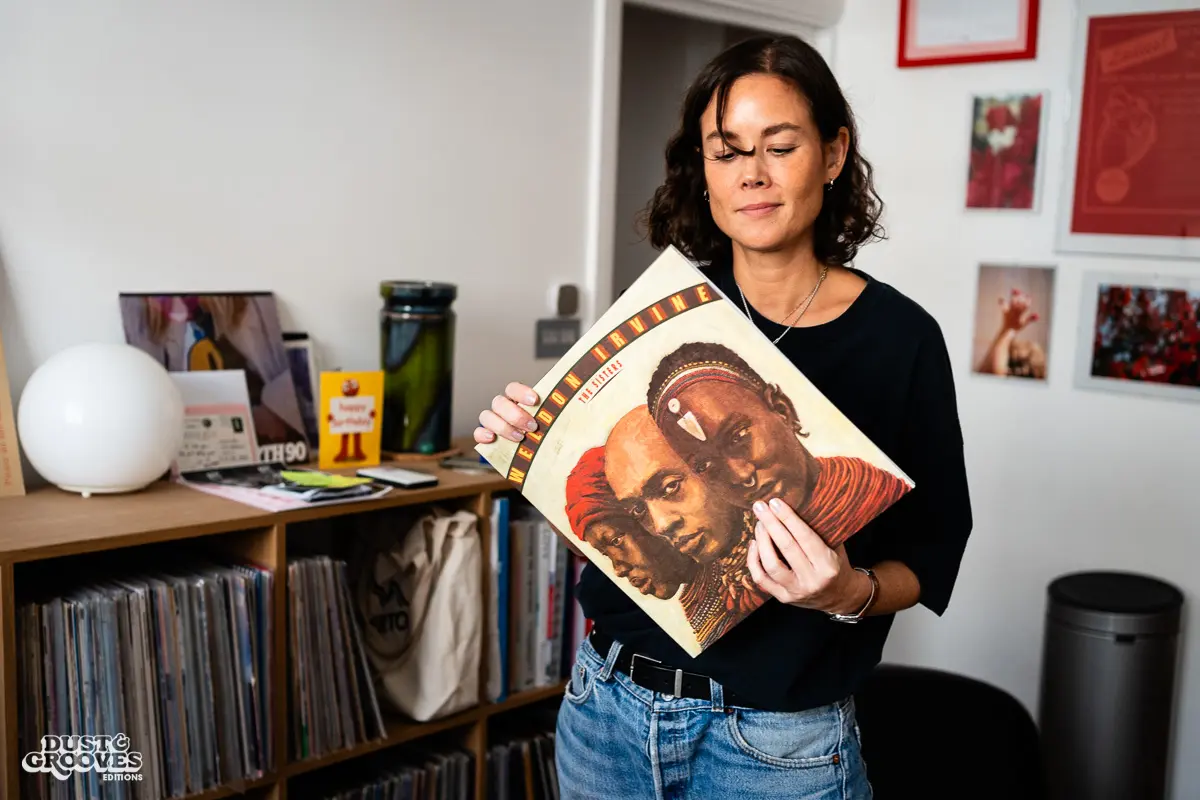
Weldon Irvine – The Sisters
“Irvine wrote Young, Gifted, and Black for Nina Simone because he was traveling with her on tour—that’s how it was. Otherwise he would have just kept it for himself, maybe.”
You have more of his records. The Sisters was released around 20 years after Time Capsule. Do you think there’s a prevalent reflection of personal life in the development of someone’s music over so many years? Or is it purely music for music?

Definitely. There are endless encounters and other musicians you meet, and things like that. You know, he wrote “Young, Gifted and Black” for Nina Simone because he was traveling with her on tour—that’s how it was. Otherwise he would have just kept it for himself, maybe. At that time, when you had to have a band to make music, the ideas percolated with other people and with the outside world so much faster than nowadays.

When you’re just in front of your laptop in 2025, you can remain in your myopia a lot more than you could back then, when it was like “but I need a bassline,” and “I needed someone to come and play it.” Even if you knew how to play everything, like Prince, you still had to have a sound engineer to record. There was always exposure to the outside world and what was going on in a worldwide context, or in your city, or even where you were sitting down writing music. It all would have definitely affected your sound.


Are you completing all of Irvine’s records? Are you a completionist in your collection habits in general?

Not really, I’m a bit too lazy for that. To be honest, I think I have most of it, but there are a few that elude me and I’m okay with that. I’m quite sentimental, so as long as I can access the music and I can hear it, I don’t always need to own it because I own a certain moment in time. That’s the beauty of records: they are a recording of a moment in time, and then when you go back to them, you unlock your own moment in time. I think that’s why my relationship to my collection is not completed, because it’s not really a system thing. It’s more documenting that this has been my journey through music, and this has been my life. Through these travels I found this and this and that, or I can remember a day I had when I was really lucky and I found something outside my house. It’s more interesting to me to have someone’s entire discography if there’s a personal connection to my story, rather than a more macro level, where you don’t necessarily connect to all of it.

Louise Chen, DJ and vinyl record collector, is pictured at her Parisian apartment with shelves of vinyl records for Dust & Grooves Volume 2.
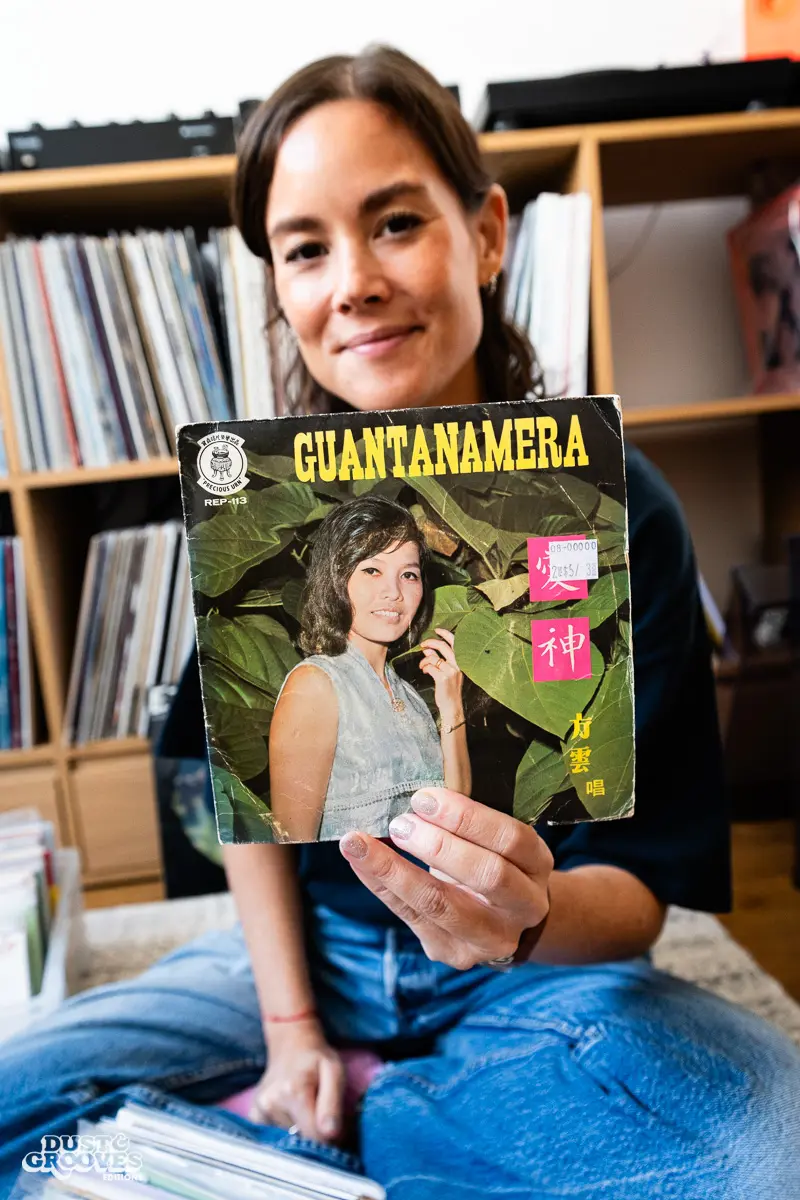
方雲* – 愛神 - Guantanamera. “It’s a Chinese cover of ‘Guantanamera,’ and I remember I didn't even love the song so much, but the cover had something that reminded me of my childhood. It reminds me of my aunt singing, or the singers that my parents, my aunt, and my uncle would listen to or sing in the karaoke.”

“Oh, that’s cute.”

Your Guantanamera record. Where did you find it?

I can’t even quite remember. There’s a chance I found it at Superior Elevation. I honestly don’t recall where I found it. I just remember thinking, “Oh, that’s cute.” I think it was in New York because I think I played it at The Lot Radio the week I bought it. It’s a Chinese cover of “Guantanamera,” and I just remember thinking that I didn’t even love the song so much, but the cover had something that I guess reminded me of my childhood. It reminds me of my aunt singing, or the singers that my parents, my aunt, and my uncle would listen to or sing in karaoke. The kind of voice, the timbre, is very unique to Southeast Asia in my mind. So I just thought that this was a cute little cheapie to add to my collection that might be fun one day to just listen back to, or even play for my dad.

I was wondering because it took me a couple of rounds online to find it, and I was like, “Where did this come from?”

It’s funny, because I think someone else in the book, another collector who’s also a writer, also found it. I just remember seeing someone in my feed posting about it and me thinking, “Oh, I have it too.” In the infinite scroll, I don’t want to speak wrongly. I don’t want to say—I don’t want to talk out of my ass [Laughs].


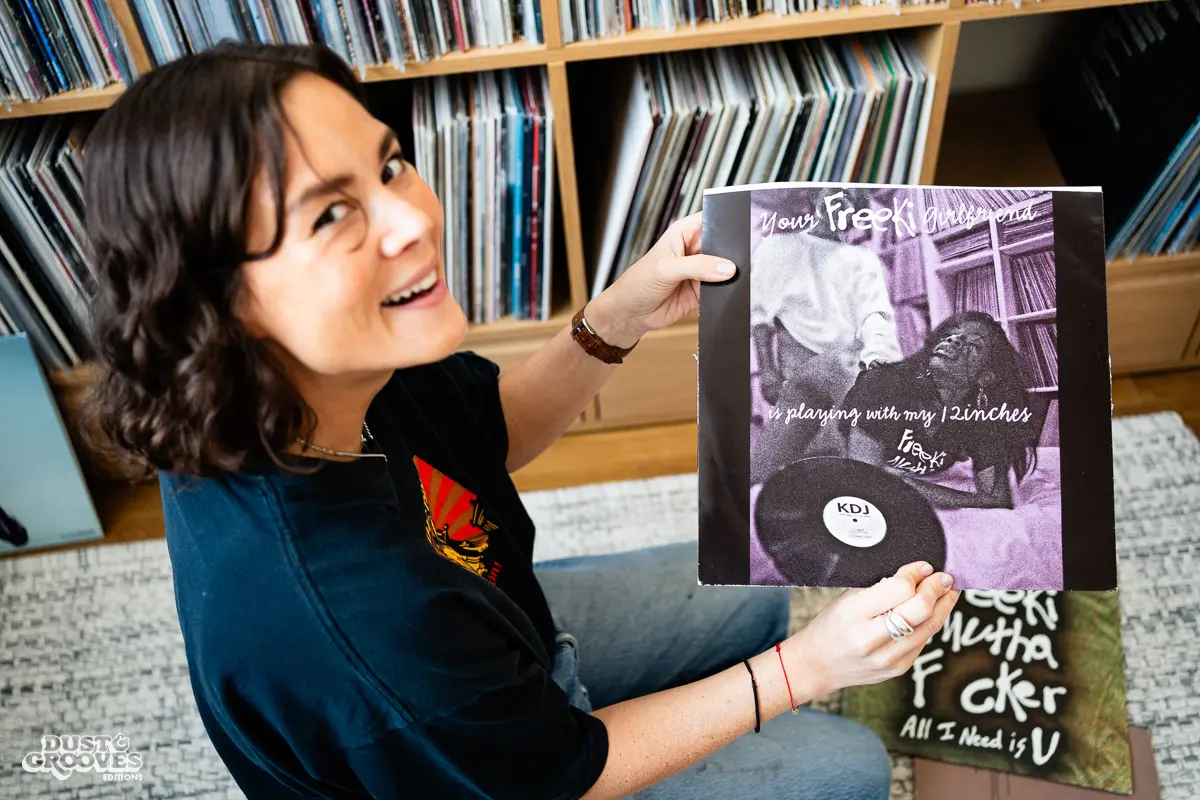
Lovers Rock Volume 2 and Freeki Mutha F*cker (All I Need Is U) are particularly graphic sleeves. We slightly touched on this earlier about the holistic nature of vinyl, so I want to ask—not necessarily how important is the art to collecting, but—how much does your focus extend beyond music itself?

Actually, I care a lot about artwork. I hate to admit it. My collection is made up of quite a few house records, but I think a big barrier to entry for me is that—sorry—all the records sort of look the same. Okay, you’ve got the label, but you don’t have much information, and you don’t see much about the producers. I understand that for DJs at the time, it was important to keep some sort of anonymity and gatekeeping around records, but I think there’s some beauty in finding artwork where the artist or band cared so much that they got outfits specially made.

For example, on a lot of the gospel records, they’re all suited up and coordinated. I think you can find out so much through the artwork, and it gives you a little bit of insight into people’s attitude or personality. I love that! I also love questioning who decided to choose, for example, a super abstract artwork, painting, or photography; I always find it really interesting.

And so for this compilation, Lovers Rock, I remember thinking when I was buying it: “Wow, the music industry was really just run by straight men.” Because someone really has to have thought, “Oh, I know how we’re gonna sell this compilation. Lovers Rock, right? We’ll just use a half-naked woman smiling and dancing.” Like, what?! I think it’s funny because it’s quite the reflection of the times. This would never happen today.

Louise Chen, DJ and vinyl record collector, is pictured at her Parisian apartment with shelves of vinyl records for Dust & Grooves Volume 2.

Moody – Freeki Mutha F cker (All I Need is U)
“You can find out so much through artwork, and it gives you insight into the people’s attitude or personality. I love that! I also love questioning who decided to choose, for example, a super abstract artwork, or painting, or photography.”
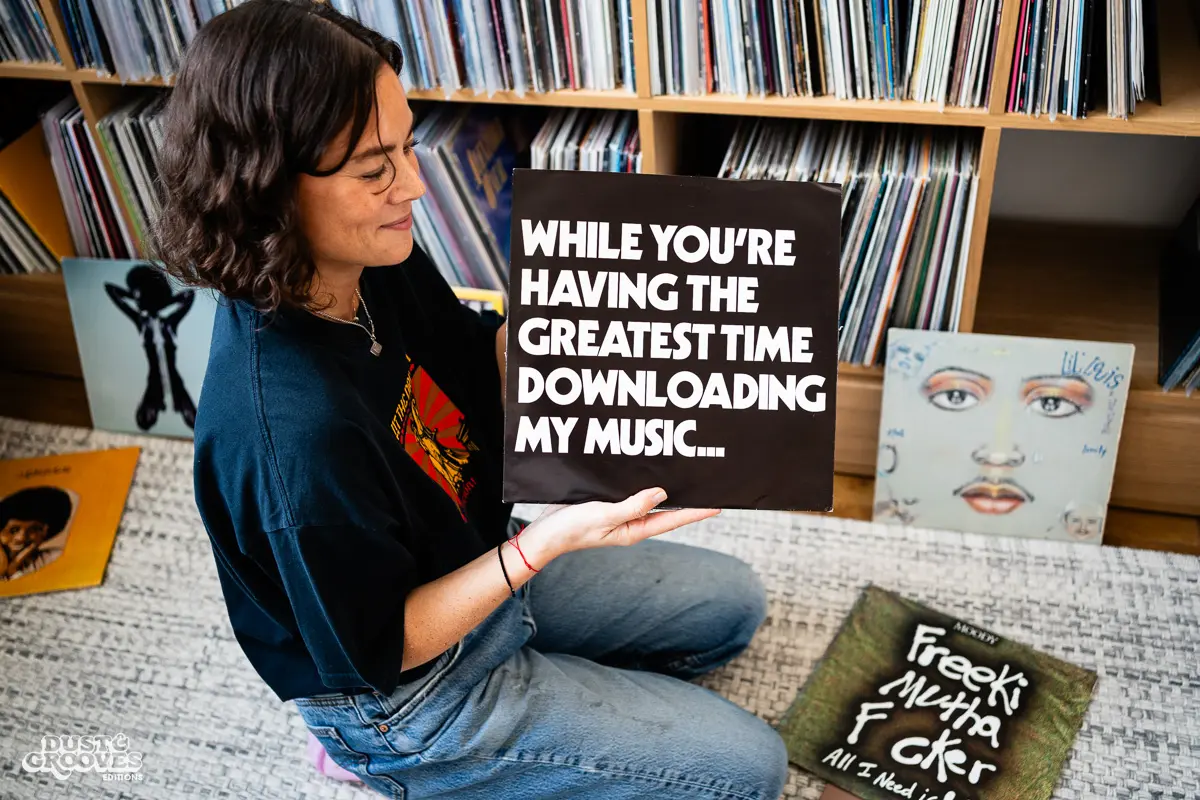
Louise Chen, DJ and vinyl record collector, is pictured at her Parisian apartment with shelves of vinyl records for Dust & Grooves Volume 2.

Moody – Freeki Mutha F cker (All I Need is U.) Inside Sleeve
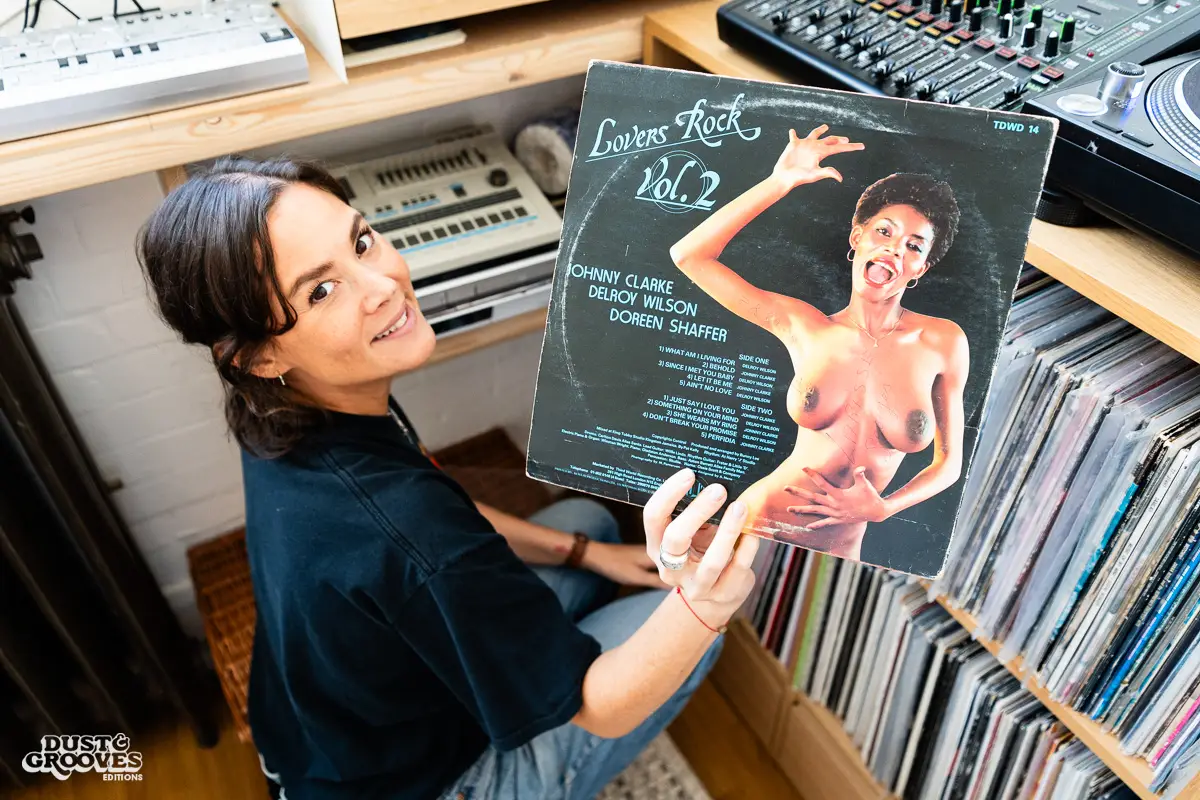
Louise Chen, DJ and vinyl record collector, is pictured at her Parisian apartment with shelves of vinyl records for Dust & Grooves Volume 2.

Johnny Clarke, Delroy Wilson, Doreen Shaffer – Lovers Rock Vol. 2. “Someone really must have thought, ‘Oh, I know how we’re gonna sell this compilation. Lovers Rock, right? We’ll just use a half naked woman smiling and dancing.’ Like, what?! I think it’s funny because it’s quite the reflection of the times.
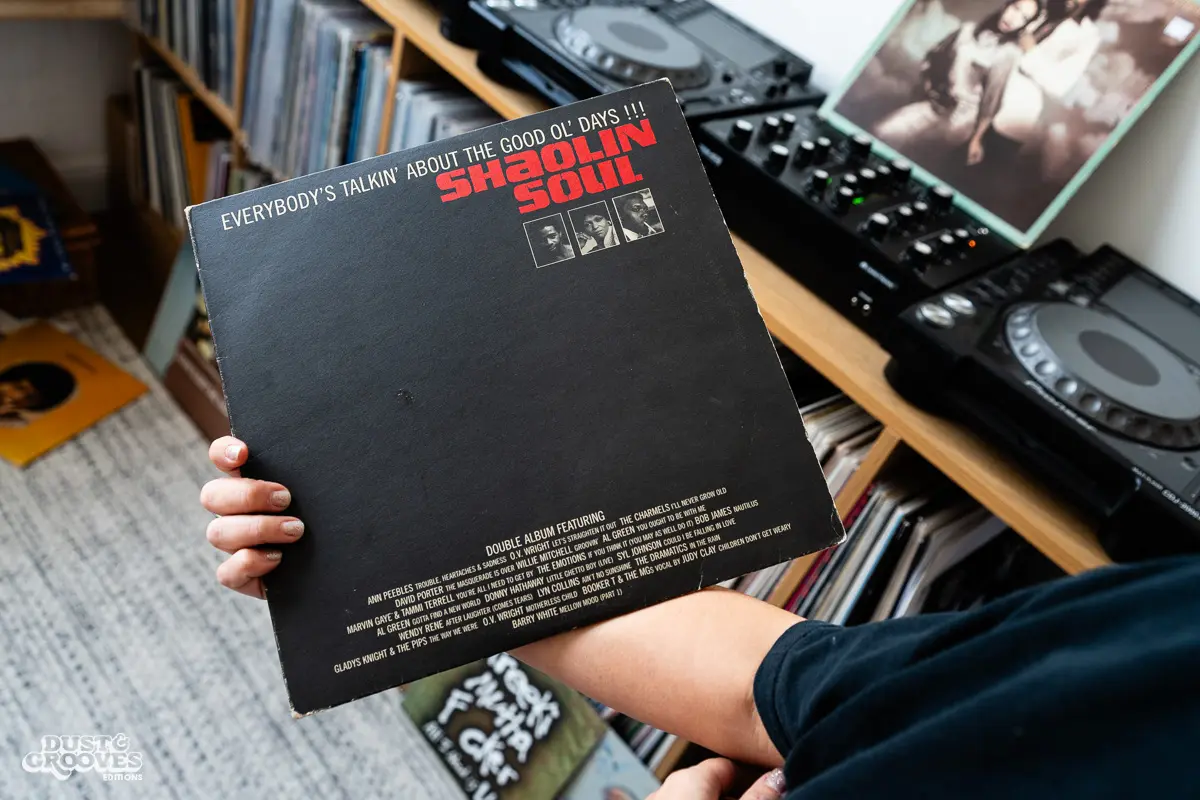
Shaolin Soul, what a fun compilation! Do you think compilations are an essential part of the act of archiving records?

That’s a really interesting question. I never really thought about it, to be honest. But it’s funny, because I guess when I started buying records I wanted to know more about soul, but I didn’t really know how to. So whenever I found a compilation, and whenever there was a tune I knew I liked, I would just buy it. That way, I could find out about the different artists I didn’t know—they were bound to be kind of in that vein.

Back in the day, if you didn’t have your portable turntable, you couldn’t always listen to the records—you just had to be quick or know what you were buying. And I guess I was a bit shy too; I didn’t know how to ask for more. I knew I liked something, but it felt like I didn’t know enough to ask precise questions. So if I found a compilation that had, say, the Delfonics, I would buy it and then find out about whatever was next to it. And then keep going.

I have quite a few compilations, and it’s funny because they are a reflection of the time. They’re also a reflection of how music was marketed pre-Spotify. I have a compilation of wedding songs, movie compilations, things like that. I think they’re really relevant tools for sharpening your curiosity and for finding more to dig into when you’re exploring a new genre or discovering more artists. They’re like the algorithm before the algorithm, if you know what I mean—it was easier for me to be recommended things in a compilation than by asking anyone.

Louise Chen, DJ and vinyl record collector, is pictured at her Parisian apartment with shelves of vinyl records for Dust & Grooves Volume 2.

Various Artists – Shaolin Soul.  “This is the ultimate compilation for crate diggers and Wu-Tang Clan fans. It compiles all the soul and funk records RZA sampled to produce his iconic Wu-Tang beats. When I was seventeen, my boyfriend burned this on CD for me, and that’s when I realized my true love extended beyond hip-hop to soul and jazz. As I get older and see it all connected and stemming from jazz, I owe this compilation my thirst and curiosity for tracing back the steps of music history.”
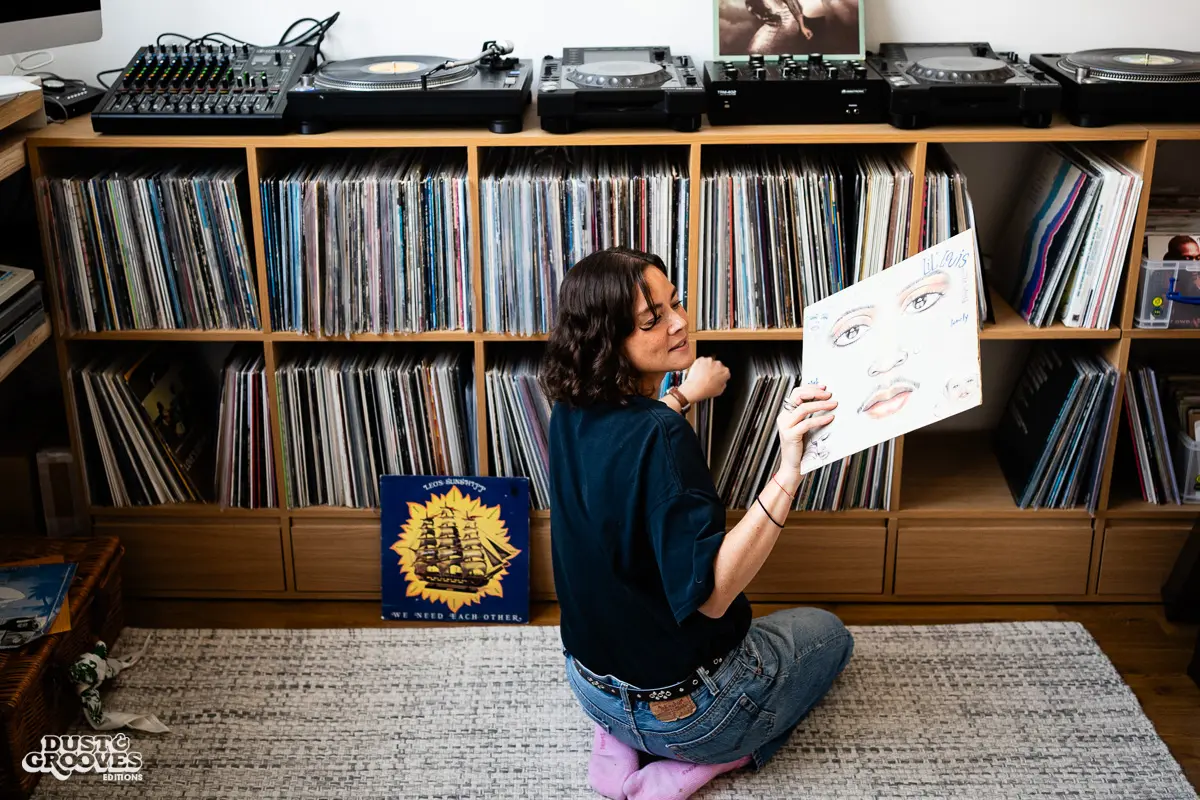
So when did you start to feel confident to ask those specific questions?

I think it was after DJing for a little while and seeing other DJs play records that I knew and liked. For a long time, I didn’t think the records I was playing were very special. Then I heard Sadaha play one at Concrete in Paris, or Tama Sumo play another, and I saw that it was something obscure that other people were Shazamming. That’s when I realized maybe I could just go to a store.

I think it was also about meeting the right people. I remember going to Heartbeat Vinyl in Paris, and Malik was just so nice, so friendly. He asked, “Well, what’s on your wishlist?” And I was like, “I don’t really work like that.” He said he respected that and just asked me what I liked. I said I loved Patrice Rushen, and he just smiled. He said, “That’s an excellent choice.” Then he started digging out different things: “Do you know this? Do you know that?”

His shop is quite small, but it feels very much like you’re in his record listening room—you’re not really in a shop. You can sit down, he’ll offer you sweets or coffee, and you can just chat. That’s what made me feel really comfortable and confident: spending time there, not always buying something, but just going through his knowledge, his DJ brain, and matching that with whatever mood or thing I was into at that point. Calculating ideas without any end goal. I never wandered there questioning if I was going to absolutely find an original pressing of a very rare record to add value to my collection. It was just more, “I really like this and I’ve been looking for that.” It’s that simple.

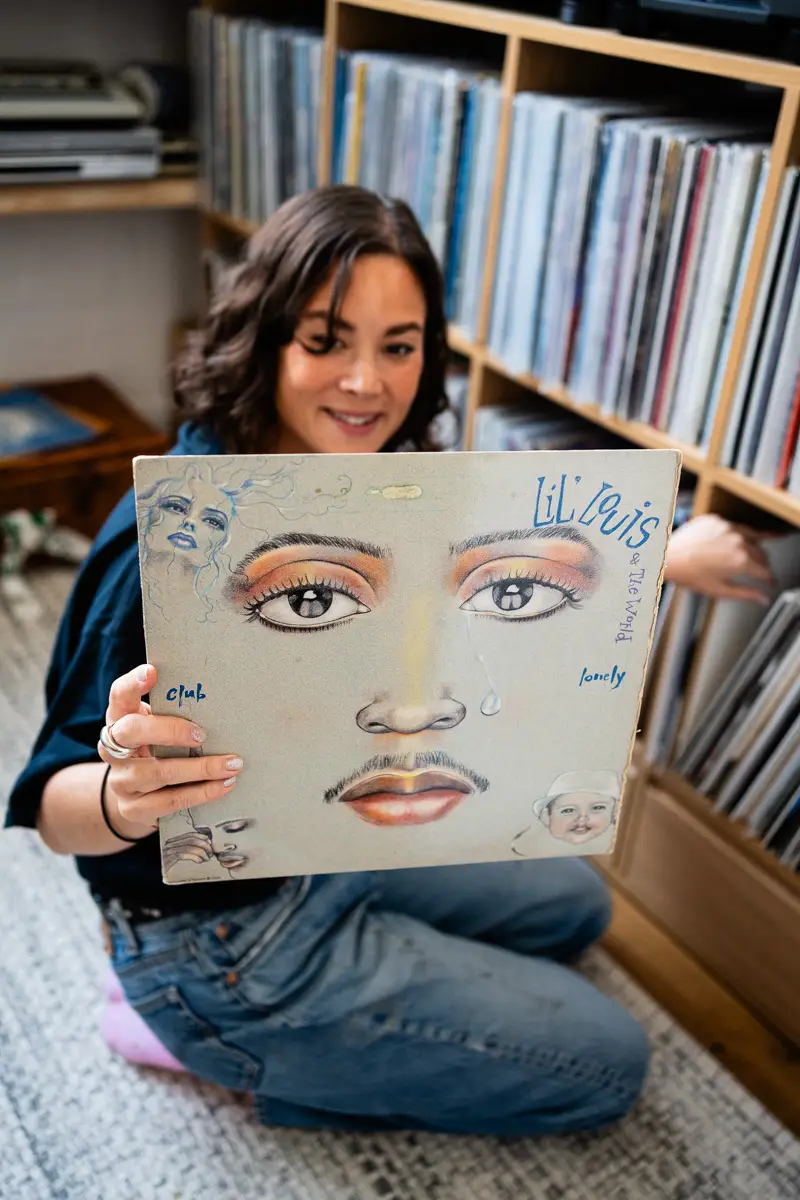
Lil’ Louis & The World – Club Lonely. “It’s nice to lean into a track for a long time and make a continuous mix. Being able to do that with house music, there’s no joy that matches it.”
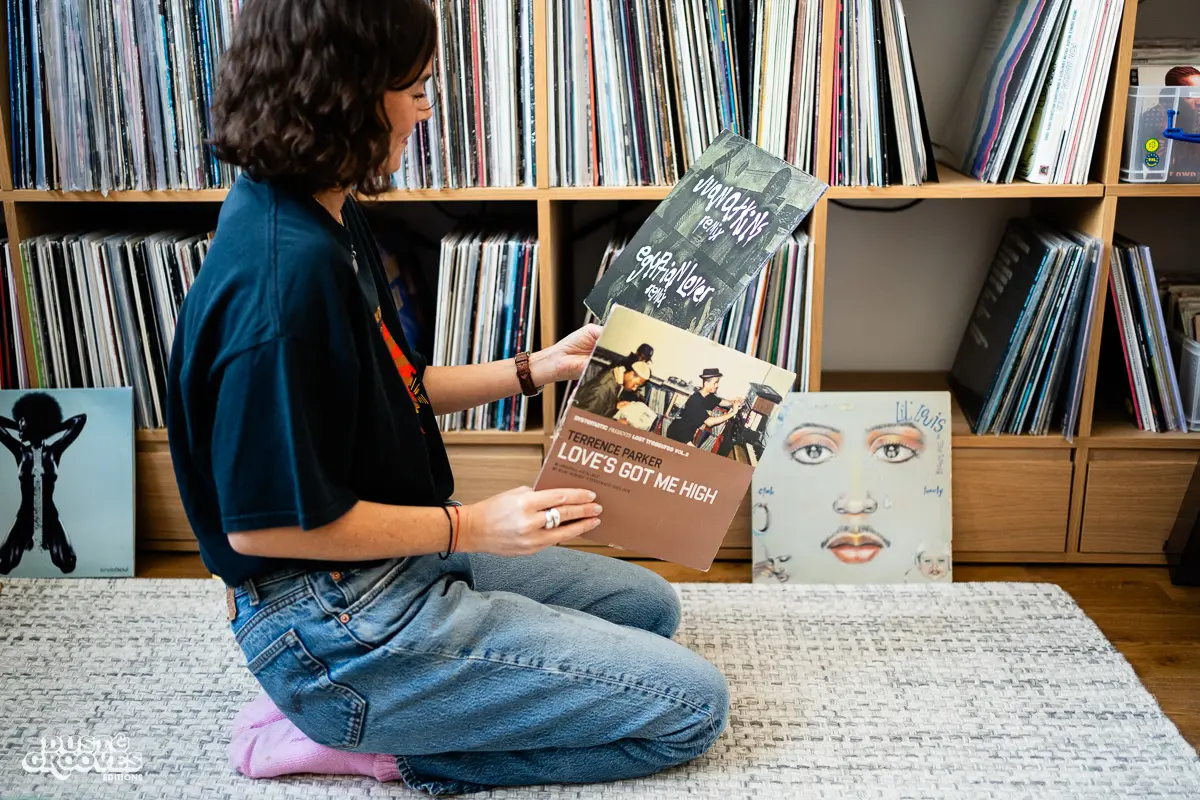
Terrence Parker – Love’s Got Me High. “It sounds cliché, but I think there’s a reason why the house classics say that house is a feeling—it is.”

Let’s talk about these Lil’ Louis & The World and Terence Parker records. So very, very cool. What is it about a house record that’s so special, especially to DJ with?

Well, it’s especially good to DJ with because it’s music that was really made to DJ. The long, simple intros let you blend, and the long outros make it easy to beat match. I think it’s nice to lean into a track for a long time, and then create a continuous mix. Being able to do that with house music—there’s no joy that matches it.

It’s a funny feeling, and it sounds really cliché, but I think there’s a reason why the house classics say that house is a feeling—it is. I don’t dance the same way to disco, with high-energy lyrics and horns, as I do to very stripped-down house. So when it comes to mixing, it’s a different kind of pleasure. You’re not necessarily sharing something rare; you’re just sharing the moment. You’re creating a bit of a bubble for yourself and anyone who wants to join—to lean in and escape a little.


What is the particular kind of focus with house music?

I think it’s just a different mindset. When I DJ house, it feels like I enter a different headspace, especially with records. I get very focused on the beat matching. There’s a lot less singing along and a lot more feeling along. I’m constantly thinking, “This is too fast or too slow, this will go well with that, or I want to play this record next,” then quickly finding it and beat matching.

Because the tracks are longer, you have more time to consider what to play next and what contrast to bring. Whereas with shorter songs back to back, you have to move quickly. With records, that can become a bit routine—you know that four or five songs go together, and you just play them in that sequence. You memorize them to beat-match or key-match. With house, you can explore more and be adventurous because you have the time.

Do you enjoy listening to house at home, or is it strictly for dancing and mixing?

Definitely—I love listening to house at home. Sometimes house music helps me think. If I’m working, writing, or doing something that doesn’t require active listening, house—or even techno—keeps me in a focused trance. The continuous beat, whether warm and vibey or cold and precise, lets me settle into a rhythm. There’s something about that focus, and it’s the same in the club. Good house music keeps the crowd together, moving in unison.


“My son won’t have a plastic-fantasy, picture-perfect idea of music. It’s messy. It takes up space. It’s dusty. I want him to respond to the reality of it.”

Any last thoughts?

When I started my collection, I never thought about what value it could have in the future or after I pass. It’s definitely something I’m more conscious of now that I have a son.


Do you think that shareability is what adds value?

I think so. The added value is probably in the fact that it’s a tangible object. He’s already touching the records, trying to go through them, though they’re stacked tightly so his little fingers can’t pull them out. Eventually, he’ll be big enough to understand what we’re listening to and start asking questions.

In a child’s mind, interacting with objects like records and instruments provides a direct entry point to curiosity about music. Even in the playpen the other day, he reached for the cable where my microphone is attached—he was sort of eating it. But handling a microphone at nine months old gives him an early sense of its weight, what it’s attached to, and how it works. My son won’t have a plastic-fantasy, picture-perfect idea of music. It’s messy. It takes up space. It’s dusty. I want him to respond to the reality of it.

So far, he loves pressing the cue button on the CDJ—it flashes—and he also loves spinning the wheel. Eventually, when he’s big enough, I can show him the records and demonstrate scratching: what it does, how it sounds. I can’t wait to see his reactions and hear all the questions he’ll have.


Who would you like to see next on Dust & Grooves?

I would actually love to see Jeff Mao. 
I don’t know if he’s on the list, [post-interview note, he is] but he has an amazing record collection. He’s taking me record shopping and pulled out records for me. He’s very discreet about his well of knowledge. He just distills it mostly in the papers he writes and interviews he’s hosted and stuff, but I would like to hear about him directly and I would love to hear about his records.

Louise Chen is a DJ, promoter, and radio host on NTS. You can keep up with her via her instagram

Leave a Reply

Your email address will not be published. Required fields are marked *