
No products in the cart.

No products in the cart.

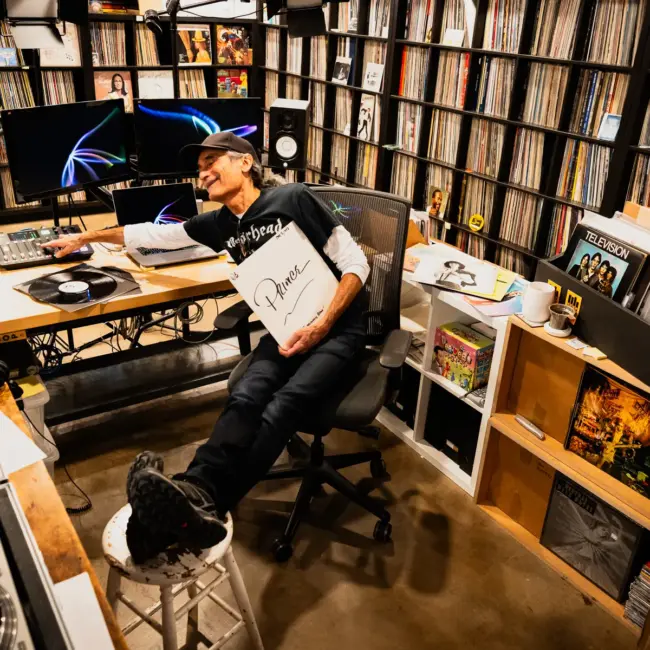
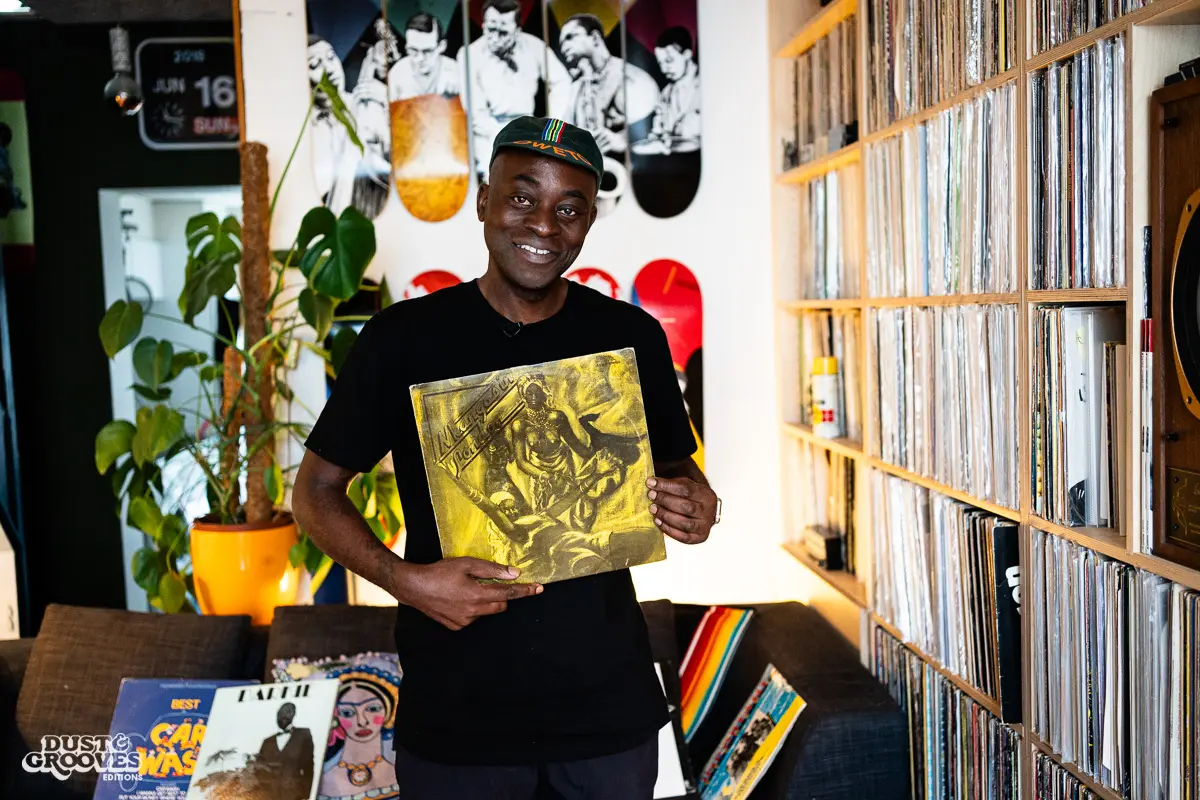
Charlie Dark, DJ, coach, and founder of Run Dem Crew, photographed at his London apartment, with his vinyl record collection for Dust & Grooves Volume 2 book.

CHARLIE DARK

Peace, Positivity, and Blessings

BY Dom Servini

Born in the early 1970s in London’s salubrious East Dulwich to Ghanaian parents who sacrificed for their children, Charlie Dark’s upbringing was anything but run-of-the-mill. As a teenager, he found himself in private school, feeling like something of a misfit, an “alien,” to use his own words. It was his mother, perhaps without realizing it, who provided both the most significant education and, thereby, the answer to Charlie’s predicament. 

Charlie’s mother arrived in London in the late 1960s, via New York, where she studied. Living in an apartment that was perfectly positioned opposite the Apollo Theatre, the venue became her local hotspot, where she regularly checked out live shows from legends like James Brown, Ray Charles, and Aretha Franklin. Not only that, she had the record collection to match those live performances she saw. It wasn’t until the rare groove period of the mid-1980s that young Charlie realized he already owned all of these records that were suddenly prized, and that music itself would provide both an artistic outlet and a way to be accepted by peers. 

“People were like, ‘Oh, he knows about music!’ because I grew up in a musical house. I didn’t think it was special to have music and records around, it was just normal,” he says.

Armed with his mother’s musical heritage, his newfound love of hip-hop, and the belated discovery of Fela Kuti on a visit to Ghana, Charlie stepped out into the world determined to make DJing his career. “Up until that point,” he says, “My whole life was geared towards academia to then become a lawyer or a doctor, but I was determined to get into the entertainment industry”

It was only when he met fellow music enthusiast, Tony Nwachukwu, at the start of the ‘90s that his musical vision began to expand and bring about greater possibilities. The pair would go on to form revered 1990s outfit Attica Blues, and after a chance encounter with a sixteen-year-old James Lavelle, were signed to his fledgling label, Mo Wax. International touring and everything that goes with that followed. Soon thereafter, Charlie went on to take club land by storm with his legendary Blacktronika parties, before he began focussing his talents in other areas.

Around the turn of the century, Charlie again harnessed another of his passions, marathon running. Run Dem Crew brought together a community of would-be athletes and music lovers to exchange ideas and pound the streets of London. It’s become something of an institution in the capital and even spawned its own radio station, Run Dem Radio.

During the Covid lockdown, encouraged by the reception his shows on Run Dem Radio and Gilles Peterson’s Worldwide FM had been having, Charlie made the bold decision to work towards returning to the club DJ landscape. A busy schedule followed as the world reopened, and Charlie found a new, younger audience and a smattering of elders who’d managed to stay the distance, to spread his message of “peace, positivity and blessings.” 

Here, we examine Dark’s musical journey, from familial history to his rise with Mo’ Wax, to his current incarnation as an astutely, uncompromising DJ.

"I was in a very strange situation as I was a young, black kid from Ghana. Most of my friends were from Jamaica and I went to a very esteemed private school—I called it the Bermuda Triangle. So trying to work out who I was and where I fit in was difficult. That Roy Ayers and Fela Kuti record helped it all make sense."

Charlie’s Bespoke Shelving System. “Each one is a piece of history, a slice of time and a memory of a creative moment.”

Your music space feels like it’s an exclusive back room at a club—loose but focused. Is there a filing system on your record wall, or has it come together more organically?

Some of it is alphabetical, some by label, some by memories, and some of it is not in any order at all because I like to have a section that I can dig through to find surprises. For example, if I find a Fela Kuti record next to a deep house record, then I start thinking about how the two flow together. When it’s too alphabetical, I find it just becomes like a museum. I like my record collection to be alive and to feel like it’s constantly evolving. In the days when people were getting their record collections stolen, my attitude was that if it’s not in alphabetical order, it makes it a bit more difficult to come and decide that you’re taking that section! It’s like having my own weird security system!

You mentioned your mom had a massive record collection when you were growing up. How much of that collection did you inherit?

I borrowed, liberated and not returned quite a number of her records. A good example is by Nkengas, which is an early incarnation of Nigerian outfit Nkengas Super Stars Of Africa, appropriately entitled Nkengas In London. It’s an example of the kind of African music that would regularly be played in our house. At the time, I was slightly embarrassed by it. Now I feel that I’ve come full circle and grown to love playing Highlife music and introducing it to new people. Records like this are golden gems that remind me of African weddings, christenings, and family gatherings.

Charlie Dark, DJ, coach, and founder of Run Dem Crew, photographed at his London apartment, with his vinyl record collection for Dust & Grooves Volume 2 book.

The Nkengas – Nkengas in London. “Highlife classic from 73 that came out of my mothers collection and was never returned. A staple in my household and Ghanian gatherings when I was growing up, I’ve literally heard this record hundreds of times over the years. Another one of those records I grew to appreciate more as I got deeper into investigating the music of my homeland.
As a kid whenever this came on you were usually bored, and being told to behave at a family gathering when you’d rather be out in the street playing with your mates. Years later it’s become the record I play whenever I’m missing family as it immediately reminds me of home. A must have for any collection. Asa Mpete Special is my favorite but the entire album is golden.”

Charlie Dark, DJ, coach, and founder of Run Dem Crew, photographed at his London apartment, with his vinyl record collection for Dust & Grooves Volume 2 book.

Fela Aníkúlápó Kuti and Roy Ayers – Music Of Many Colors. “I knew who Roy Ayers was, but I had never heard of Fela Kuti. I remember putting it on an old gramophone at my dad’s house and I went from hating everything African about myself to falling in love with the music from that continent!! When Fela spoke about Africa being “the center of the world”, and Roy was talking about being inspired to go to Africa and make this record, I suddenly realised that I should be proud! I came back to London from Ghana wearing beads, black leather and Black panther berets and began to learn more about my culture. I was about fifteen years old and it made a huge impression on me.”
Did your dad have a similar musical influence on you?

Dad was into The Beatles, Motown, and R&B, but my most life-changing musical experience happened in the mid-1980s when I was sent to Africa to be with him. This was something that happened to a lot of Ghanaian and Nigerian kids at school, and some never came back. My mom was worried about me wearing strange clothes, talking in a weird way due to hip-hop’s influence, and not concentrating on my studies, and thought some time in Africa would do me good. I really didn’t want to go, but Ghana opened me up to a whole new world of music. 

One day, I was digging through a pile of records at a local market when I discovered a record by Fela Kuti and Roy Ayers, titled Music Of Many Colours. I knew who Roy Ayers was, but I had never heard of Fela Kuti. I remember putting it on an old gramophone at my dad’s house. I went from hating everything African about myself to falling in love with the music from that continent! When Fela spoke about Africa being “the center of the world,” and Roy talked about being inspired to go to Africa to make this record, I suddenly realized that I should be proud! I came back to London wearing beads, black leather, and a Malcolm X beret and began to learn more about our culture. I was about fifteen years old and it made a huge impression on me. I was in a very strange situation as I was a young, black kid from Ghana. Most of my friends were from Jamaica and I went to a very esteemed private school—I called it the Bermuda Triangle. So trying to work out who I was and where I fit in was difficult. That Roy Ayers and Fela Kuti record helped it all make sense.

Describe your very early days as a DJ and who your influences were.

To continue reading this interview we humbly ask you to consider supporting Dust & Grooves by becoming a paying premium member.

Level Price Action
Premium

€5.00 per Month.

Select
Premium+

€25.00 per Month.

Select

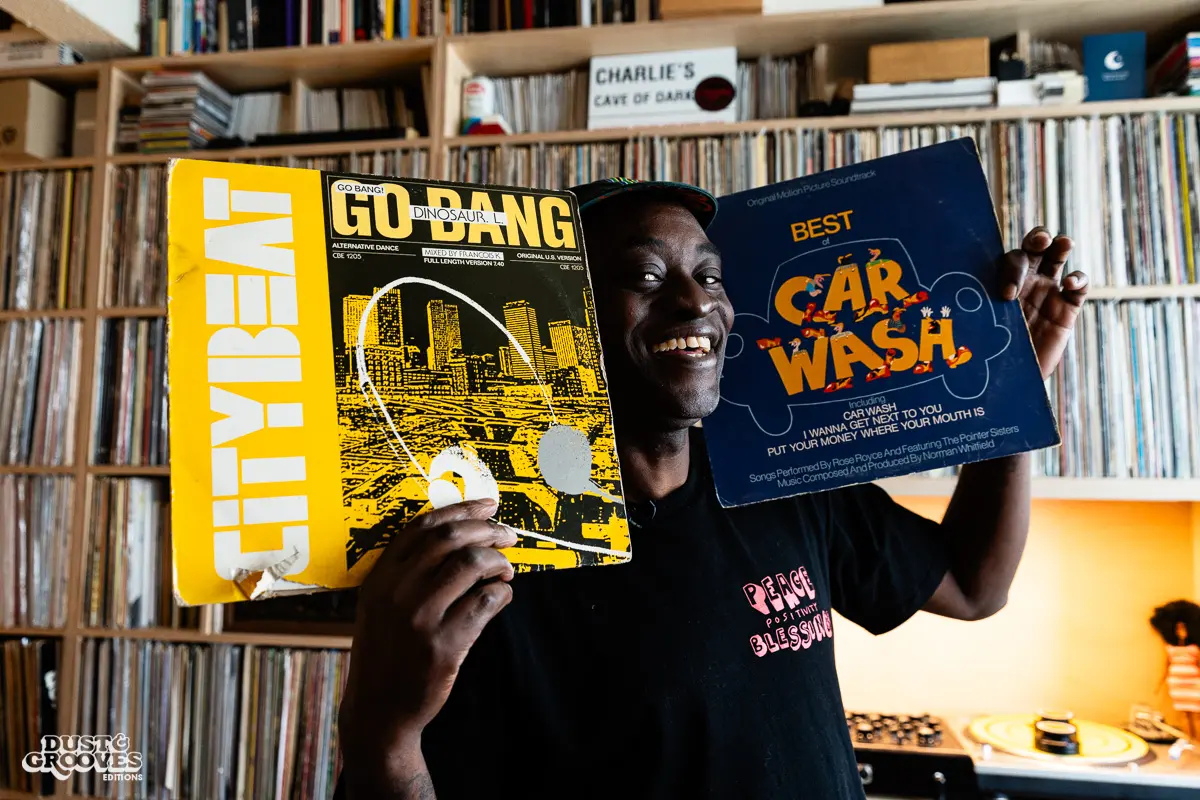
One of my biggest influences was Norman Jay. He used to play “Car Wash” by Rose Royce a lot. Everyone knows this tune now but it stopped being regarded as cool. At the time, it was a brand new tune to me, and it blew my mind. I managed to get myself a copy when a girl at school decided to have a sixteenth birthday party. She had assumed that I knew about music as I was one of the only black kids at school and asked me to DJ. I, of course, told her that I DJ all the time and would do it. 

So, I played this record and it got such an amazing reaction! I was so excited that I accidentally picked the needle up off the record while it was playing, and everyone in this place stopped dancing and stared at me. I realized that this was the first time in my life that I felt seen and that I had some sort of power. At that moment, I decided to make DJing happen. All because of that record. 

Along with being a DJ and producer, you’re a poet and spoken word artist. Tell us when you started writing poetry and how that was influenced by your record collection.

I started writing poetry in the early 1990s. I’d always been keen on writing at school, so when I heard there was this spoken word scene emerging out of hip-hop in New York, I started listening more intently to records that had that kind of material on them. One of those records was “The Poem” by Bobby Konders which sampled “Dis Poem” by Mutabaruka, which was a big record on the acid house scene. Hearing names like Jomo Kenyatta, Malcolm X, and Marcus Garvey on that record was a hugely significant moment for me. I’d heard the names before from my parents, so I didn’t necessarily pay as much attention as I should have, but hearing them in a club situation was something else.

Charlie Dark, DJ, coach, and founder of Run Dem Crew, photographed at his London apartment, with his vinyl record collection for Dust & Grooves Volume 2 book.

Rose Royce – Best of Car Wash. “Everyone knows this tune now… but at the time it was a brand new tune to me and it blew my mind.”
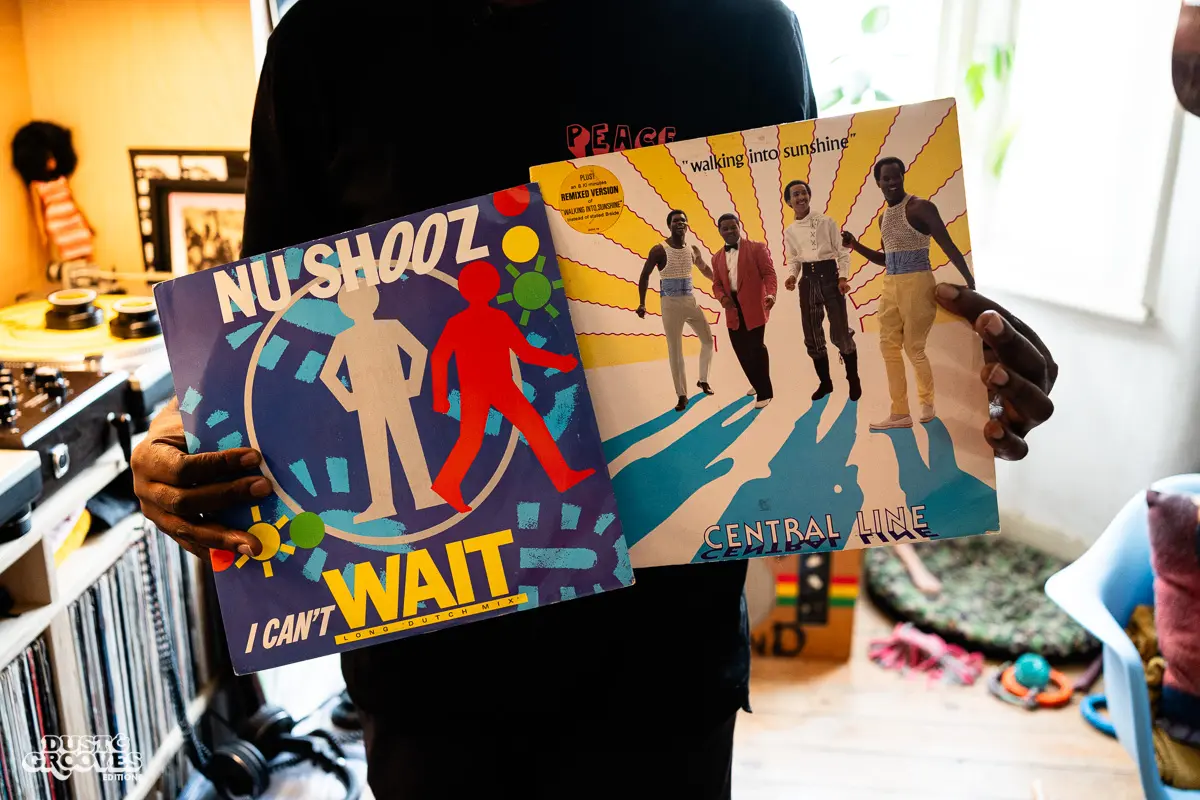
Charlie Dark, DJ, coach, and founder of Run Dem Crew, photographed at his London apartment, with his vinyl record collection for Dust & Grooves Volume 2 book.

Nu Shooz – “I Can’t Wait”. Central Line – “Walking Into The Sunshine”. “Pirate radio and warehouse parties were my jam in the 80’s and early 90’s and these are two tunes that immediately take me back to that era. I’m a big Larry Levan collector and try to pick up anything with his name on – his mix of ‘Walking into Sunshine’ is deadly. A feel good extended groove with a perfect DJ arrangement. Essential foundation records that will never go out of style. Seek and you shall be rewarded.”
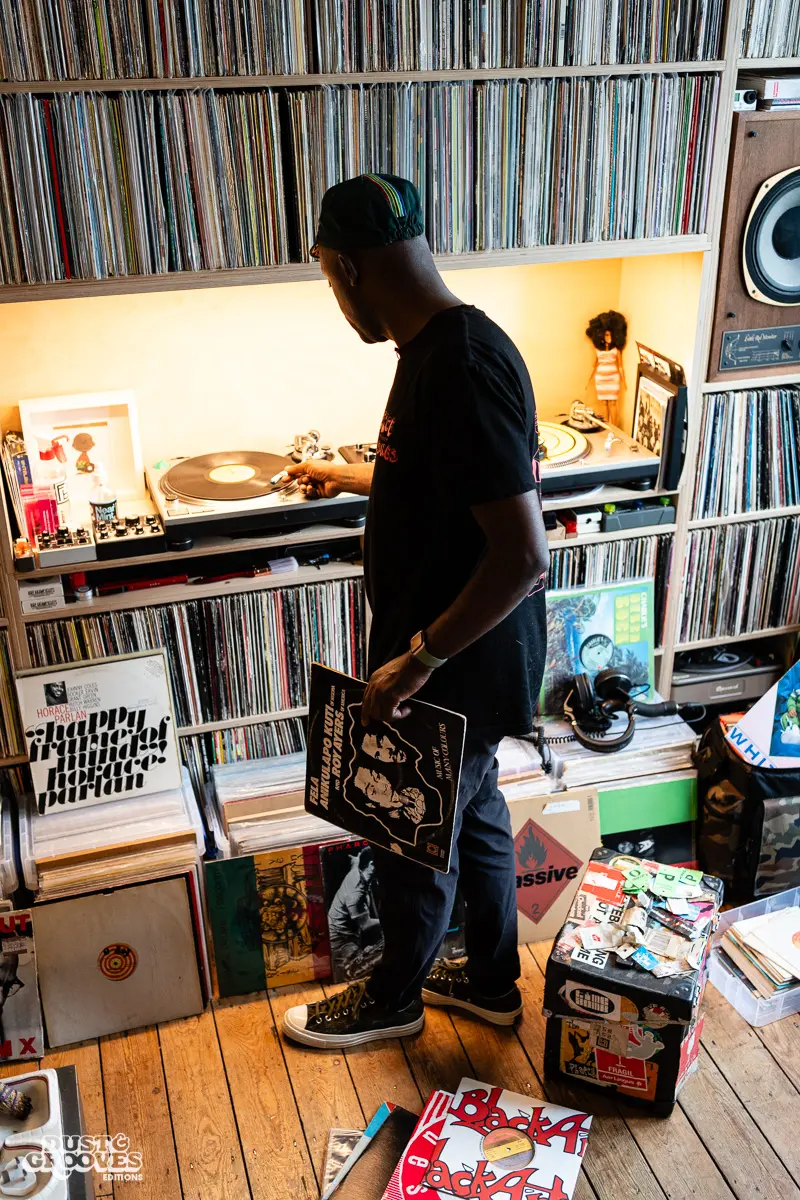
"I went from hating everything African about myself to falling in love with the music from that continent! When Fela spoke about Africa being “the center of the world,” and Roy talked about being inspired to go to Africa to make this record, I suddenly realized that I should be proud!"

Charlie Dark, DJ, coach, and founder of Run Dem Crew, photographed at his London apartment, with his vinyl record collection for Dust & Grooves Volume 2 book.

At what point did you meet Tony Nwachukwu and James Lavelle? How significant were these meetings in your musical journey?

I met Tony around 1990 and his references were the same as mine. He was listening to Fela Kuti, but also Soul II Soul. He was a bit older than me and worked at a shop that sold specialized music equipment. He was very knowledgeable, and I looked up to him–I still do. He would help me out and let me try using equipment that I simply couldn’t afford, and we bonded. 

I met James around 1993. At this point, I’d kind of fallen out of love with hip-hop, especially the super violent, homophobic, and sexist aspects of it. I was looking for a record shop with a wider and more eclectic remit. Honest Jon’s in West London was exactly what I was looking for. James was working there at the time, he was only about sixteen years old. But he was into the Japanese hip-hop scene, Star Wars, Wild Style, and so on. He also had amazing connections with distributors in New York. So one day, he saw me and said, “You look like you’re into hip-hop. I’m starting a label. Can you make some records for me?”

This is very much like the girl at school who said “You look like a DJ.”

Yeah! So I rang Tony, told him about the conversation, and he was in. This was on Tuesday. James booked the first studio session for us that Saturday. I’d never met anyone as fearless as him. He made things happen. This was the thing I learned from James–as long as you have a telephone or wifi connection, anything is possible. You’ve just got to get to the person on the other end. I was in James’ office once when he simply phoned up the Beastie Boys. At the time, they were the biggest hip-hop act in the world, and James very casually called them up and spoke to them. 

On Saturday, we started making the instrumental record. I brought my girlfriend down because that’s what the rappers would do on MTV. She brought her mate, who sang a little bit, and just before the end of the session, we asked her if she’d like to sing over a few bits. She asked us what she should sing, and I suggested “contemplating jazz”’ since that was a major element of the music. That became the record Contemplating Jazz.

Charlie Dark, DJ, coach, and founder of Run Dem Crew, photographed at his London apartment, with his vinyl record collection for Dust & Grooves Volume 2 book.

Attica Blues – “Tender” (Dubplates). “These are dubplates of backing tracks from the Attica Blues live shows…Wow, this is amazing. I don’t wanna start crying now!”
How did being signed to Mo’ Wax affect your musical outlook?

Going on tour with James and DJ Shadow changed the way I collected music. It broadened my horizons and understanding of genres that were previously alien to me. And it made me dig deeper outside of my comfort zone. Before Mo Wax, I wasn’t listening to techno. I didn’t realize that a lot of those records were made in Detroit by people who looked like me, like Derrick May and Carl Craig. 

I remember being in a record shop in Australia with Shadow, and everyone was in the soul and funk section apart from him–he’s in the rock section. He played me these strange prog-rock records, and when I heard the drum breaks, I was like, ‘Oh my god, he’s a genius!’ James, on the other hand, had this voracious appetite for cleaning out record shops. He’d walk in and tell them he wanted to take every soul record they had! It was the first time I’d been around people spending big money in one go on records. 

So with all these influences abound, tell us about a significant record that you recorded for Mo’ Wax during this time.

Funnily enough, I’ve just come across something very special. I often deliberately scatter my records around in my collection so that I’ll lose them and find them again at a later, and often at an opportune time. These are dubplates of backing tracks from the Attica Blues live shows. This one is labeled as “Pen To Paper” but what I think this is, is an early version of “Tender,” which is one of our big tracks.

Charlie Dark, DJ, coach, and founder of Run Dem Crew, photographed at his London apartment, with his vinyl record collection for Dust & Grooves Volume 2 book.

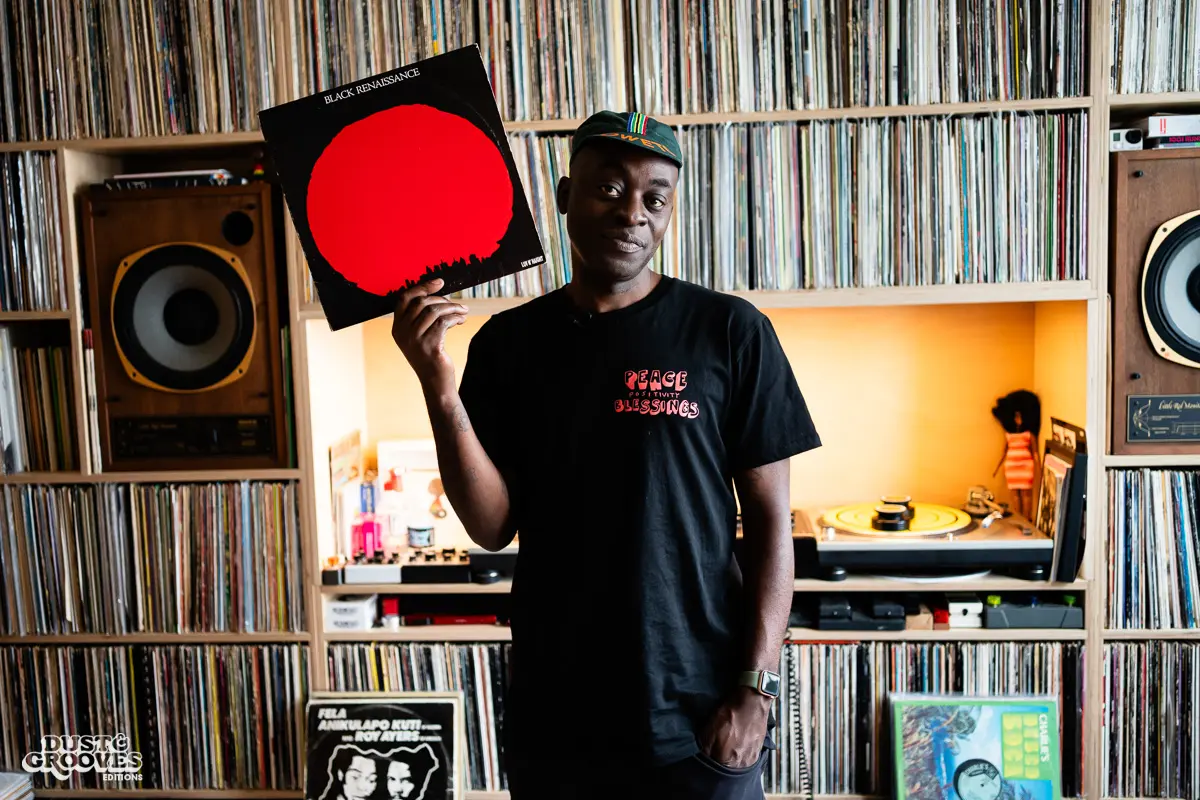
Black Renaissance – Body, Mind And Spirit. “It’s a really special, incredible record from the super mad intro to the crazy bassline. It’s my George Floyd record – one you really need to listen to and understand what it’s saying and how it relates to the Black Lives Matter movement today. It’s also a record I always recommend to people to use when meditating. It’s a versatile record! If I pack it and I get to play it then I know I’m having a good night and am really free.”
Is there a particular club venue or session that was vital to you during this period, and is there a record that always takes you back there when you hear it?

Plastic People was the one. A basement club in Shoreditch, East London. It was run by a young Nigerian guy called Ade, who also DJ’d at the venue. He was a real music head. For a relatively short period of time, it was home to some truly legendary gatherings and club nights. Gilles Peterson, Theo Parrish, and Floating Points all had residencies there, and we had a night called Blueprint Sessions. 

Black Renaissance by Harry Whittaker. It’s the ultimate Plastic People record. The first time I heard it was at Gilles Peterson’s Dingwalls club on a Sunday afternoon in Camden, North West London. The lights went down and Gilles dropped it. All I was thinking was I wanted to see the sleeve. I somehow managed to work my way around to the DJ booth and all I could see was the red and black of the sleeve, which remains imprinted on my mind. Then one night at Plastics, Ade played it. He told us the story of how he found two copies of this mythical record! It later got re-issued by Love & Haight Records and I copped a copy. It’s one of those records you buy on site and I’ve probably got two or three copies at the moment. It’s a really special, incredible record–from the super mad intro to the crazy bassline. 

It’s my George Floyd record, one you need to listen to and understand what it’s saying and how it relates to the Black Lives Matter movement today. It’s also a record I always recommend to people to use when meditating. It’s versatile. If I pack it and I get to play it, then I know I’m having a good night and am really free.

“It’s my George Floyd record, one you need to listen to and understand what it’s saying and how it relates to the Black Lives Matter movement today.”

“Peace, positivity, and blessings seem to be needed more than ever.”

And this freedom was the ethos of your seminal club night, Blacktronika, right?

Yep, I started my Blacktronika night because I’d been getting really disillusioned with how segregated music had become, as well as the idea that black music had been reduced to just hip-hop and R&B. I felt like there was all this other amazing music out there that was just being ignored, and I wanted to be able to go to a club where you could hear it all in one space. I realized that unless I start this myself, it’s not gonna happen. It was the beginning of what later became Run Dem Crew and this idea of building communities and collectives. 

What are the differences in how you prepare for a DJ set these days in comparison to the times of Blacktronika and Plastic People?

When I’m packing a record box for a set these days, one of the things I really think about is being economical. So not over-packing, taking just the right amount, and being brave enough to kind of stand by what I bring.

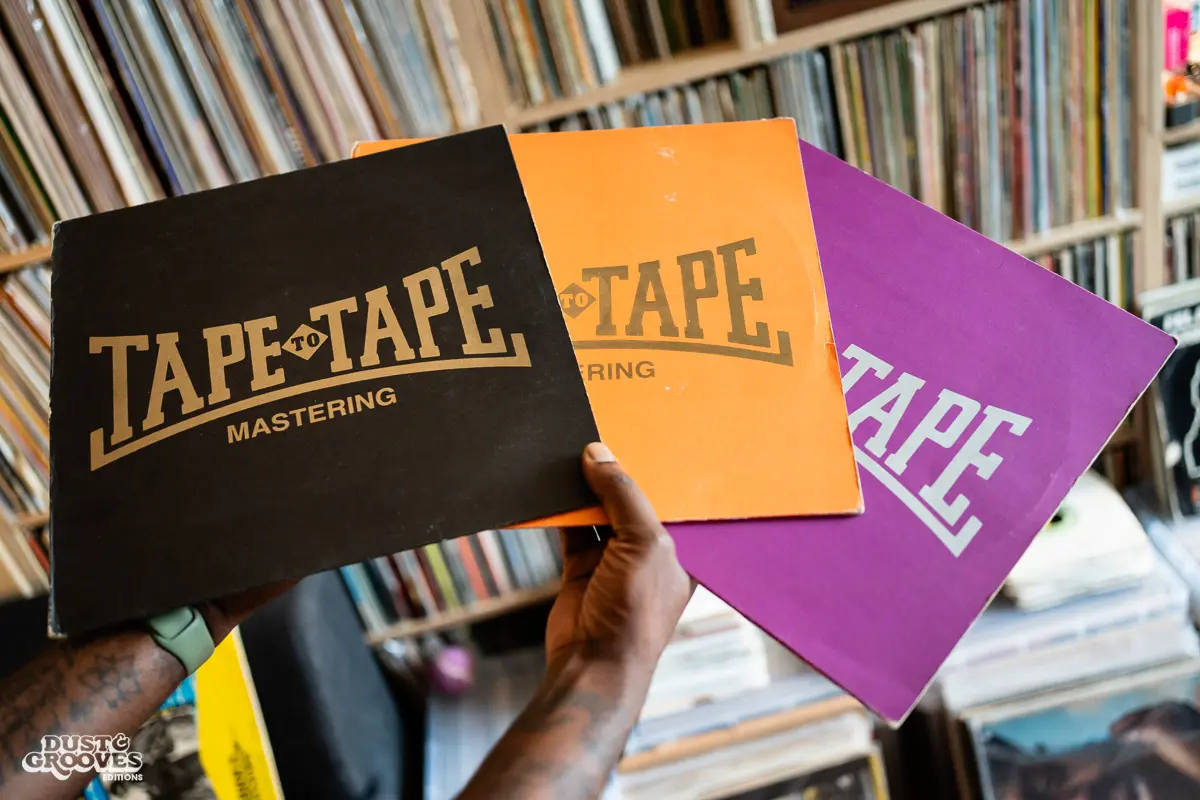
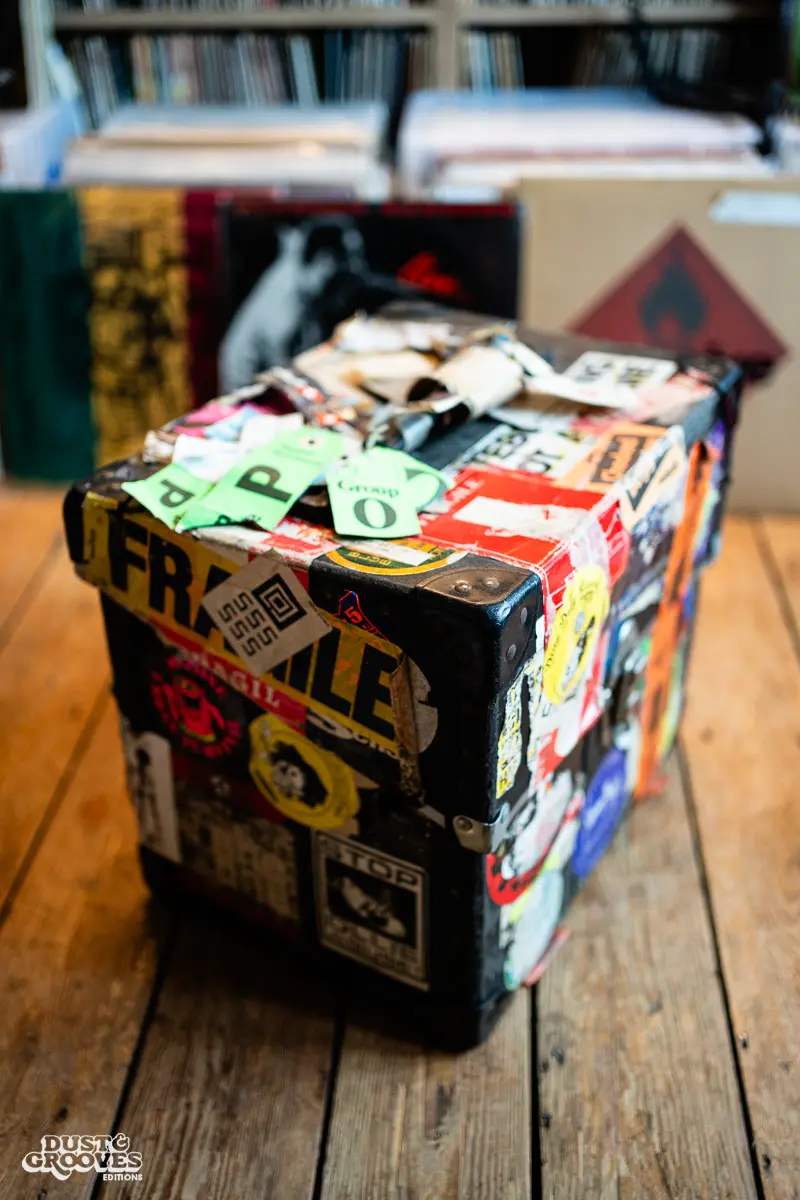
“This is my original and first ever record box complete with stickers and flight tags from the days when the airlines would let you keep tags from previous flights on the box. Thinking about it now it’s no wonder my box would go missing all of the time! I paid £25 pound for this box and it’s been all over the world and witnessed many an epic set. When I’m feeling nostalgic I bring it out for gigs but it’s pretty battered now and deserves a quiet life. It’s definitely one of the family members and I’ll never get rid of it, just thinking about the firsts we achieved together makes me smile inside. Weirdly enough this record box inspired the beginning of Run Dem Crew and my work in the wellness world. I wrote and performed a one man show called ‘Have Box Will Travel” based on my early DJ career and the places I’d been to with the box. My director challenged me to get in shape for the role and I started running and the rest is history.”

Charlie Dark, DJ, coach, and founder of Run Dem Crew, photographed at his London apartment, with his vinyl record collection for Dust & Grooves Volume 2 book.

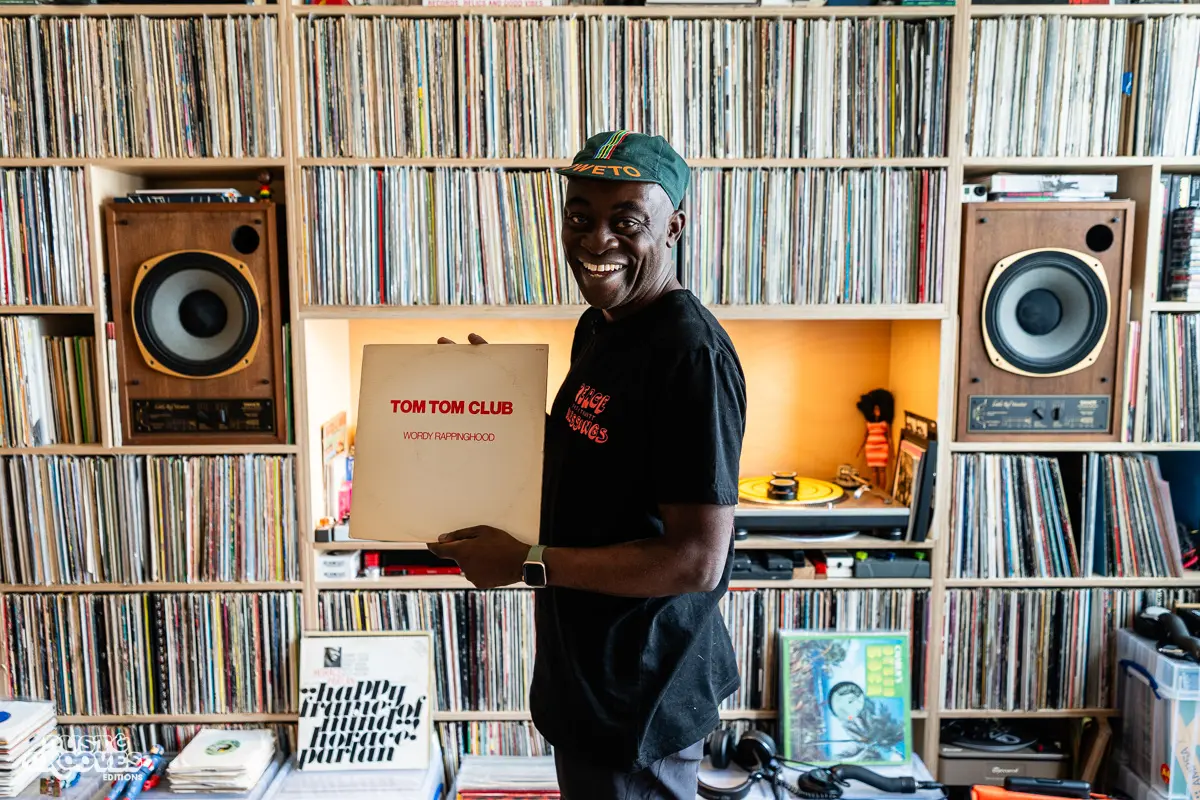
Tom Tom Club – “Wordy Rappinghood”. “There was a period in the ‘80’s when the idea of connecting dots between musical genres really became a thing in underground clubland especially in the warehouse party circuit. You’d hear the Clash next to Schooly D next to Airto next to Fela Kuti and the floor would stay rammed with dancers.
Charlie Dark, DJ, coach, and founder of Run Dem Crew, photographed at his London apartment, with his vinyl record collection for Dust & Grooves Volume 2 book.

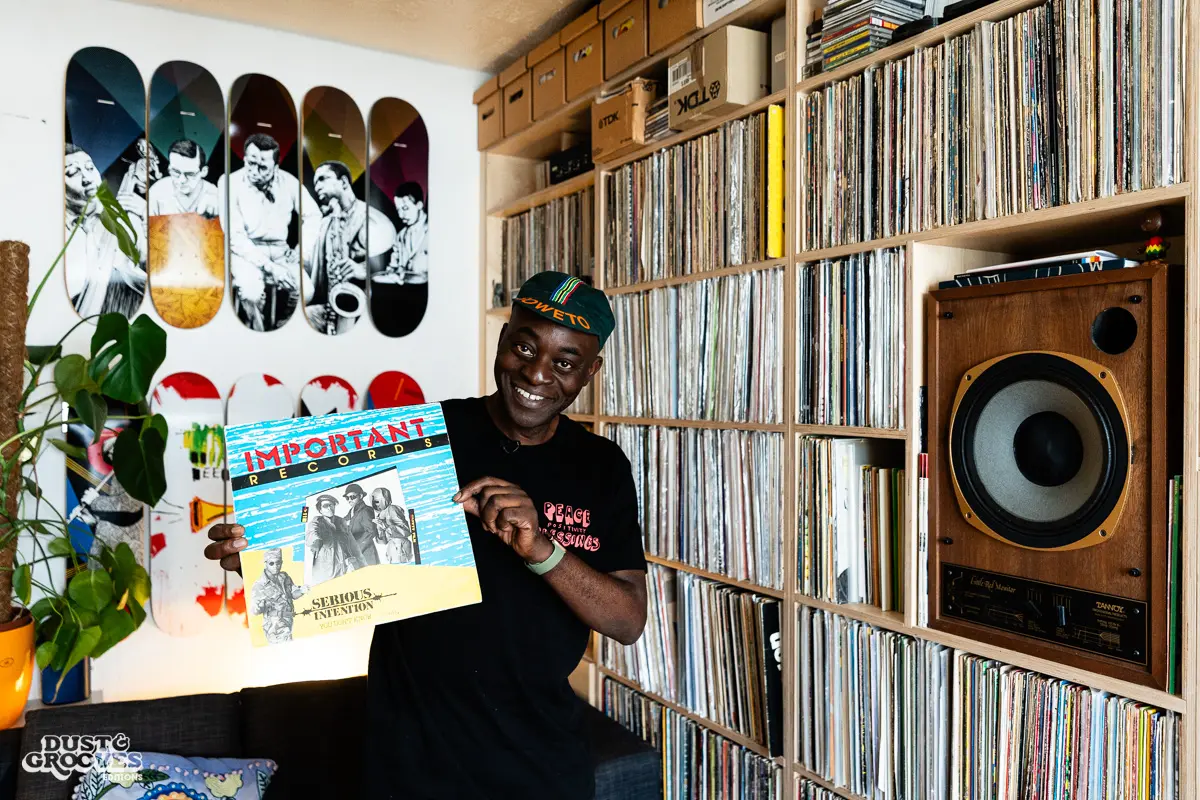
Serious Intention – “You Don’t Know (Special Mix)”. “I first heard it pumping through the speaker boxes of the MasterMind Road Show at Carnival and thus forever cemented in my soul. The great Paul Simpson on the buttons and one of the first records to really grab my attention as a teenager. Great intro tune to kick off a set, killer synths, dubbed out effects and a boss daddy bass line. If perfection comes in a musical form then this is the record of all records, an all time favorite that will forever have a place in my box.”
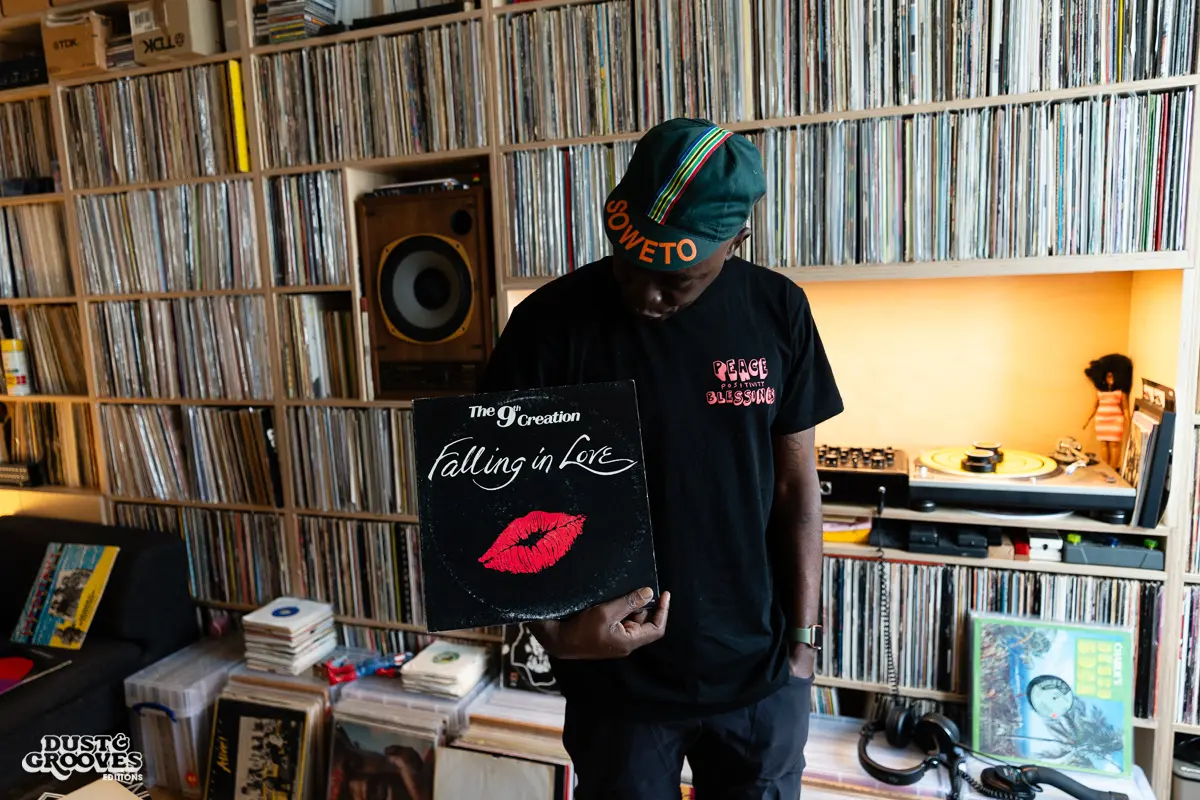
Charlie Dark, DJ, coach, and founder of Run Dem Crew, photographed at his London apartment, with his vinyl record collection for Dust & Grooves Volume 2 book.

The 9th Creation – Falling In Love. “There’s a track on this album called ‘Bubble Gum’ which starts with one of my favorite drum breaks of all time. I love the texture, the melody and the whole feel of this recording. It’s one of my most treasured records and it took me a long time to find a clean copy. My first copy got lost in a house move; I was mourning its departure for years and then I randomly found one recently at a record fair at a festival I was playing at. I love this record to bits and it’s one of my favorite records to chop up in my MPC.”
What’s your mindset when you start a DJ set?

I always think when you’re starting a mix, you need a reset. I always tell younger DJs not to be too concerned about dovetailing from what the previous DJ was playing, and don’t be afraid to make people walk off of the floor. A strong introduction is important, whatever the result.  

What would be a good example of a record you might start a set with that might have that effect?

“Milte Hi Ankhen” also known as “Bird In Hand” by Sam Carty on Black Art Records is a particularly weird and wonderful enough record to warrant starting a set with. It was one of those random records that I saw in a shop and I just liked the color combination of the label. I think that if your design aesthetic code is strong, then that’s going to be reflected in the music. And so when I saw this was a Black Art release, with that particular combination, I just thought it was gonna be interesting, but it definitely wasn’t what I expected it to be. 

And what would be an essential record that never leaves your box?

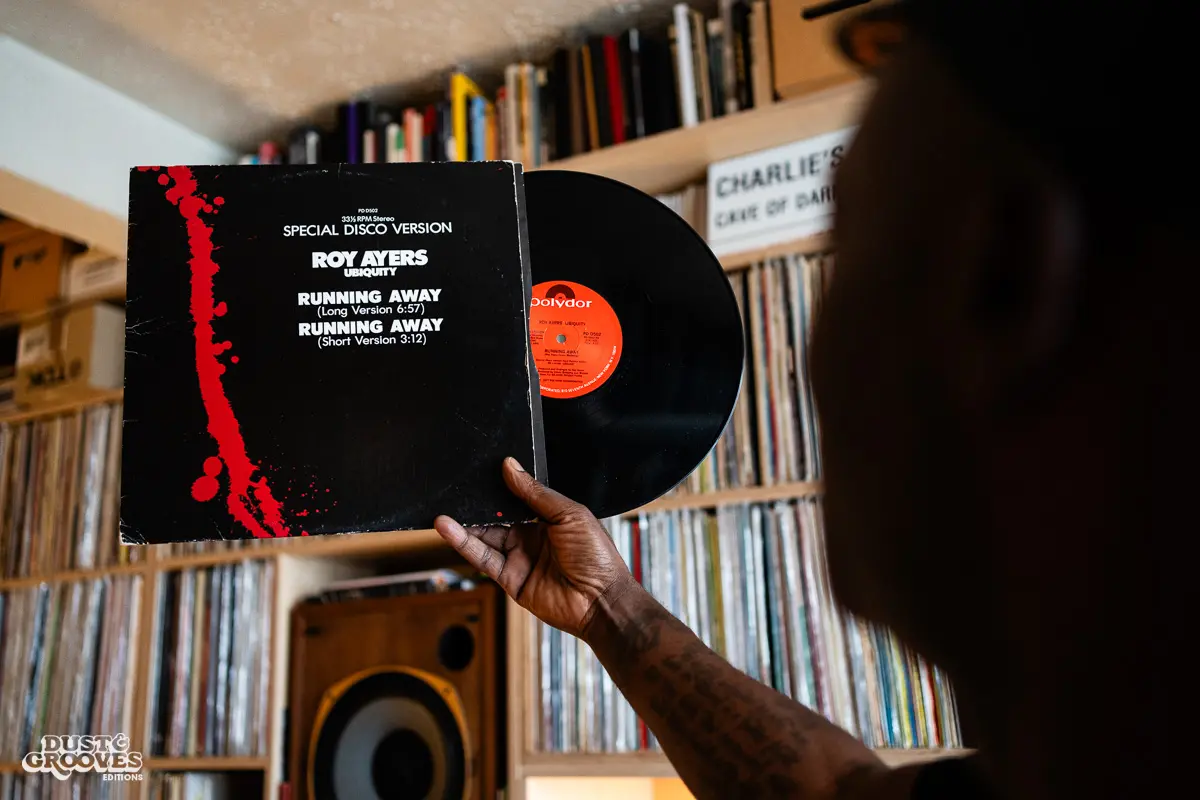
“Running Away” by Roy Ayers. I would describe this as essential foundation music. These days you meet a lot of people, especially young collectors, who have every super rare, obscure private press record that you could ever want. When you ask them about a foundation record, they just look at you blankly.

Charlie Dark, DJ, coach, and founder of Run Dem Crew, photographed at his London apartment, with his vinyl record collection for Dust & Grooves Volume 2 book.

Roy Ayers – “Running Away”. “I would describe this as essential foundation music. These days you meet a lot of people, especially young collectors, who have every super rare, obscure private press record that you could ever want. When you ask them about a foundation record, they just look at you blankly. It’s the foundation records that help cement the rare records together in a set. They are moments for people to come up for air.”
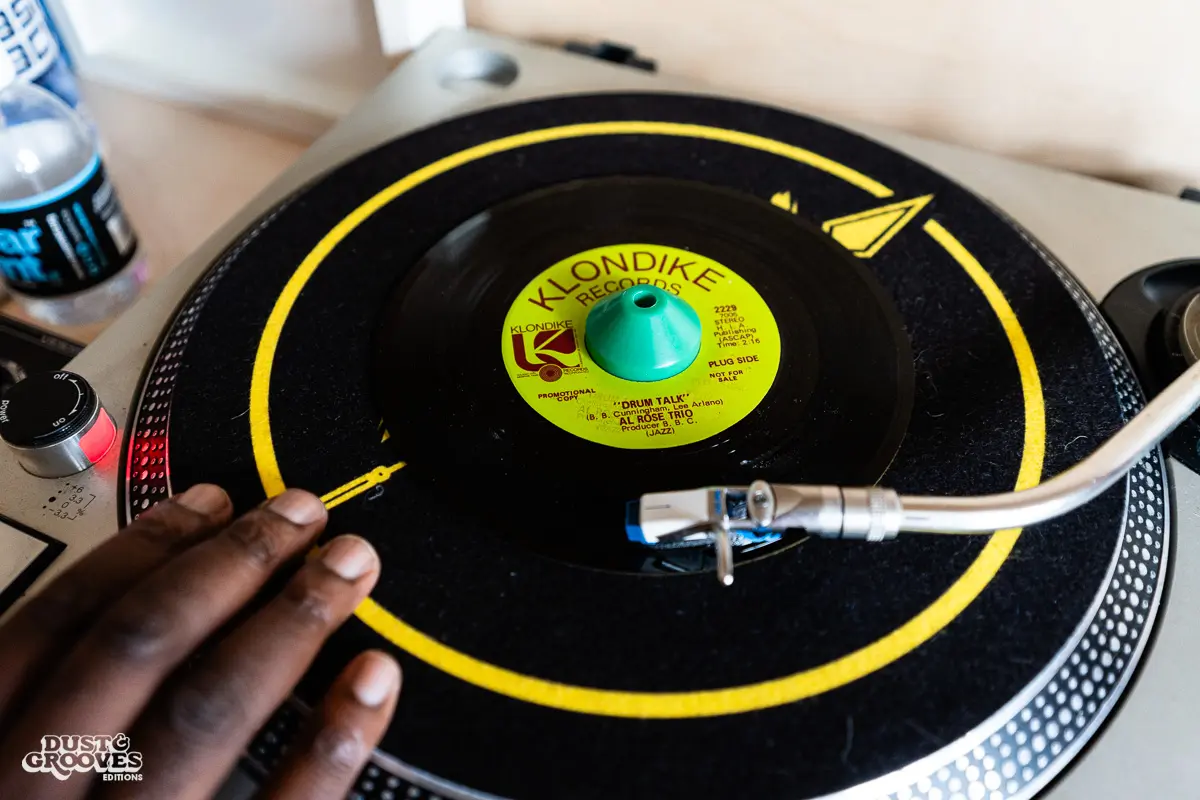
Charlie Dark, DJ, coach, and founder of Run Dem Crew, photographed at his London apartment, with his vinyl record collection for Dust & Grooves Volume 2 book.

Al Rose Trio – “Drum Talk”. “This is what I call a WTF record. Whenever I play it someone will always come up and ask ‘What the…is that?’ It’s a mad percussive raw drum record with an infectious driving baseline and a gigantic climatic ending. A perfect transition record and great for waking up the dance floor. One of those accidental finds where the combination of colors on the label caught my eye. Rookie tip – interesting labels or sleeves often contain hidden heat.”
“Running Away” is always guaranteed a warm reception on the dance floor, but what’s the one song that has really surprised you by the reaction it got from the crowd?

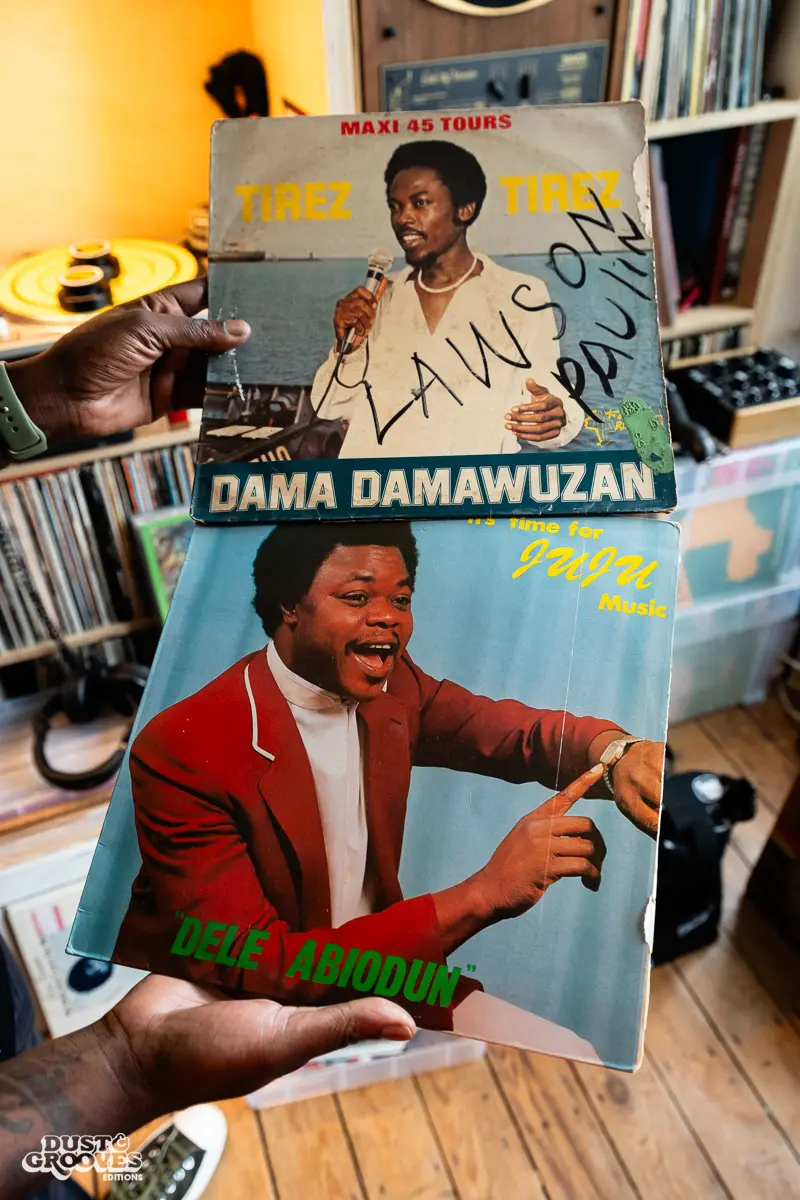
“It’s Time For Juju Music” by Dele Abiodun. For me, this had one of the best reactions to any record I’ve played publicly in the last thirty-five years. I played it at the We Out Here festival and it just went off! These kinds of records, like “Sunday Bloody Sunday” by U2, which I played as my last record at Electric Chair in Manchester, to a similar reaction, have become so special to you because of those great moments you’ve had playing them. They’re also the kind of records that trip people up on the dance floor because they’re not expecting them.

“This had one of the best reactions to any record I’ve played publicly in the last 35 years. I played it at the We Out Here festival and it just went off! These kinds of records become so special to you because of those great moments you’ve had playing them. They’re the kind of records that trip people up on the dance floor - they’re not expecting them.”

Is there a genre of music that you’re championing that you think deserves to be heard by more people?

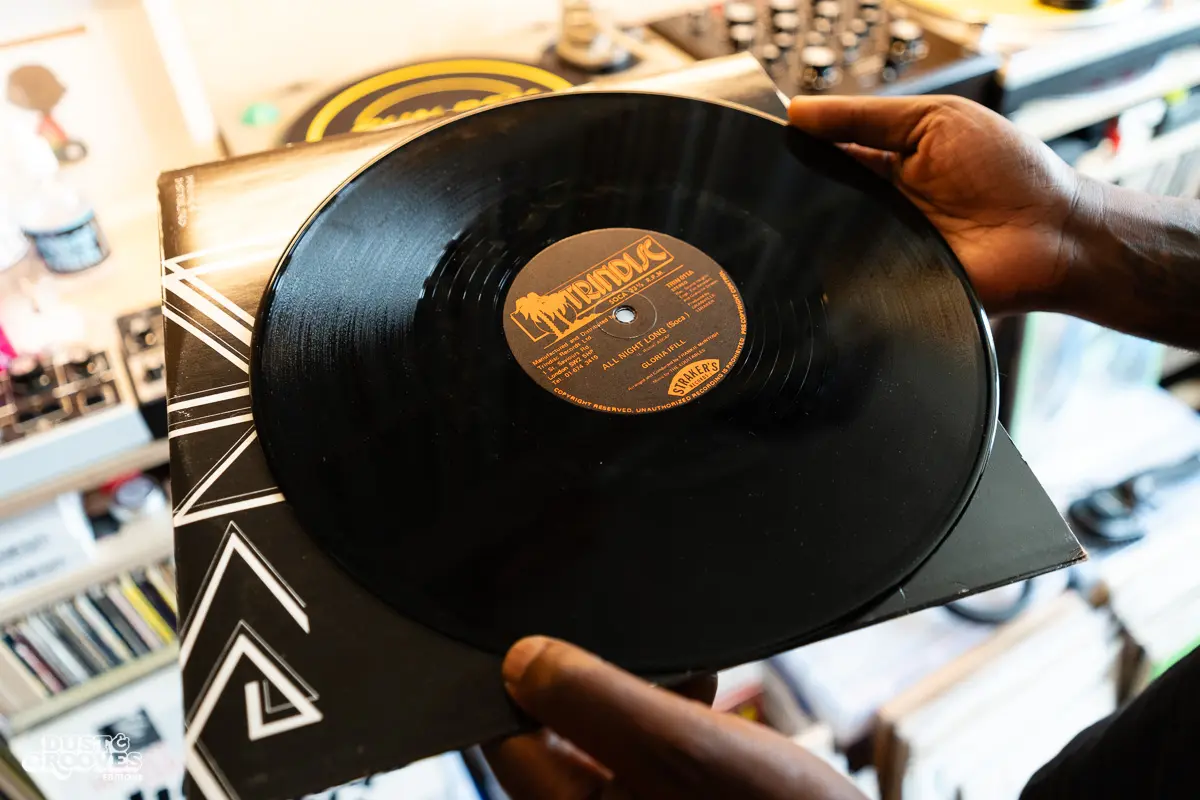
Soca, it’s the often derided music that you only usually hear once a year at the Notting Hill carnival and you can always find it in the bargain bin. But you have to listen to a tremendous amount of rubbish to find the gems. I’m passionate about collecting Soca music and have crates and crates of it. It’s the perfect music for people to listen to post-pandemic, uplifting, happy music!

Charlie Dark, DJ, coach, and founder of Run Dem Crew, photographed at his London apartment, with his vinyl record collection for Dust & Grooves Volume 2 book.

Gloria Ifill And The Equitables – “All Night Long”. “I’m a big Soca collector, but you have to listen to so many average records before you find the gold. Initially it was the label design that drew me to the record and I can distinctly remember touching the needle down and immediately smiling. I love a good cover version, especially an alternative version of a well known sing-a-long song and this never fails to lift the energy on the dance floor and have people asking for the artist. Whenever I see a cheap copy I always pick it up as I’m always giving it away. A secret weapon for sure.”
Charlie Dark, DJ, coach, and founder of Run Dem Crew, photographed at his London apartment, with his vinyl record collection for Dust & Grooves Volume 2 book.

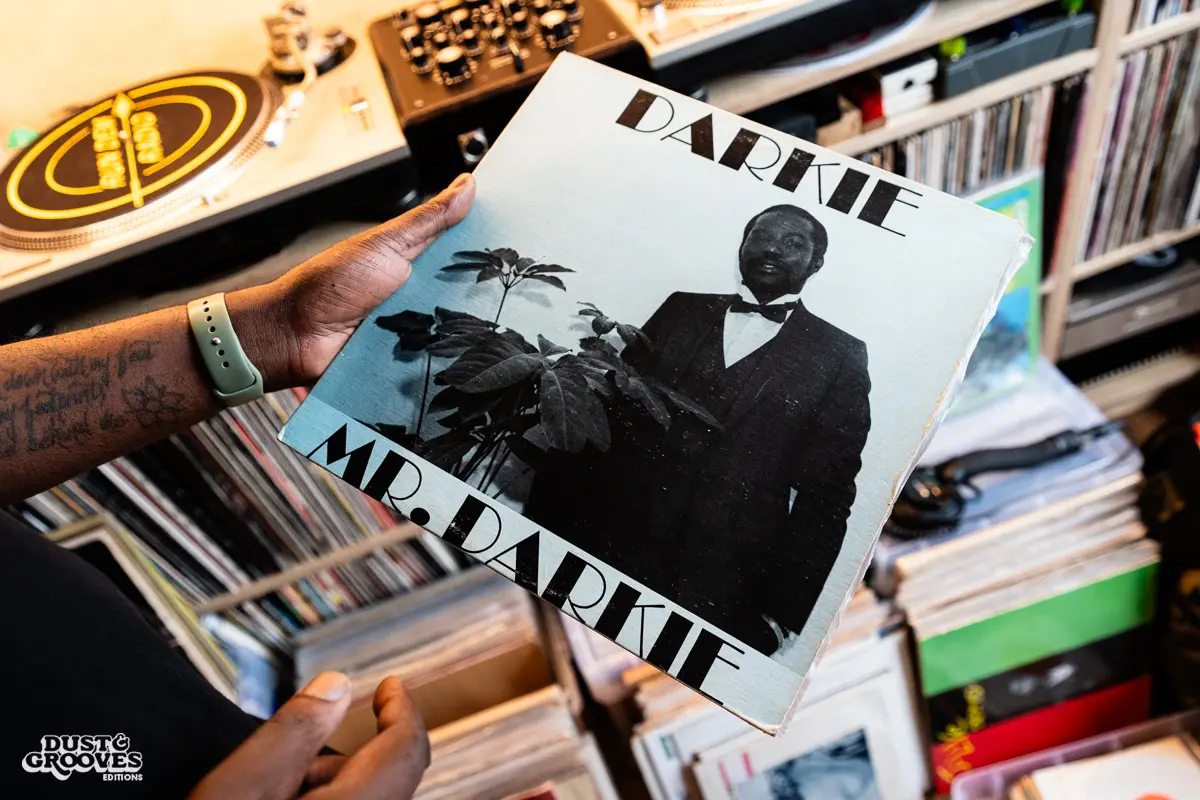
Darkie – “Mr Darkie”. “During the pandemic I got more deeply into collecting Soca and Calypso records and this is one of the gems that I discovered that has since become a bit of a theme song in my sets. Soca gets a bad name in the collecting world but there are so many bangers hidden amongst the crates and it’s generally always cheap and plentiful. Guaranteed to lift the mood of the room and a good way to flex your mixing skills when you blend in a house tune afterwards.”
Charlie Dark, DJ, coach, and founder of Run Dem Crew, photographed at his London apartment, with his vinyl record collection for Dust & Grooves Volume 2 book.

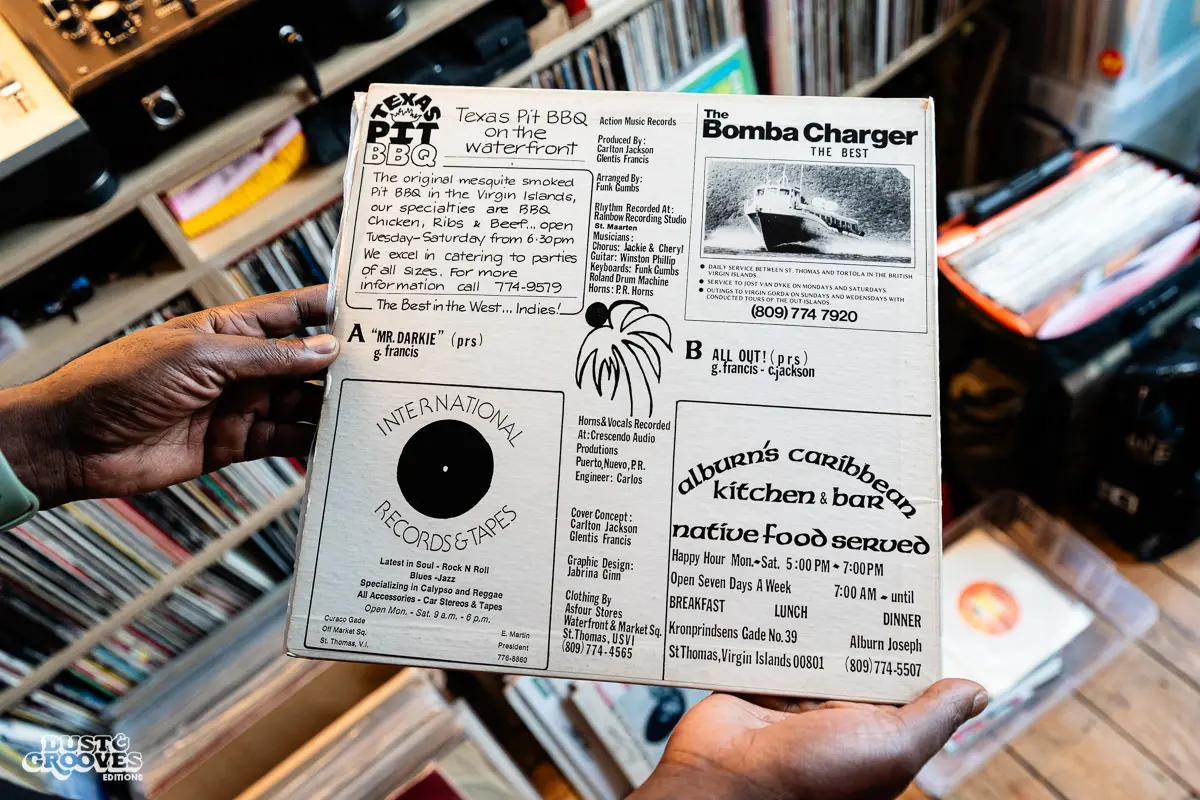
Darkie – “Mr Darkie”. “I love the inserts and back covers you find on Soca and Calypso records and they give a great context to the music contained within.”
Where does reggae sit in Charlie Dark’s record box?

I’ve got a big reggae collection. At one point I had 10,000 dancehall 7-inches. When dancehall became unfashionable, I started to check it, because I always check music when it’s being ignored and no one’s really after it. 

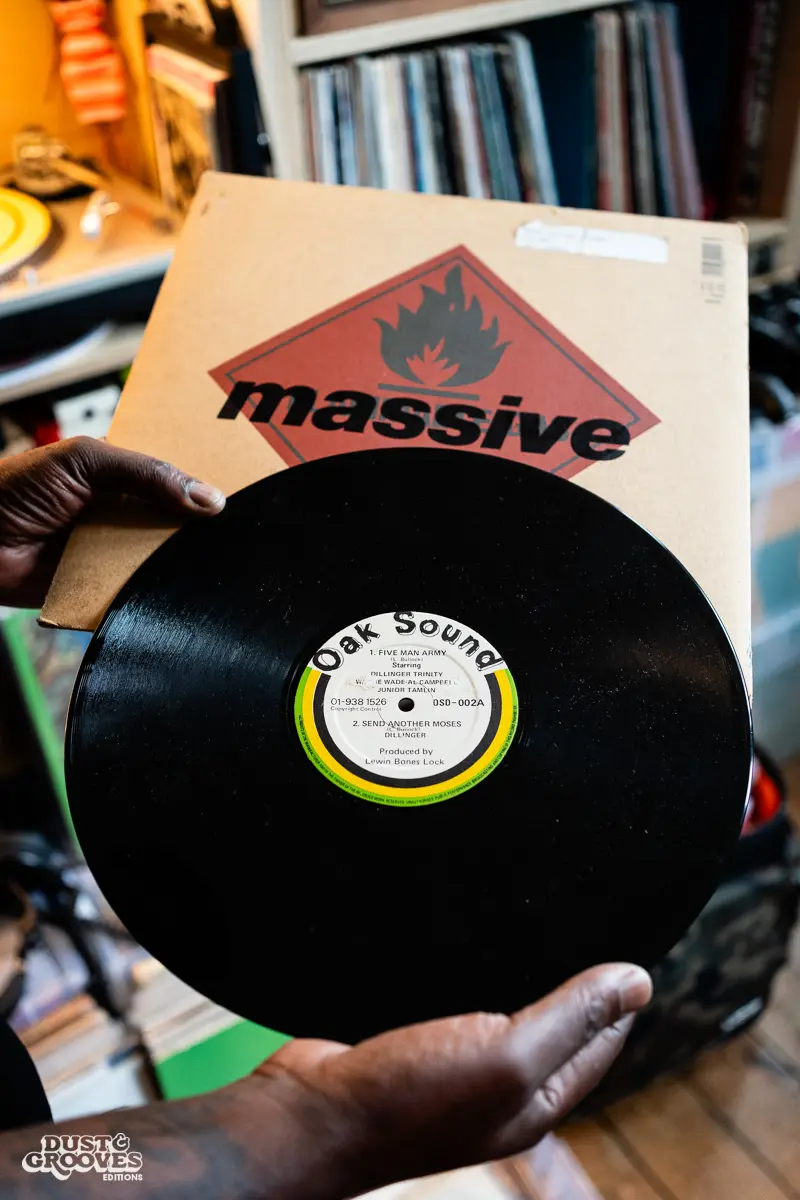
A key record for me is “Five Man Army” by Dillinger with Trinity, Al Campbell, Wayne Wade, and Junior Tamlins on Oak Tree Records, which is one of my favorite reggae labels. It was famously sampled by Massive Attack on the track of the same name. It was one of those mythical records, but as soon as it was sampled, everyone, including myself, started chasing it. 

When I was working at Mo’ Wax, a guy rang the office looking for a tune from the label that we had boxes and boxes of in the store room. I asked him if he wanted to swap it for something and if he had a copy of “Five Man Army.” He did, and he drove down from Milton Keynes and we did the swap on the stairs! 

Dillinger with Trinity, Al Campbell, Wayne Wade and Junior Tamlins – “Five Man Army”. “A key record for me on one of my favorite reggae labels. It was famously sampled by Massive Attack on the track of the same name. It was one of those mythical records, but as soon as it was sampled, everyone, including myself, started chasing it.

Charlie Dark, DJ, coach, and founder of Run Dem Crew, photographed at his London apartment, with his vinyl record collection for Dust & Grooves Volume 2 book.

Finally, tell us about one record that’s key in your journey as a record collector.

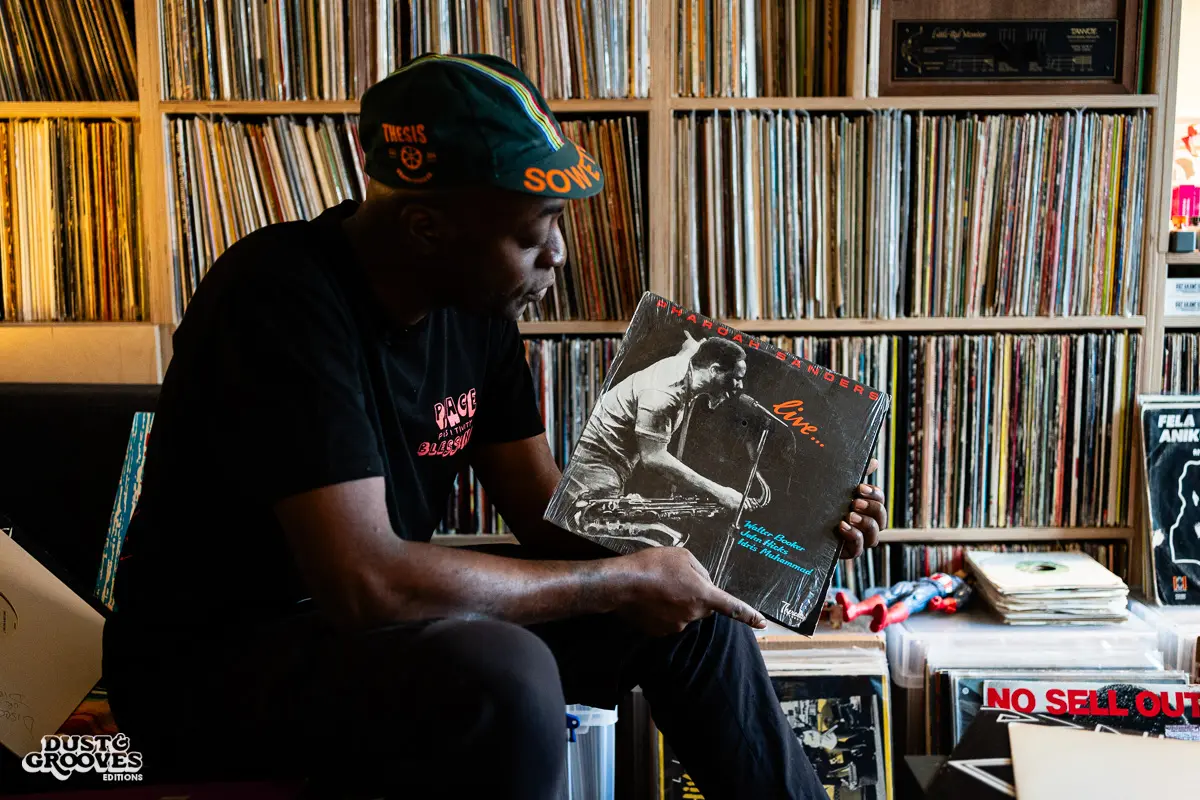
There are certain records that I’ve collected over the years that have been really pivotal in my life, and You’ve Got To Have Freedom by Pharaoh Sanders is one of those. I first heard it on holiday as a teenager and just knew it as the freedom song. One of the most memorable times of playing it was at the Winter Music Conference in Miami. It was in 2003, and the second Gulf War had just broken out that day. Most people in the dance had only just become aware of that, and I felt it was my responsibility to react from the DJ booth, so I made it my last record of the night. It was a very emotional moment. Now, somewhat sadly, I usually have cause to play that record at least once a year. Peace, positivity, and blessings seem to be needed more than ever.

Charlie Dark, DJ, coach, and founder of Run Dem Crew, photographed at his London apartment, with his vinyl record collection for Dust & Grooves Volume 2 book.

Pharoah Sanders – “You’ve Got To Have Freedom”. “I first heard it on holiday as a teenager and just knew it as ‘the freedom song’. One of the most memorable times of playing it was at the Winter Music Conference in Miami. It was in 2003, and the Second Gulf War had just broken out that day. Most people in the dance had only just become aware of that, and I felt it was my responsibility to react from the DJ booth, so I made it my last record of the night. It was a very emotional moment.”
Poet, DJ, community builder, and founder of Run Dem Crew, Charlie Dark has spent decades shaping London’s cultural landscape. From his early days collecting records from his mother’s Apollo-inspired collection to forming Attica Blues on Mo’ Wax, his journey bridges music, identity, and movement. Through his legendary Blacktronika parties and Run Dem Crew collective, Charlie has built spaces that celebrate connection, creativity, and the power of sound. Today, he continues to inspire a new generation of listeners with his message of peace, positivity, and blessings.
Instagram
 

Leave a Reply

Your email address will not be published. Required fields are marked *