
KEVIN COLE
A Relentless Quest
BY DAN EPSTEIN
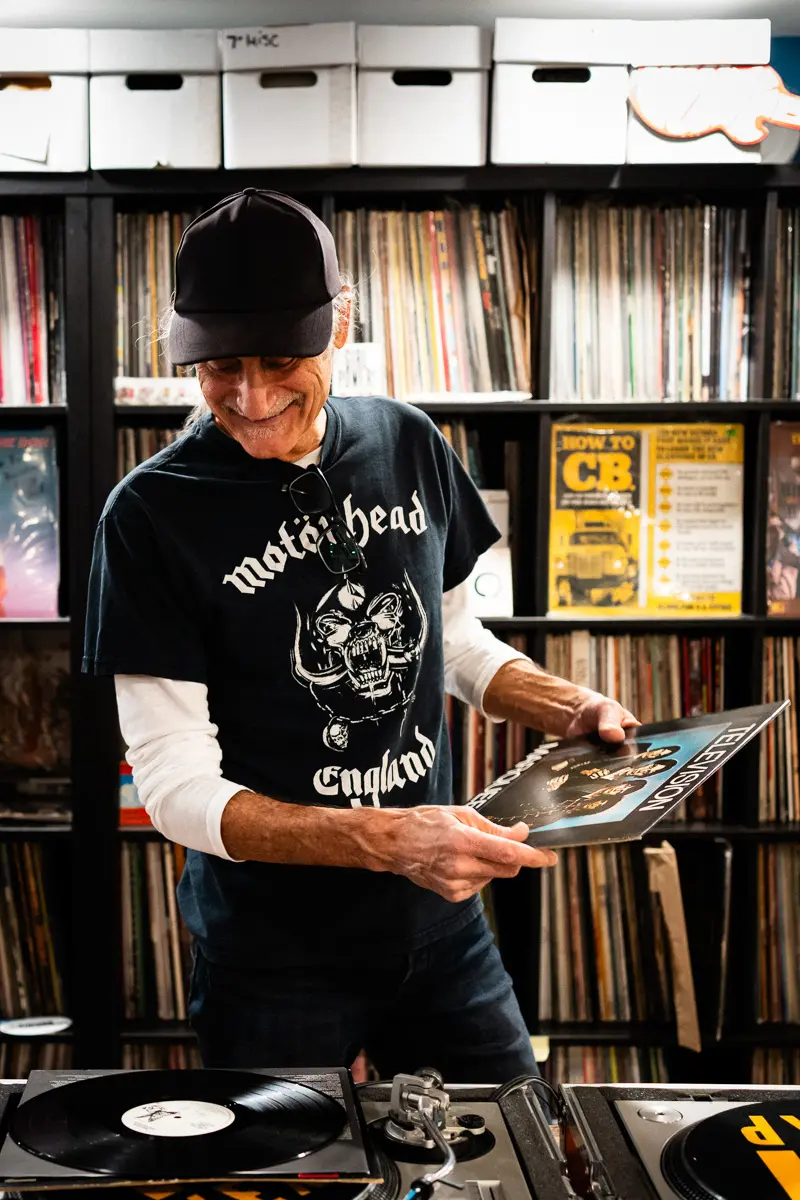
“The magic of radio and the magic of music combined was always very powerful for me,” says Kevin Cole, who has been deeply involved in both over the last six decades, first as a fan and musician, and then as a record store clerk and radio and club DJ. Since 1999, Cole has been a fixture on Seattle’s KEXP, where he served as Director of Programming/Chief Content Officer for 18 years, as well as one of the station’s best-loved disc jockeys.
But before moving to the Jet City in the late-’90s, Cole was a prominent figure on the Twin Cities music scene. On just about any night from the late seventies up until the early nineties, you could find him in the DJ booth at the legendary Minneapolis club First Avenue, spinning everything from punk to funk to house music.
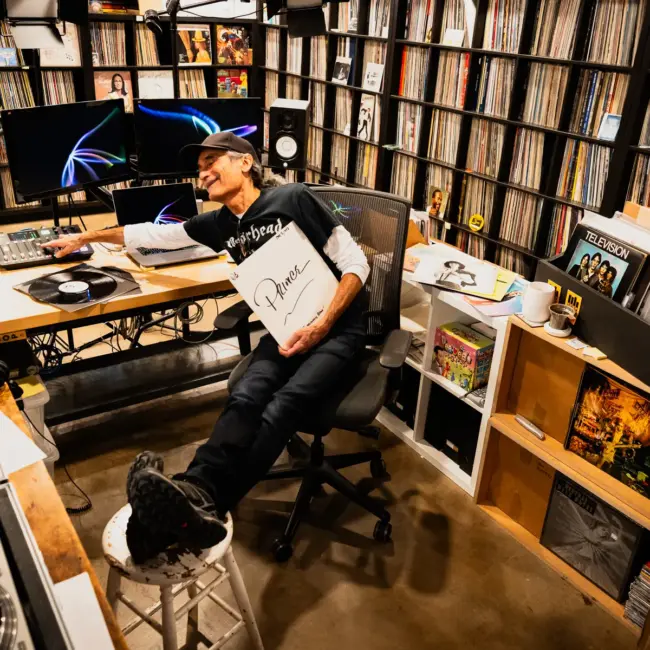
Unsurprisingly, Cole has amassed a sizable and extremely varied vinyl collection over the years. While he admits to being something of a completist when it comes to certain artists, Cole’s digging is generally motivated by the desire to continually expand his musical universe.
“Occasionally my record collecting impulses will be like, ‘Okay, this is a meaningful record to me,’” he explains. “Like, I really like Tommy Bolin as a guitar player, so I wanted to find a promo copy of Spectrum, the Billy Cobham record that he plays on. I have two or three standard versions of it, but it was like, ‘I need a promo of that, and I need a promo of his solo album Teaser.’ So I’ll go deep on certain things that mean a lot to me.
But mostly, my collecting is driven by an obsession to find great new music I love, that I can then share with others. And I feel fortunate that I’ve been able to do that through radio, which is a magical medium; the journey that you can put together, the narrative you can create through sequencing and mixing, is something that never gets old to me. There’s always new music, and there’s always a new way to share new music in the context of the music that inspired it. As Afrika Bambaataa said, ‘I’m always looking for the perfect beat—and the perfect mix, and the perfect segue, and the perfect show.’ It’s an ongoing, super-fun thing.”
“There's always new music, and there's always a new way to share new music in the context of the music that inspired it. As Afrika Bambaataa said, I’m always looking for the perfect beat—and the perfect mix, and the perfect segue, and the perfect show.”
—Kevin Cole
When did music really start making an impression on you?
Man, for me, it was back as early as I can remember. I just somehow gravitated to it; it made me feel good. I loved radio—and for me at my age, in the ‘60s, it was a really great time, obviously, for music and for radio. It was super exciting, and I just kind of gravitated towards things related to that. I was in some garage rock bands, and when I was in sixth grade and seventh grade I started a lighting company to light bands playing at the Teen Center; you know, just to get involved and be around it.
Do you remember your first record?
Yeah, it was The Cyrkle, Red Rubber Ball, which I still really love. And then I had a pretty good streak in 1966-67, because I got the Dylan records Freewheelin’ and The Times They Are A-Changin’—those had come out earlier—Blonde On Blonde and Highway 61 Revisited, along with The Who Sell Out and a bunch of Kinks records. One of my all-time faves, still to this day: the Jimi Hendrix record Axis: Bold As Love. I’d sit in my bedroom and just look at that Hendrix cover forever.
You DJed at the legendary Minneapolis club First Avenue at a time when the Twin Cities music scene was really coming into its own. What was that experience like?
To continue reading this interview we humbly ask you to consider supporting Dust & Grooves by becoming a paying premium member.
I started at First Ave. around 1978, when it was still called Uncle Sam’s; it then changed to Sam’s, and then First Avenue. I was there for 14 years, and it became my musical outlet because it was a very open palette for curation and programming. The Friday and Saturday dance nights were kind of the bread and butter, but it was always an interesting, eclectic mix of music. I think part of the reason the club had such incredible longevity is it didn’t tie itself to any given trend. But it was crazy; we’d play like, 20 minutes of dance rock, and then 20 minutes of disco, and then 20 minutes of funk; it was all over the place, but that was pretty much in alignment with my musical interests. The club also did shows three or four nights a week. Everybody played there: the Ramones, Prince, Defunkt, U2, REM. The first time REM played there, I mixed their sound. And then the club opened this tiny room called the Seventh Street Entry; that was a 200-capacity room, and that’s where Hüsker Dü and The Replacements would play, and all these new bands.
For me, it was amazing, because there was always something going on. Initially, there were two resident DJs, Roy Freedom and myself, then PD Spinlove, and the main room was open every night of the week, and the Entry was open every night except Sundays. So Roy and I would alternate between the two rooms, which meant we each had one day and night off every two weeks [laughs]. But it was so much fun! Like, one night Hüsker Dü would be playing in the Entry, and I’d be helping Terry Katzman do the sound, and then DJing; and then the next night, I’d be DJing in the main room with 1500 people, trying to play an eclectic mix of music that people could dance to and would love, but at the same time trying to work in new music that they didn’t know. It totally fed into my musical obsession and my workaholism and FOMO. Seriously, you never knew what was going to happen there, and we were booking a lot of bands that were making their first appearance in the Twin Cities. So it was a lot of rich new experiences that you didn’t want to miss.

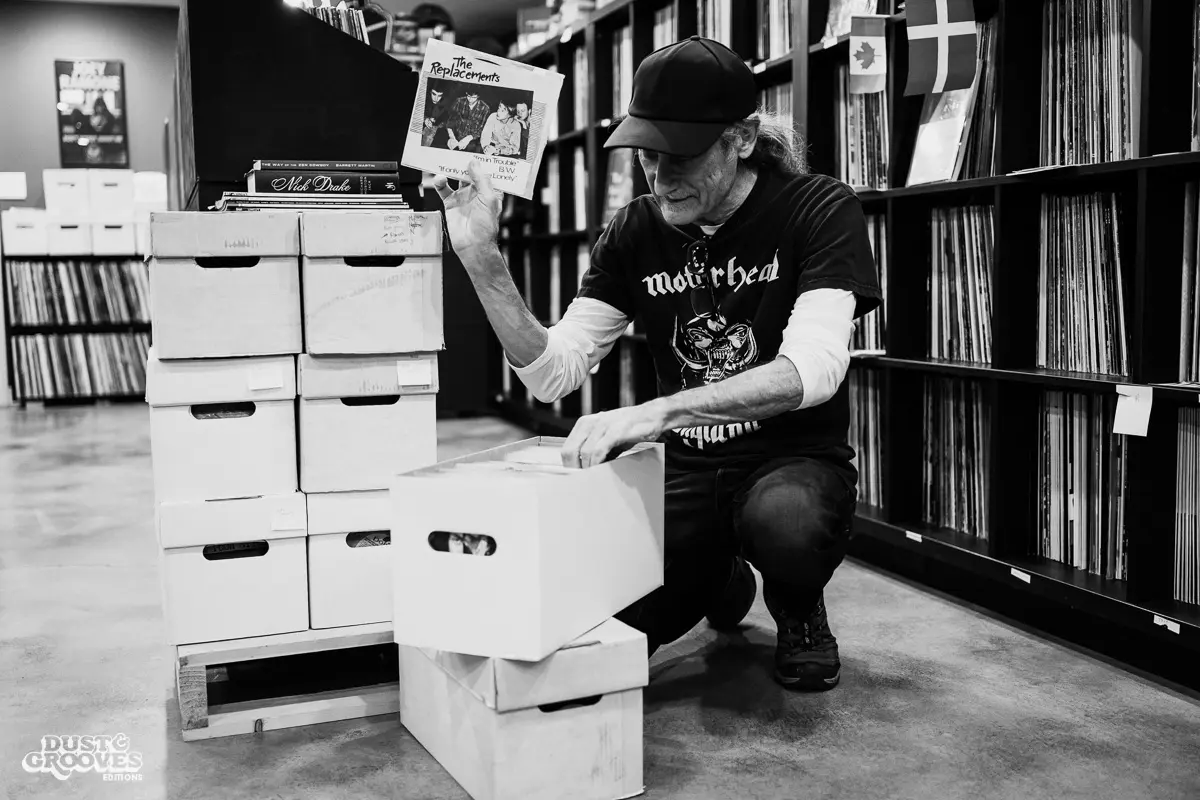
The Replacements – “I’m in Trouble / If Only You Were Lonely.” “The very first Replacements single, released August 7, 1981, on the heroic, independent, Minneapolis-based Twin/Tone Records. Greatness right out of the gate! The A-side is classic Replacements ramshackle punk rock. The B-side, the country-tinged folk song ‘If Only You Were Lonely,’ showcased a different, more vulnerable and, at the same time, humorous side of frontman Paul Westerberg—the brilliant, sensitive side.”
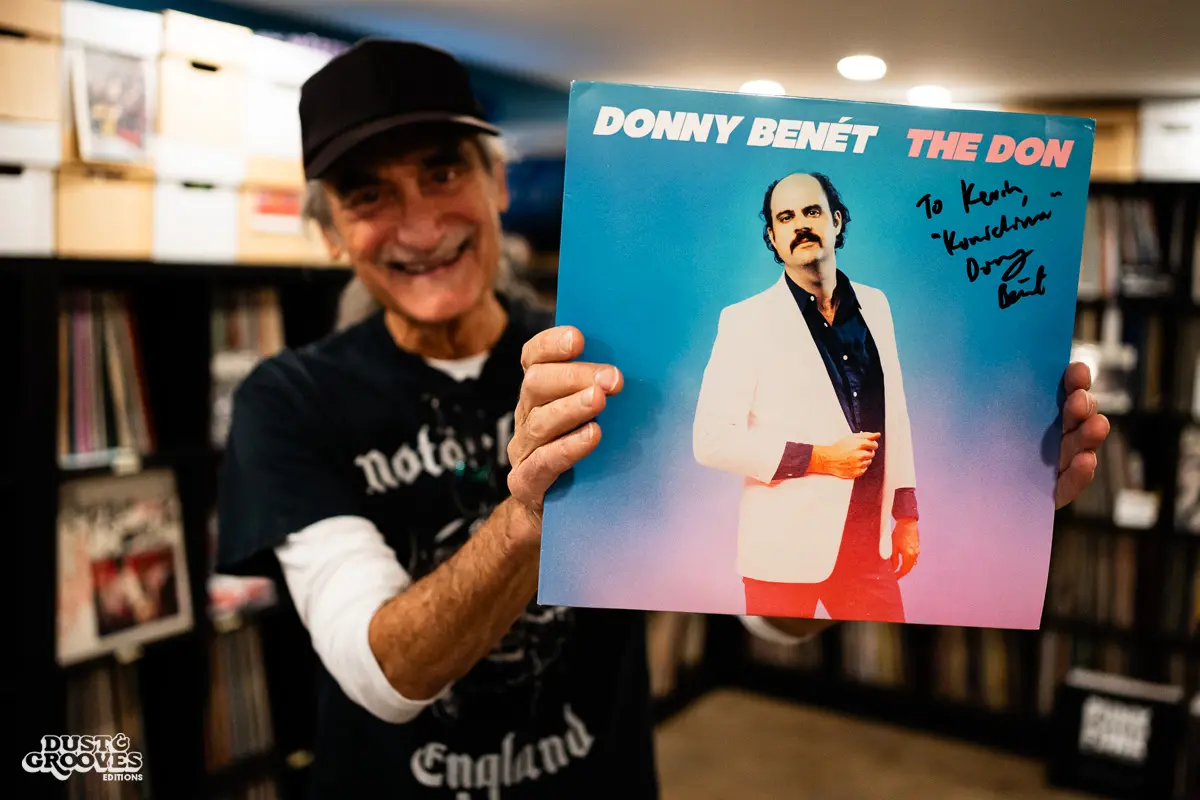
Donny Benét – The Don. “‘WTF. What is this?’ was my first thought when I stumbled upon Donny Benét doing a solo in-store at Balades Sonores record store in Paris. I had never heard of him and was dumbfounded. Is this karaoke? Performance art? A flashback to ‘80s Miami Vice? Is he real? Oh, Donny’s real alright, and the dude is a frickin’ genius. I’ve had the honor of hosting a couple of KEXP live sessions with The Don that were phenomenal. He’s a wicked bass player, and the YouTube comments are pure gold. ‘Donny Benét is the 21st-century music industry’s Viagra overdose.’ Legend.”
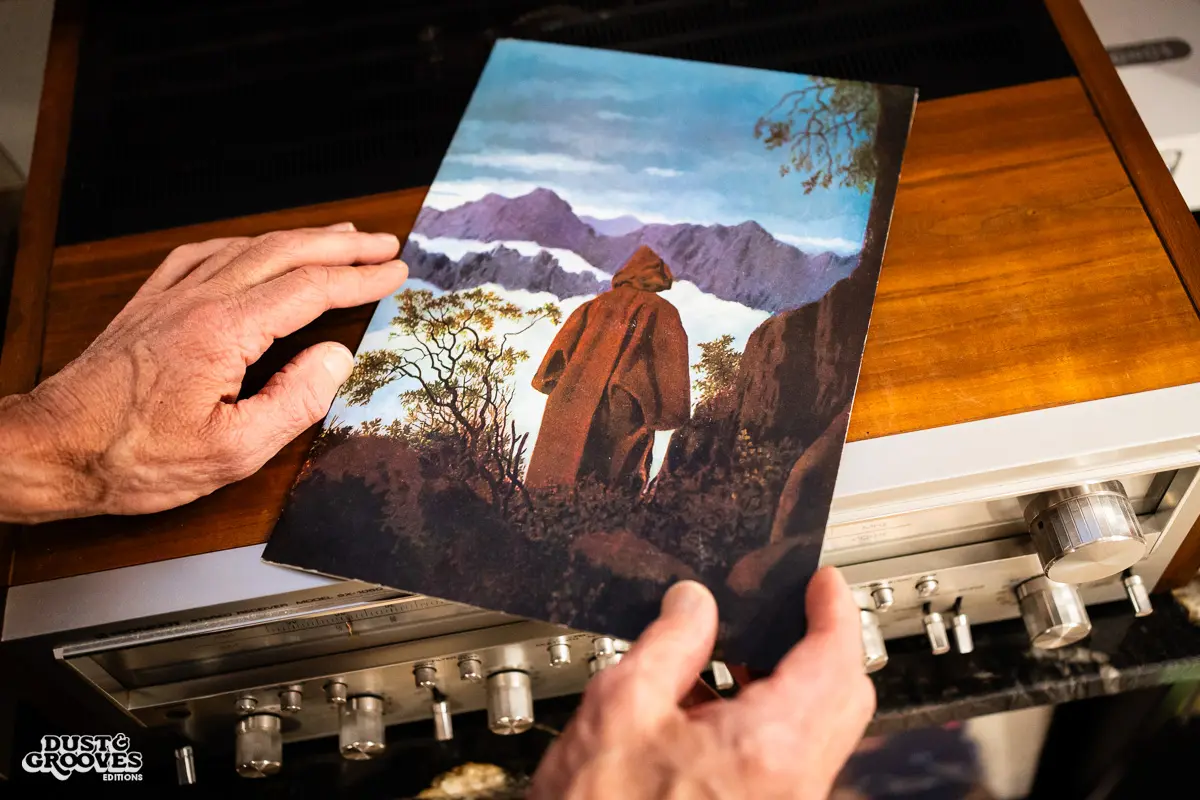
And you were also working at a record store at the same time?
Yeah, at least from about ’78 to ’82; it was called Hot Licks. It was part of a very small ma and pa chain; we were downtown a block away from the First Avenue club, and mostly only sold funk or punk records—and by punk, I mean new wave, indie, etc. We didn’t really carry too many straight-up mainstream records; that wasn’t the clientele. I was kind of an anglophile, so we’d bring in a lot of imported 12-inches by Duran Duran, ABC, and things like that.
“Some of my favorite records of all time are the ones that I didn't like right away.”
You’re a big Joy Division collector. When did you first get into that band?
Well, it’s kind of embarrassing, because Joy Division are now my favorite band of all time. But when Unknown Pleasures, the first Joy Division album record, came out, I’d heard so much about it in advance; and then when it finally showed up at my store, I was disappointed on first listen—I thought it was kind of muffled, and that it kind of sounded like The Doors. But some of my favorite records of all time are the ones that I didn’t like right away. And that one took some work; but within like four months, maybe, I was totally converted.
Let’s talk about Licht Und Blindheit, the limited-edition Joy Division 7-inch that you have.
Yeah, that came out on that French art project label, Sordide Sentimental. They did a handful of records that were somewhat experimental and just beautifully packaged. And that was the first release of both “Atmosphere” and “Dead Souls,” which are two incredible, amazing songs. It was a super-limited package. I got it a couple of years after it was released—‘82-ish, probably—when I moved to England for a short period of time; and at that point, it was the most I’d ever spent on a record. You just never saw it in the States; we’d tried ordering it at the store, and we couldn’t get it. My record collecting is sort of interesting, in that I’m more driven by this quest to hear new music and then be able to share it with others. But there are a few bands that I’m more of a completist on, where it’s like, “Okay, Joy Division, I’ll spend 100 bucks on this single.” Which, at that time, was an insane amount of money for me; it was probably five times more than I’d ever spent on a record. The same with the An Ideal For Living EP; I found that on the same trip.

Joy Division – “Licht Und Blindheit”.
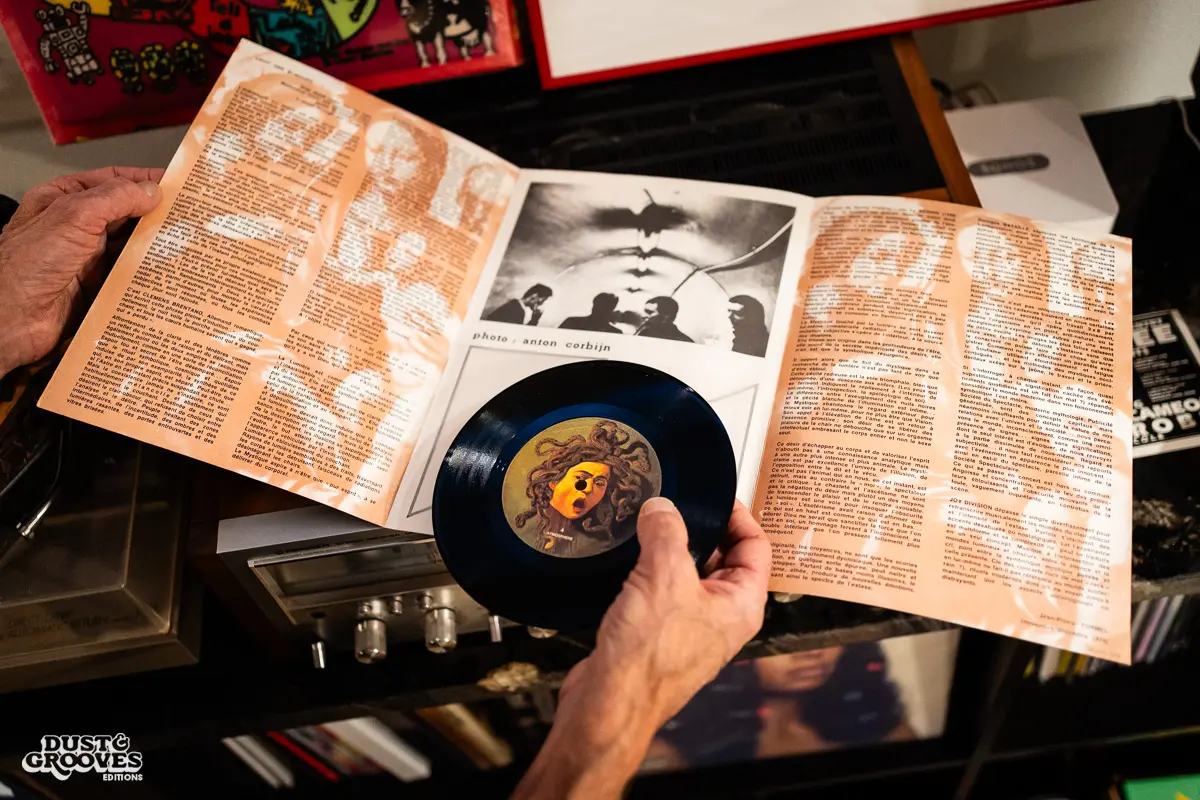
Joy Division – “Licht Und Blindheit.” “Two of Joy Division’s best songs, ‘Atmosphere’ and ‘Dead Souls,’ were originally released as a very limited, awe-inspiring package from the French label Sordide Sentimental. Both songs are stunning, as is the packaging. I bought this in England in the early 1980s and, at the time, one hundred dollars was the most I had ever spent on a record.”
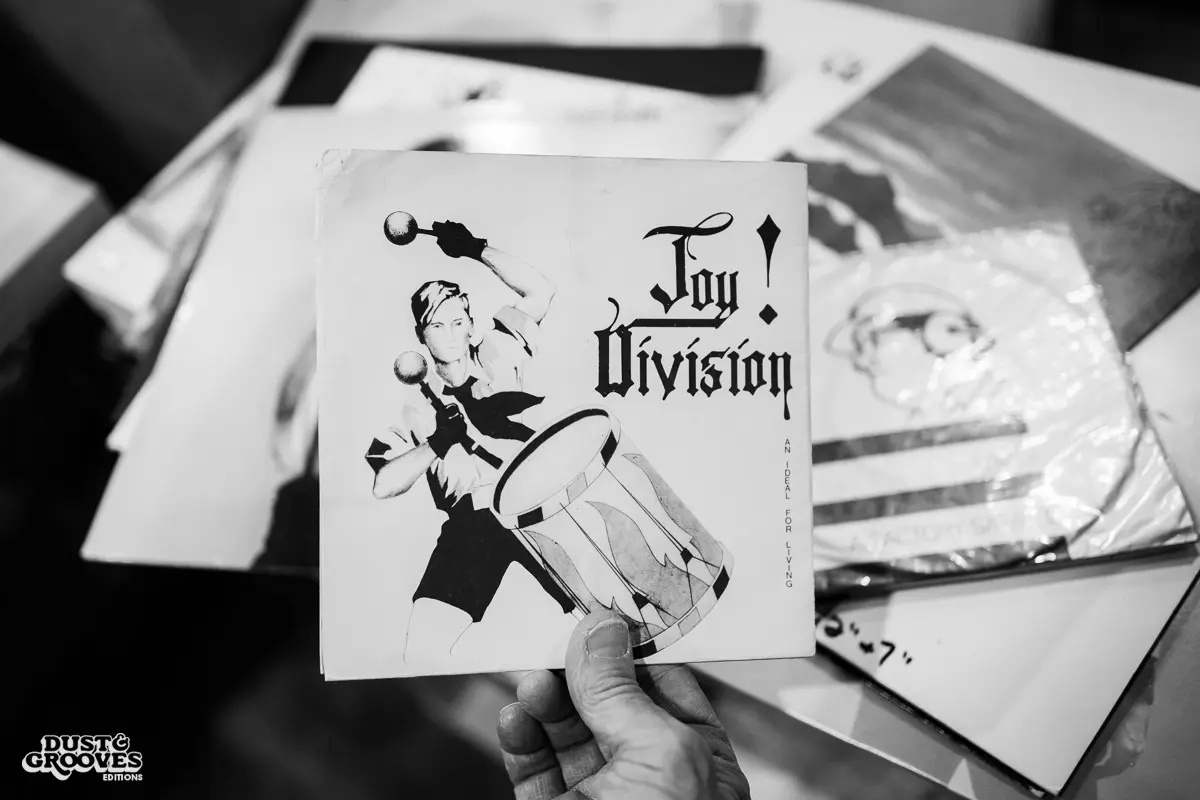
You’ve said that you feel conflicted about owning An Ideal For Living, because of the Holocaust imagery they used on the packaging.
Yeah, . It’s horrible imagery. If they were actually promoting that kind of perspective and attitude, I would not own it. But even so, I’m conflicted. An Ideal for Living was the band’s first release, and about a year later it was released as a 12” single with a different cover. I keep the original in storage, and when I listen to it, or play it, use one of the later reissues.

Joy Division – An Ideal for Living EP. “Joy Division’s controversial debut four-song EP was independently released on their own Enigma label. A remarkable band whose entire output from 1978 to 1980 was perfect. I picked this up while in England in the early ‘80s. I’m very conflicted about owning this single. Joy Division is one of my all-time favorite bands; I love them but hate the imagery on this single.”
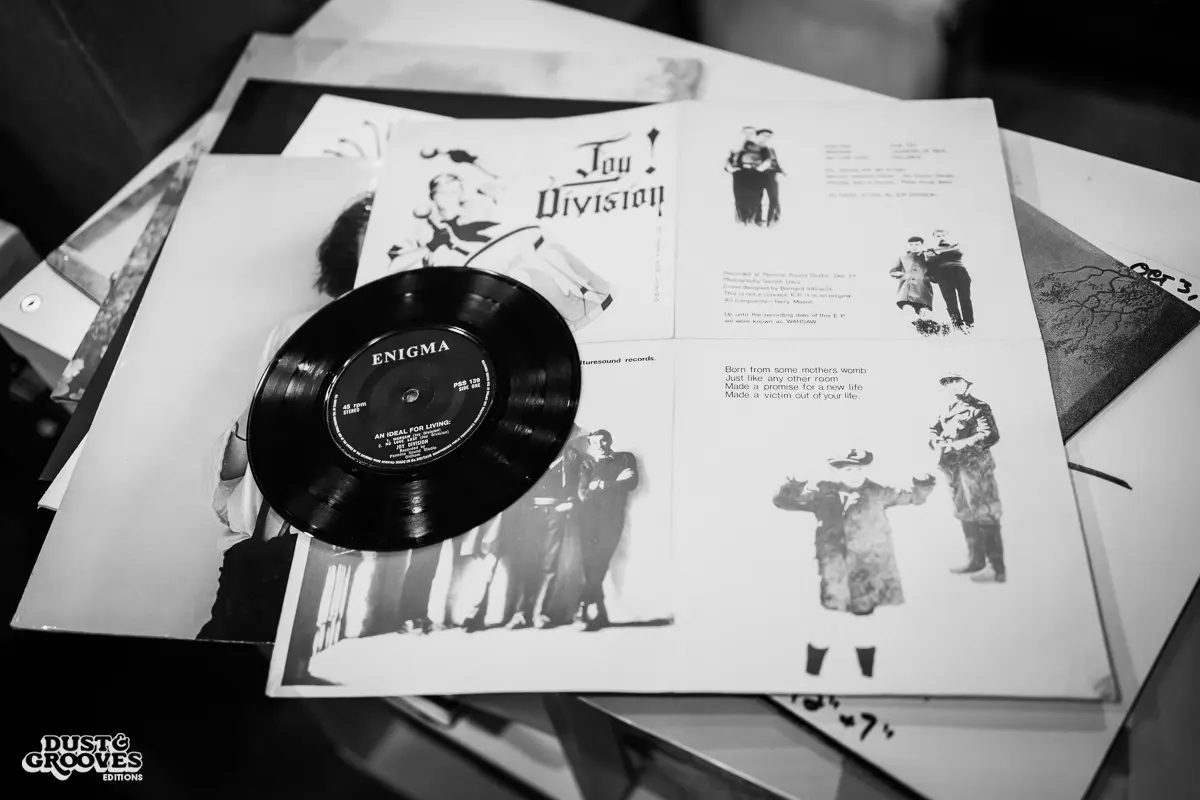
Joy Division – An Ideal for Living EP.
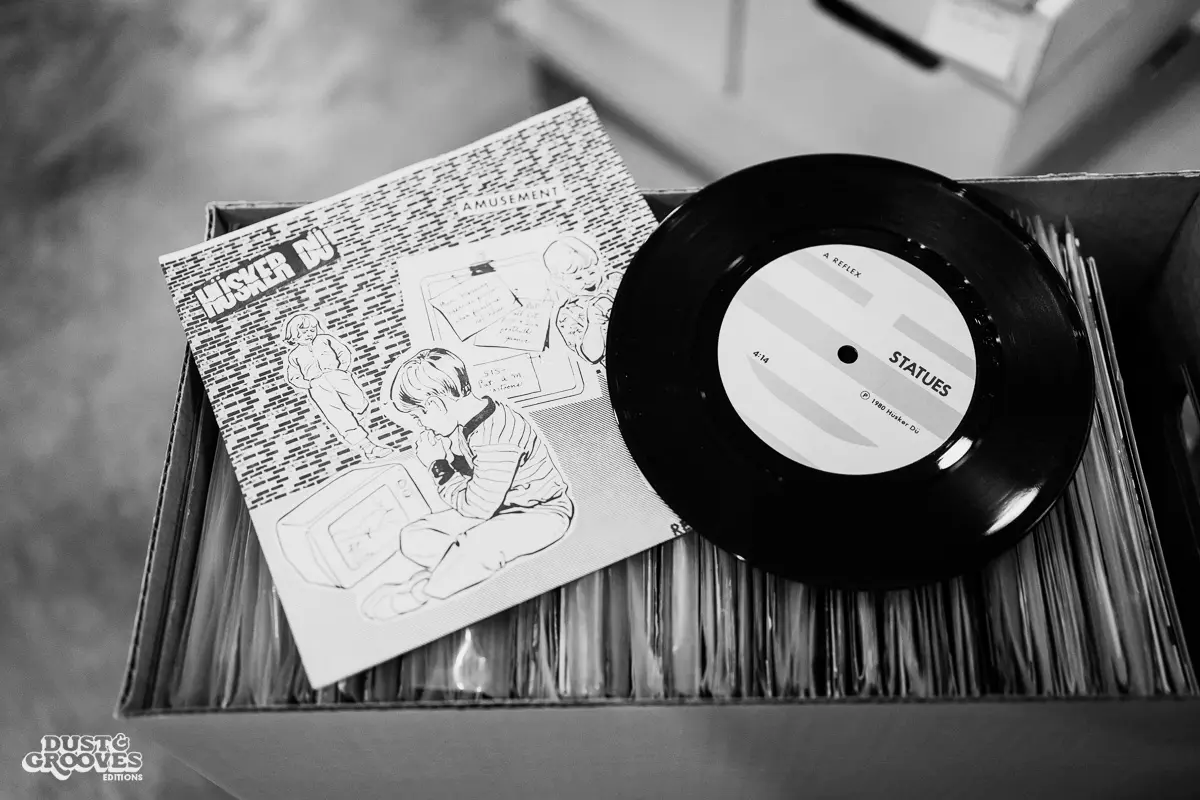
How about Hüsker Dü? I know you have their debut single, but are you as much of a completist about the rest of their catalog?
I am. That era for me was really important, because it was just kind of a pivotal time when I discovered a lot of amazing music, and the Twin Cities scene that was emerging was something I got to experience and be a part of. The Hüsker Dü record “Statues,” they probably brought in on consignment. And I remember the first REM single—Jefferson Holt brought a box in on consignment. We’d read about the band in New York Rocker, but we hadn’t ever heard ‘em, you know? So they played in The Entry, and Jefferson came into the store that day, and he’s like, “Hey, I manage REM. Do you know them?” I remember we took a box on consignment; that was kind of the model. But for me, that era was really transformative. Hüsker Dü and The Replacements, I guess I’m a completist for both of them. On Record Store Day, there’s a new Replacements live record every couple of years. I buy them all, and they’ve all been really good.

Hüsker Dü – “Statues/Amusement.” The debut single from the groundbreaking Minnesota punk trio. I was working as a DJ and soundman at First Avenue/7th Street Entry—the smaller venue attached to First Avenue in Minneapolis—in the early 1980s, and I had the opportunity to experience and work with bands in their early days as they were figuring out their sound. Hüsker Dü was one of the best. This single still has the one-dollar price tag on the plastic sleeve from the record store I worked at!
Further Adventures in Record Collecting
Dust & Grooves Vol. 2
Kevin Cole and 150 other great collectors are featured in the book Dust & Grooves Vol 2: Further Adventures in Record Collecting.
“I became what I considered at the time to be the world's biggest Prince collector.”
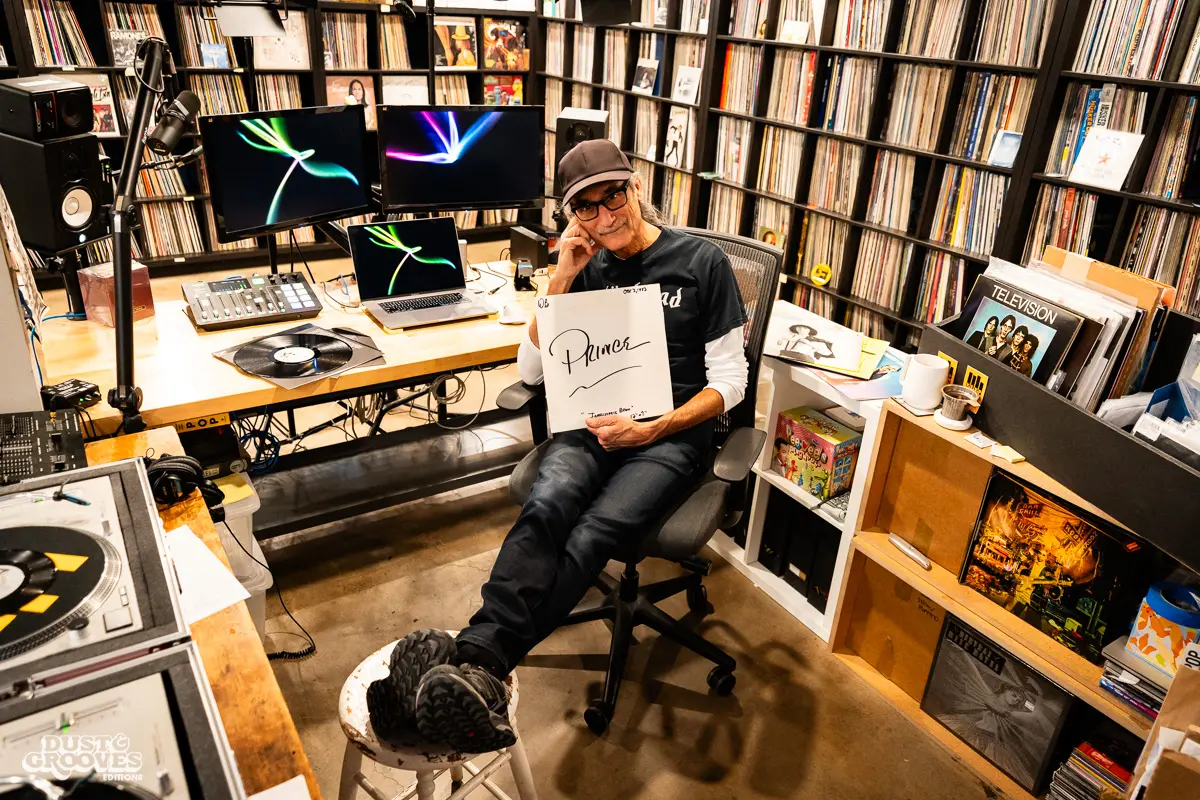
Your autographed “Irresistible Bitch” acetate has to be one of the most collectible Prince items of all time. Can you tell us the full story behind that?
Prince had a great relationship with Sam’s/First Avenue. In March 1981—we were still Sam’s at the time—we booked Prince, right after his album Dirty Mind had come out. We had like 1500 people there; it was the first time I’d seen him, and it was as good as any show I’d ever been to, and still is, but it was also a new artist I’d never seen before, which made it even more mindblowing. Because I was a DJ at the club, I could go anywhere, so I just ran down and popped into the dressing room as soon as the show was over. I’m right in Prince’s face, going, “Oh my god, that was amazing!” He was so quiet and introverted; he was actually sitting back in a chair, and I was straddling him, basically; I must have freaked the shit out of him [laughs].

Prince – “Irresistible Bitch” acetate. “Prince tapped me on the shoulder one night while I was DJing at First Avenue (music venue in Minneapolis, MN). He was holding an acetate of a brand-new song and asked if I’d play it. I tried to keep my cool, and later, after the night was over, Prince asked me what I thought of it, then gave me the acetate!”
That’s what started it for me—I became what I considered at the time to be the world’s biggest Prince collector. That show ended up starting this incredible relationship where he’d play at the club a couple times a year. Like, every time he went on tour, he’d usually do a kind of a run-through of the show at the club; then, when the tour ended, he’d just do a full-on party blowout. He’d come down to the club a lot, and for some reason, he really liked me, so I got to DJ a lot of Prince’s private parties up until around Under the Cherry Moon. And sometimes he’d come down and he’d test out new material. So one night, I’m just DJing up in the booth, and I feel somebody tap me on the shoulder. I turn around. It’s Prince. He’s holding an acetate of “Irresistible Bitch,” and he’s like, in his very quiet voice, “Will you play my record?”
The DJ booth at First Ave. was up on the mezzanine, and there was kind of a balcony around the club. Prince had his own little booth up there, and I could see him from where I was DJing. I waited an hour and a half until the moment was right, and dropped his record. Acetates are really heavy, and you can’t really slip-cue them super easy. I remember the needle was jumping, and I was kind of shaky too, but I managed to hit the mix just right, I saw his head snap back, and he immediately ran down to the middle of the dance floor and danced to his song. And when it was over, he immediately went back upstairs. I was like, “Wow, that was kind of weird, and even sort of arrogant.”
But then when I would DJ parties for him, he’d go through my records—like, he’d hip-check me out of the way and pull some records from my box, and he’d be like, “Play these.” And they were always his records or something he had worked on, like the Time or Vanity Six. Or it would be Parliament-Funkadelic or James Brown; he would be like, “Work these into the mix at some point.” But what I realized was, it wasn’t an ego thing; Prince actually was working. He wanted to hear how his music sounded on a big system in the club. He was also listening to how the mix went with the sound of what came next—how the record sounded in context with the other records. He was always thinking about that stuff.
So that particular night, the club cleared and he was still there with his bodyguard. I was like, “Well, I don’t know if he wants his acetate back or not,” so I went over to give it back to him. He was like, “What’d you think?” We had a short little conversation that was really nice, and then there was sort of a weird, awkward pause for five seconds. I was just like, “Hey, will you sign this for me?” I thought he could either reach out and take the record back or sign it. He signed it.
“Almost all my records have some kind of story or memory for me, and I think that's probably the case for most people. It might be just a memory related to listening to it; it might be where you found it and bought it; or it might be something that happened later.”
That’s a priceless record for me. Almost all my records have some kind of story or memory for me, and I think that’s probably the case for most people. It might be just a memory related to listening to it; it might be where you found it and bought it; or it might be something that happened later. For me, some of them are playing something on KEXP and getting an amazing response. But that one is very personal.
Is it even playable at this point?
Probably not. When you take it out of the sleeve, you can see that the petroleum has kind of leaked through the inner sleeve, so there’s a golden ring around it; it feels different and smells different. I played it that night and then I taped it, and I have never played it since.
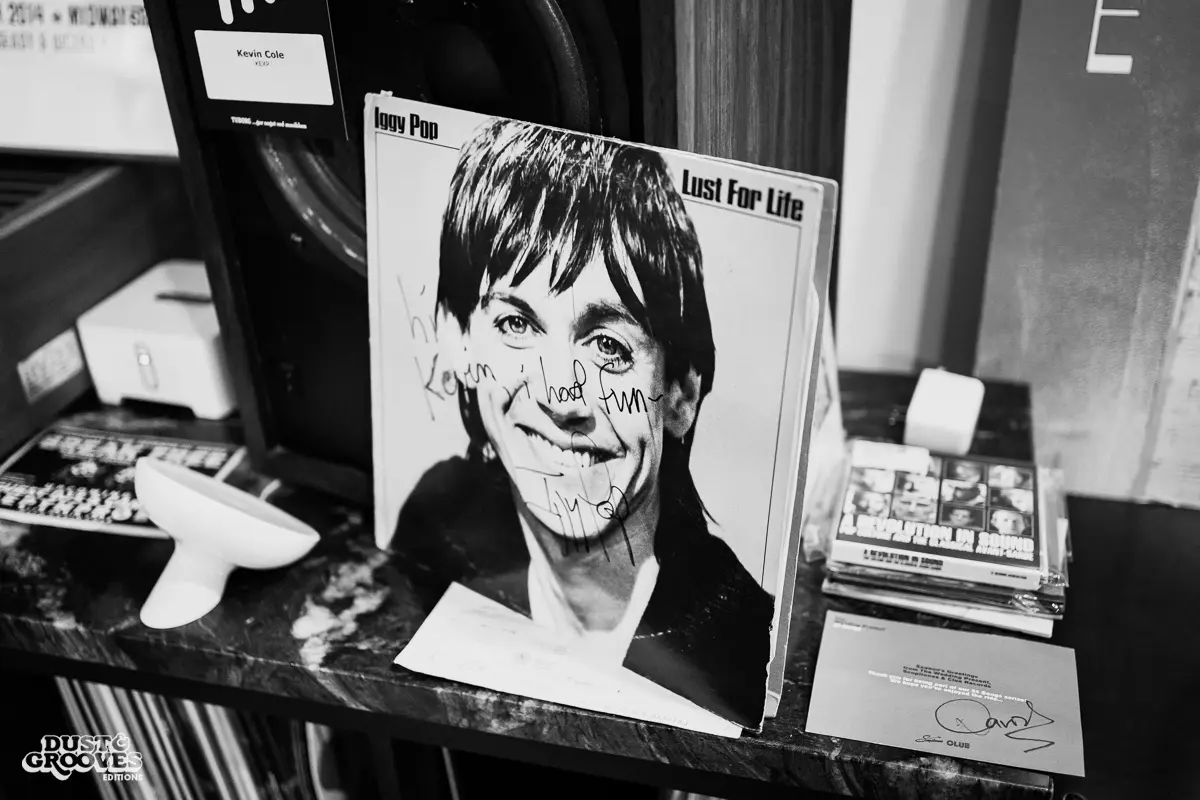
Is there a story behind your signed copy of Iggy’s Lust for Life?
That was just one of those First Ave. experiences. There wasn’t any crazy story behind it, other than that we were able to hang out after his show and have a really nice talk. That would have been in ’87 or ’88; I don’t think he was really doing any partying right then, and it was just a really nice conversation about music that didn’t feel like a forced meet-and-greet kind of thing. I have a lot of those kinds of records from that amazing period at First Ave.; like, I have a Johnny Thunders record that he wrote something really personal on, and signed it with his real name instead of Johnny Thunders, and that means a lot to me. It wouldn’t mean anything to anybody else. But, you know, I think part of the collecting for me is just the experiences and the stories behind records. It’s not collecting to collect.

Iggy Pop – Lust for Life. “Iggy Pop’s second solo release and second collaboration with David Bowie. In addition to being an amazing record, this signed copy holds dear sentimental value, as Iggy signed it ‘Kevin, I had fun’ after he played a gig I had the honor of DJing for at First Avenue.”
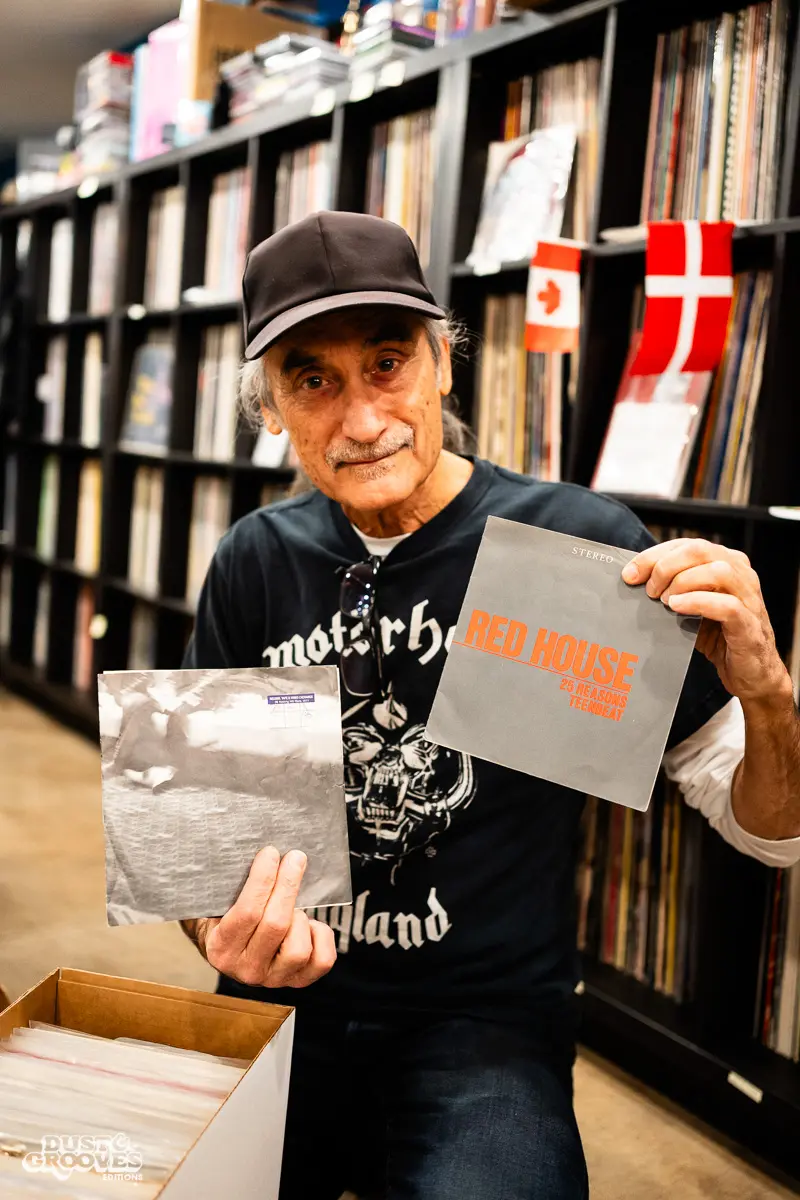
Kind of like with your NNB and Red House singles, which are artifacts from an era that you had the great fortune to be present for. I mean, if you weren’t in the Midwest back then, you’ve probably never even heard of NNB to this day.
Any opportunity I have to champion Mark Freeman and NNB and Red House I take because I think he’s like the unsung hero of the Twin Cities punk scene, or one of them. Back in 1977-78, NNB would play on a regular basis at the Longhorn. They were like a Velvet Underground-inspired group that had a very kind of angular, dark sound, very Television-y; but they might not have even known who Television was at first; our scene and the New York scene kind of developed simultaneously. They did one seven-inch single, and it’s amazing. Then they had two songs on Big Hits of Mid-America Volume Three. The band moved to New York in 1980, and I think they maybe struggled and didn’t happen, so Mark Freeman started another band, Red House. And one single, two songs—that’s the whole output for that band. And in my opinion, every one of those songs is killer; but like you say, if you weren’t there, you wouldn’t know who they were. I don’t think any of them are on any streaming platforms, which is kind of nice and refreshing in a way. However, if you want to hear those songs, somebody has put them up on YouTube.
"Mark Freeman is one of the unsung heroes of the late-1970s and early-1980s Minnesota music scene."
I recently went to listen to them on YouTube, and one of the comments on one of the songs was, “Kevin Cole sent me here.”
Oh, my God! I love that, that is amazing. Again, collecting for me is all about just a relentless quest to find new music, to hear new music—which doesn’t mean new new necessarily, just stuff I’ve never heard before—and then be able to share it with music lovers who are as passionate about music as I am. I didn’t know about that comment, but that’s my mission, and that’s what drives my collecting. You know, I buy a lot of records every week, but it’s not about, “Oh, this is collectible,” or “This is worth more than what I’m seeing it for.” It’s about like, “Oh, I’ve heard about this!” Or “I would prefer to listen to this on vinyl.”
So vinyl is still your preferred listening format?
It is for any record that I really love. On my show or sometimes in prepping for it, I might use digital files for the convenience of it. But if I love a record, it’s like, “Oh, I’ll go get the vinyl!”

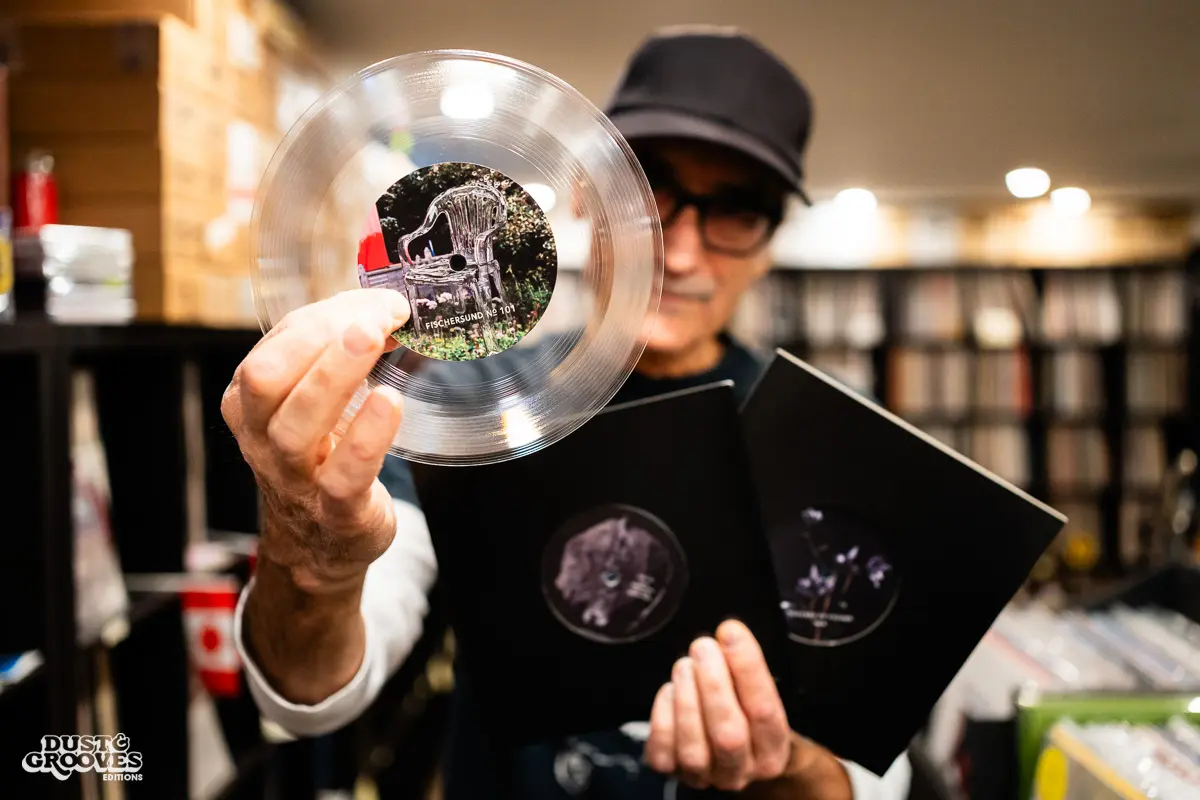
Fischersund – “No. 101.” “Fischersund is a perfumery and arts collective founded by Sigur Rós frontman Jónsi and his sisters Lilja and Ingibjörg Birgisdóttir. Located in a beautiful black house in downtown Reykjavík, Iceland, Fischersund is a store, gallery, and performance space that will cast a spell on you. In addition to one-of-a-kind scents, there are one-of-a-kind sounds, with extremely limited 7-inch singles released to accompany the perfumes. Arty, experimental, restorative.”
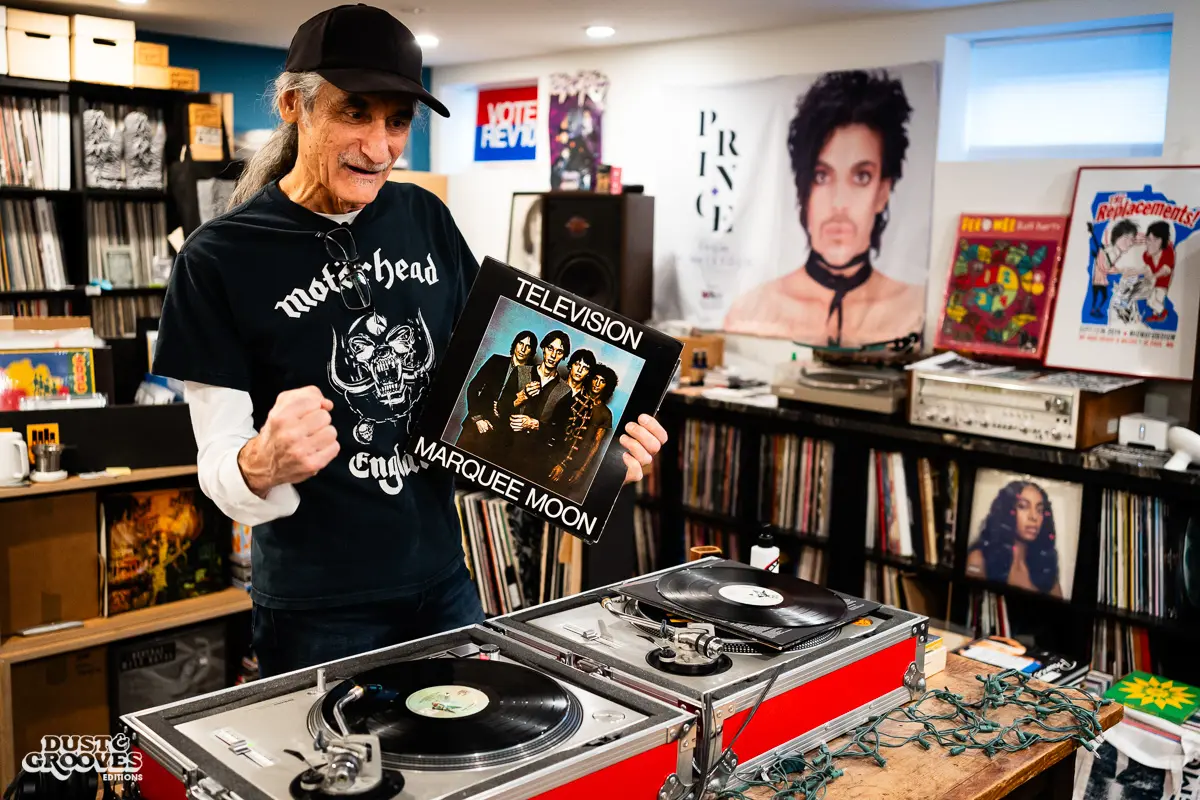
We haven’t talked yet about your white label promo of Television’s Marquee Moon. Do you remember the first time you heard that record?
I would have heard that when it came out in 1977, and I loved it immediately. But what’s amazing for me with that record is every single time I listen to it, I still hear something new; it has never failed to be just an absolutely fulfilling listening experience. The guitar playing, the guitar interplay—the whole band is very much like a jazz band—and lyrically, too. It’s a remarkable record. It’s also, I think, a really cool testament to Tom Verlaine’s vision, because Brian Eno had originally produced demos with Television a couple of years prior, and Tom Verlaine didn’t feel like it captured the right vibe. Imagine being a new and emerging artist that Elektra Records is interested in, and you turn down the recordings that Brian Eno did for you! To have that kind of strength and vision to know that there was a different vibe he wanted, it blows me away.

Television – Marquee Moon. “One of my favorite albums of all time. 47 years after its release, I still hear something new each time I listen to it. Something that moves me emotionally. For years, pre-streaming, I would buy this record every time I would see a used copy and give it to someone I thought would like it.”

A couple years ago, I was like, “This is one of my favorite albums of all time. I want to find a white label promo.” I mentioned that I didn’t have one to a friend of mine, Brad Tilbe, who has an online record store in Seattle called Nellis Records. I told him that it was one of my holy grail records, and like two days later, he had a promo copy of it waiting for me. That was amazing. And then I wanted to get a radio promo—like a white label promo, but the label’s a little different, and it’s got the timing strip on the bottom of the cover. So I found one of those, as well!
Who would you like to see next on Dust & Grooves?
You’ve already featured fellow KEXP DJ Supreme La Rock, whose Sunday Soul show blows me away weekly with rare old-school soul and funk jams. A deeper dive into artist and DJ Nabihah Iqbal’s record collection, featured in Dust & Grooves Vol.2 would be cool.
I would love to see a Dust & Grooves feature with Björk. She is such an amazing and wildly eclectic musician who has been DJing more lately including legendary wacked out sets at Smekkleysa Records in Reykjavik. I would love to know what’s in her collection, and which records she holds near and dear. The same with Lenny Kaye, curator of the “Nuggets” compilations, author of Lightning Striking: Ten Transformative Moments in Rock and Roll, and Patti Smith collaborator and guitarist. While Lenny is known to be an avid record collector, I haven’t seen a deep dive into his personal collection. I don’t know if Istanbul-based musician and artist Gaye Su Akyol is a vinyl collector, but her rebellious mix of traditional Anatolian music, psychedelic rock, surf, and garage rock is fascinating. I’d love to know about her inspirations and what’s in her collection. Finally, I’d love to see a feature on Edward B. Gieda III. He is a Philly-based musician/DJ who happens to also be sober, vegan, and a hardcore runner. I find his Instagram posts reflecting on music, running, and spirituality incredibly inspiring and would love a deeper dive with him on the intersection of music, spirituality, running, and record collecting!
Kevin Cole is the longtime DJ and member of the programming team at KEXP, the influential Seattle–based public radio station known for championing new and diverse sounds. With deep roots in the city’s music community and an encyclopedic knowledge of vinyl, Kevin has guided KEXP’s music programming for years, helping break emerging artists and curate playlists that reach listeners around the world.
Further Adventures in Record Collecting
Dust & Grooves Vol. 2
Kevin Cole and 150 other great collectors are featured in the book Dust & Grooves Vol 2: Further Adventures in Record Collecting.
Become a member or make a donation
Support Dust & Grooves
Dear Dust & Groovers,
For over a decade, we’ve been dedicated to bringing you the stories, collections, and passion of vinyl record collectors from around the world. We’ve built a community that celebrates the art of record collecting and the love of music. We rely on the support of our readers and fellow music lovers like YOU!
If you enjoy our content and believe in our mission, please consider becoming a paid member or make a one time donation. Your support helps us continue to share these stories and preserve the culture we all cherish.
Thank you for being part of this incredible journey.
Groove on,
Eilon Paz and the Dust & Grooves team