
RO 'WYLDEFLOWER' CONTRERAS
Lovely to Possess. Cooler to Play
BY NATE LEBLANC
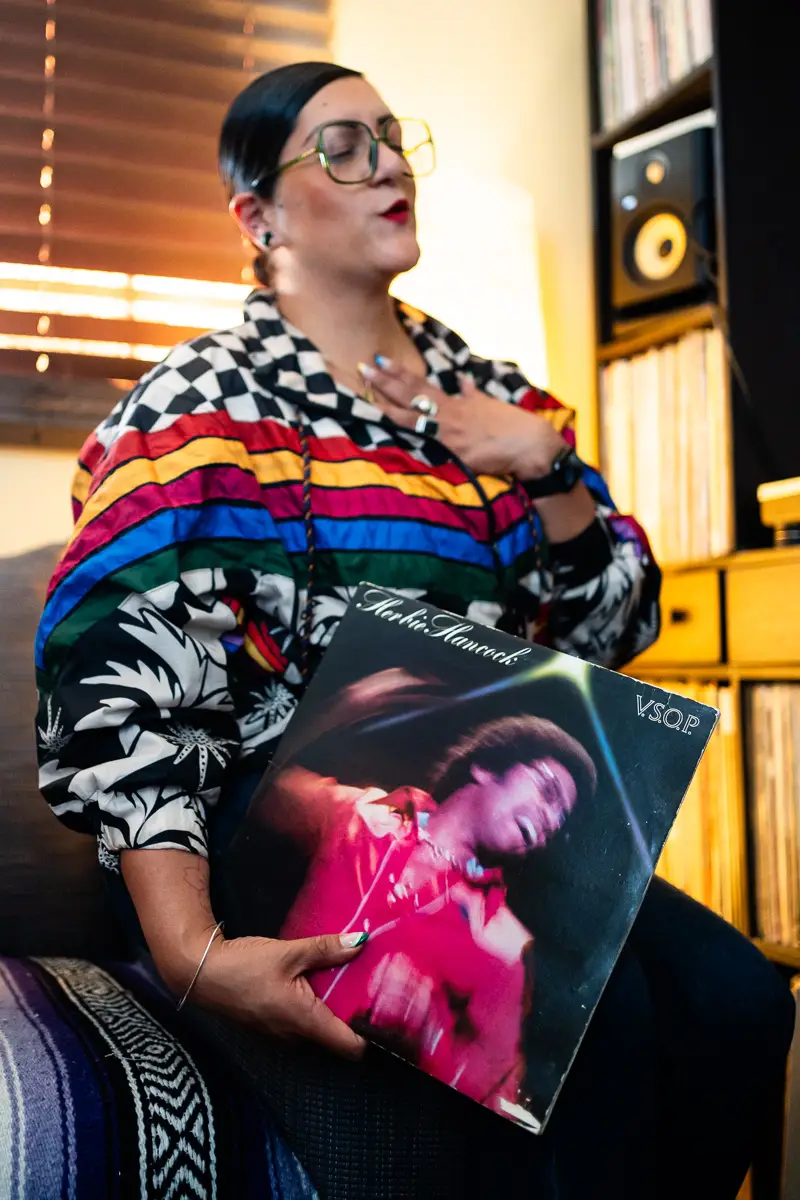
Rocio Contreras, known as Wyldeflower on flyers and the radio and Ro to her friends, is a deeply connected Los Angeles–based multi-hyphenate creative, record collector, DJ, and radio host who lives her life as a kind of professional appreciator and vibe curator, piecing together creative endeavors and always seeking new sounds. She has a colorful sense of style, evidenced by her prominent geometric eyeglass frames, and seems to move easily between the various creative communities she calls home.
Contreras refers to herself as an “artist advocate” and uses her plentiful gigs, events, and platforms to spread the good word about the wide range of musicians that she supports. As the child of a musical and entrepreneurial family, she has deep roots in Los Angeles and has worked her way up from checking IDs and sprucing up green rooms in a way that made artists feel welcome at venues to hosting performances before thousands of rapt fans at the iconic Hollywood Bowl. Wyldeflower is a fixture in the deep and diverse L.A. music scene, and here she shares a bit about her history, her approach to planning out her DJ sets, and of course, her record collection, which includes some original pressings of hard-to-find Brazilian records.
“Alice [Coltrane] was with me when I first started collecting vinyl. I started in the jazz world first. It felt like a good place to begin to dig deep and do research, to learn, and to expand my knowledge.”
—Ro ‘Wildeflower’ Contreras
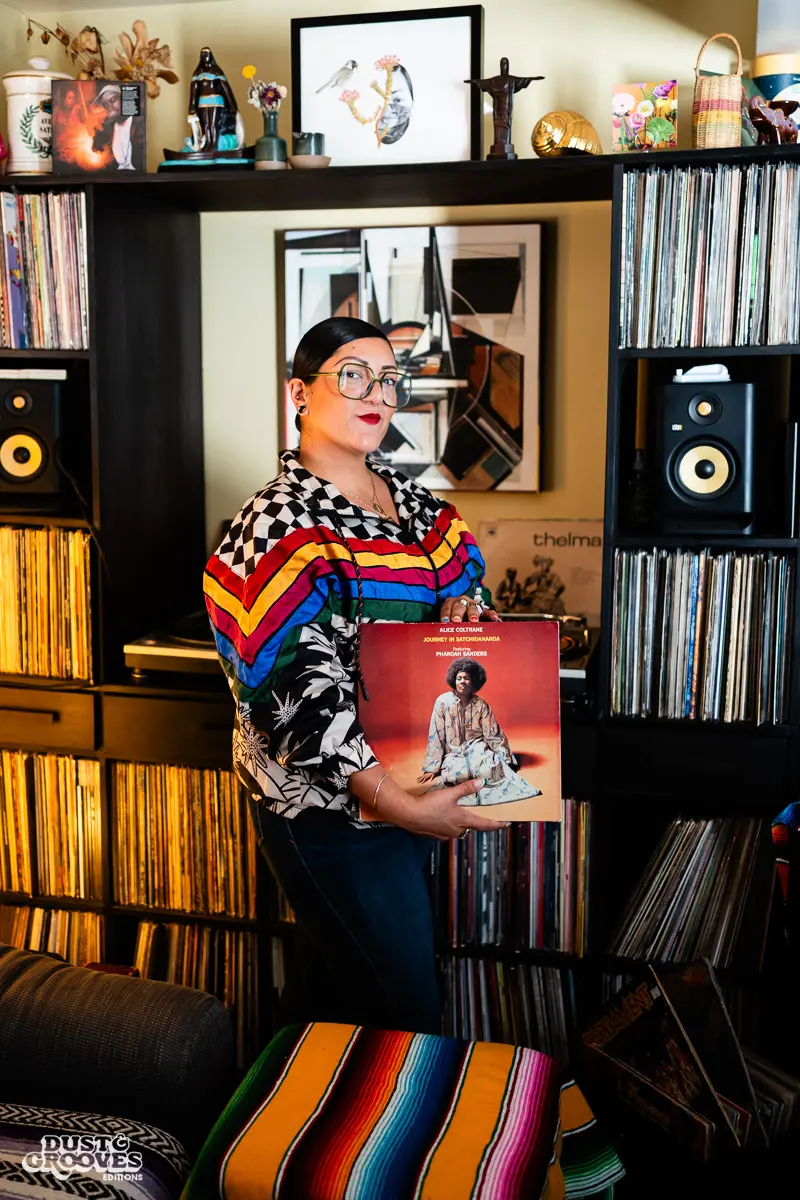
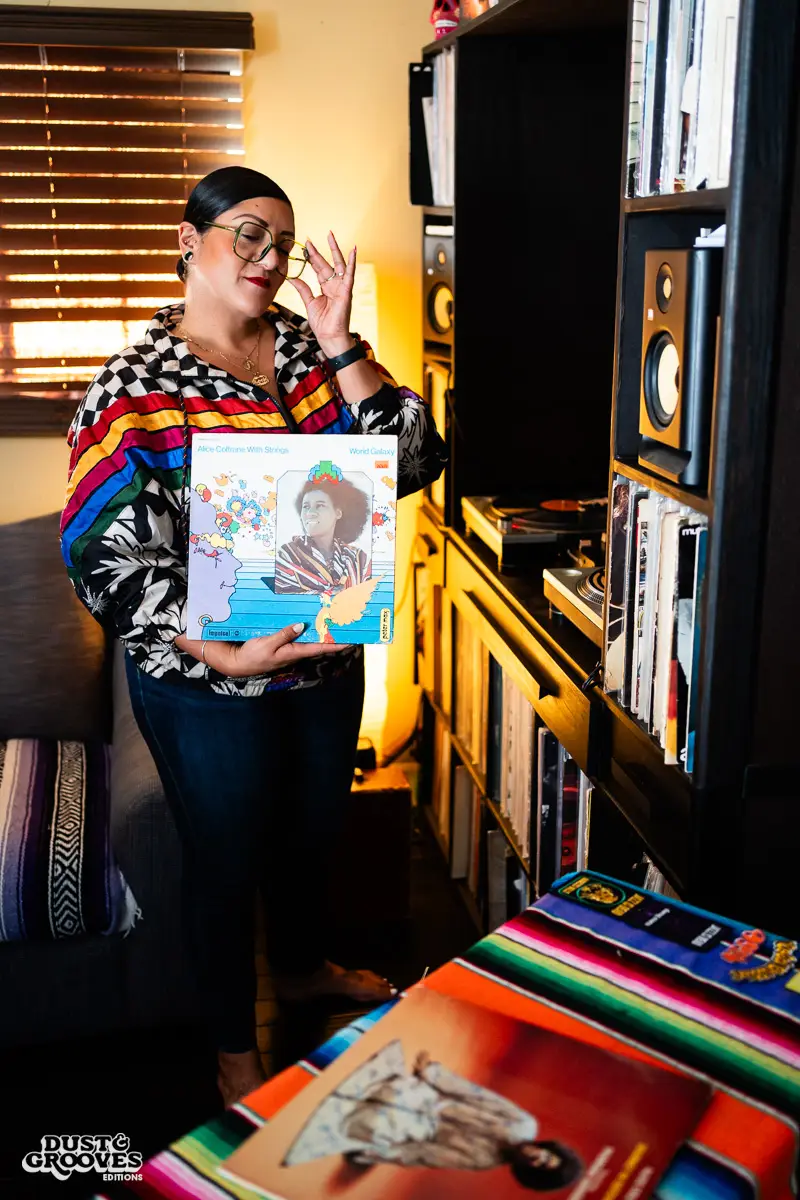
Ro, welcome to Dust & Grooves. Eilon photographed you with multiple Alice Coltrane records. What about her as a musician or a person resonates with you so heavily?
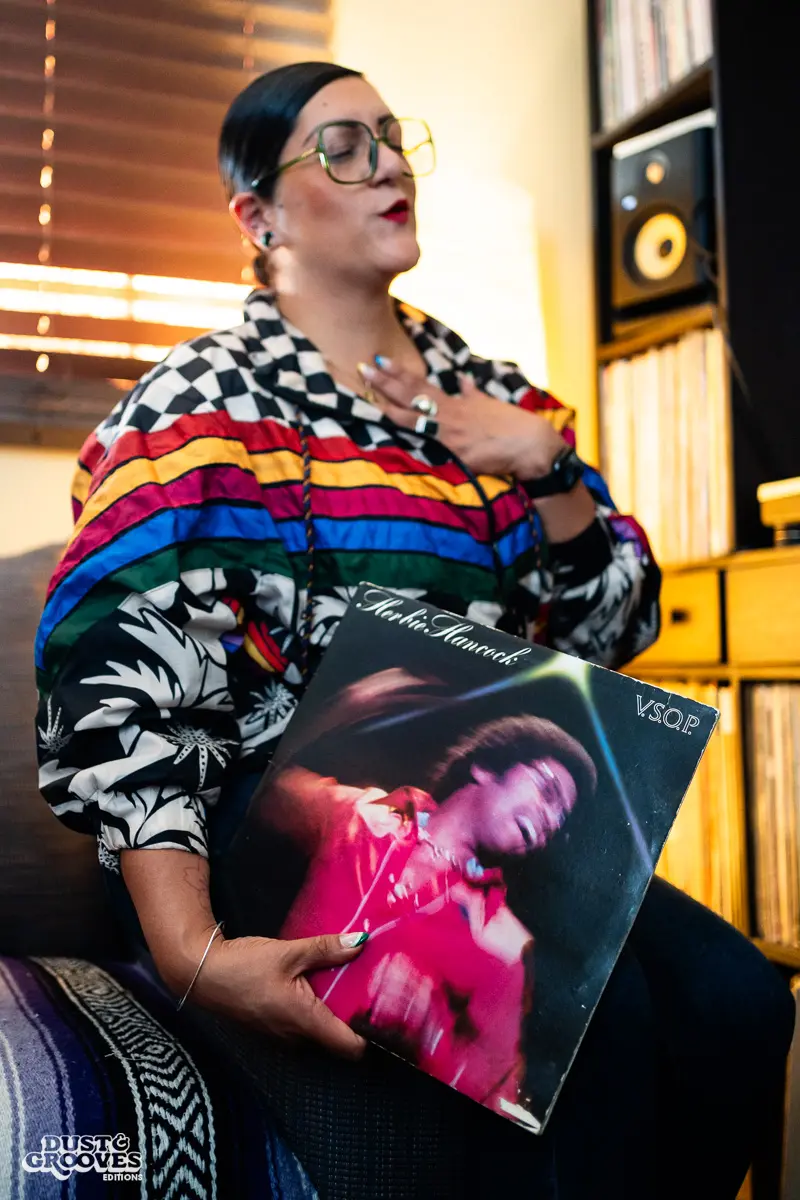
I didn’t intend to pick two Alice Coltrane records, but the heart knows what it resonates with. I feel like I gravitated toward Alice because her music brings balance to the continual chaos this life serves us.
Journey in Satchidananda provides a sort of grounding energy. It may be a trigger or remembrance for me because of the actions that were paired with Alice’s music when I first heard it. Playing Journey first in my live sets became a ritual for a few years—a recalibration, sonic sage for the spirit. A record like that pulled you in with the very first deep note. It grounded you.
In that era, in the early 2000s, when I was discovering yoga, cannabis as a medicine, and meditation, Alice’s music weaved in and out of those spaces.
“Alice was sort of an underdog. She felt like a best-kept secret, for the heads.”
“You know you’re about to dive in deep when you buy an album off a record store’s wall.”
Open gatefold of World Galaxy
Let’s get into a little bit of your personal history. How did you first start getting into music?
To continue reading this interview we humbly ask you to consider supporting Dust & Grooves by becoming a paying premium member.
Music has always been stitched into my life through my dad. He lived inside the industry in a thousand different ways — singing mariachi on stage, working production, tour managing, artist managing — just forever moving, forever building. He was one of those rare souls with a hundred hustles: running a video store in the early ’90s, a taco truck, then a restaurant — always chasing a vision, even when I couldn’t yet see the thread connecting it all. Now I realize the through line was never a specific job — it was the act of manifesting a dream into reality.
Because of that, music was never something I “found” — it was just there, already breathing in the background of my life. I was literally baptized on a soundstage at the Pico Rivera Sports Arena, between sets of a show by Flor Silvestre and Antonio Aguilar Jr. My dad pulled out his priest homeboy and made it official right then and there — a holy moment tucked inside a working stage. Looking back, it feels symbolic: my first blessing happened under stage lights, surrounded by music before I even knew what any of it meant.
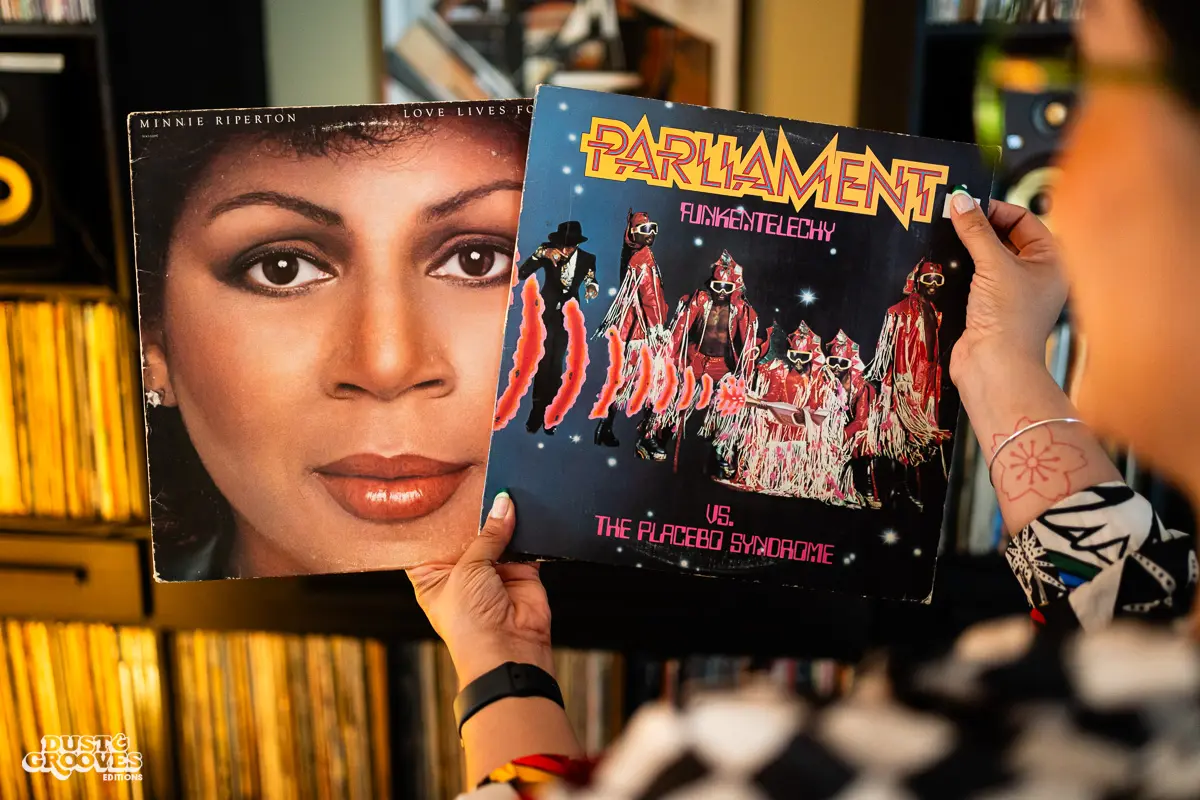
You chose a Parliament record as one of your selections. Even though they’re not from L.A., their music has come to be closely identified with your hometown because of its extensive reinterpretations in hip-hop beats. Is that part of the reason why you’re into P-Funk?
For me, P-Funk is absolutely classic L.A. — even if they’re not from here, their music lives here. It was always in the air at backyard boogies, park BBQs, block parties, and kickbacks — woven into the everyday soundtrack of growing up. Hip-hop flipped it, chopped it, reimagined it, and in the process made that whole universe feel like part of our hometown DNA.
My connection deepened while producing Mothership Landing: Funk and the AfroFuturist Universe of 1977 with Dexter Story. That project sent me into a full-on deep dive into the records that had always been orbiting my life — I was just finally listening with intention. That year alone gave us holy grails like All ’N All by Earth, Wind & Fire, Ahh… The Name Is Bootsy, Baby!, and both Parliament joints — Funkentelechy vs. the Placebo Syndrome and Live: P-Funk Earth Tour.
P-Funk isn’t just a band to me — it’s a frequency. It’s that dream language that traveled from backyard speakers into beat machines, shaping the sound of L.A. through generations. It’s joy, resistance, imagination, and community all wrapped into one cosmic groove that still feels like home every time the needle drops.
“P-Funk isn’t just a band to me — it’s a frequency”

Minnie Riperton – Love Lives Forever. Parliament – Funkentelechy vs. the Placebo Syndrome. “Records are time stamps, marking moments in our lives. Music has always been part of my DNA, and throughout my career some records stand out and shine ultra bright.”
What was the first record or piece of music that grabbed you and brought you into the world of collecting?
My first gateway into collecting came straight through my big sister Delia. She’s twelve years older than me, and we shared a room, so her record stack basically became my record school. I swiped The Smiths – Best II, then claimed her self-titled Portishead album and Björk’s Post — those albums cracked my mind wide open and reshaped how I heard music.
Even before the records, there were the tapes. Delia had this little Case Logic box under her bed, and I’d sneak it out and line the cassettes up like they were my students — while other kids played with dolls, I played teacher to Marc Almond, De La Soul, Dee-Lite, and this mysterious, colorful Memorex mixtape full of unknown magic. That was my first classroom, my first crate.
Music has always felt like a lifeline for me. I even learned reverse psychology young — when I got in trouble, I’d beg my mom, “Please don’t take away the TV,” knowing she would — and then I’d be left with nothing but the radio. And honestly? That was the real reward. Those late nights with the dial became my earliest collecting spirit — tuning, listening, dreaming — the moment I realized sound was something I wanted to chase forever.
In many ways, a simpler time.
Yeah, and the internet didn’t exist then, so you would have to sit on the floor and read the lyrics and liner notes that came with the CDs. I have thousands of CDs. I wish I would have started collecting vinyl when I was in high school. Back then, I worked mainly to be able to buy CDs and do extracurricular activities like… go to raves & concerts.
Another one of your selections was Minnie Ripperton’s Love Lives Forever. Are you drawn to artists with distinctive voices?
I think I’m drawn to voices when the moment calls for them. If I’m writing, I usually lean into instrumentals so my mind can stay clear and open. Other times, I let vocals guide me into language and culture — Brazilian records, for example, deepened my relationship with Portuguese. I love the poetry of lyrics, those untranslatable words and phrases that only live inside certain cultures and often reveal themselves through song.
Hip-hop actually led me to Minnie first — chasing samples opened the door — but it was producing live orchestral concerts that deepened that connection. In 2014, alongside Itai Shapira and Todd M. Simon, I produced Adventures From Paradise with The Decoders. I already loved Minnie’s staples, but for that project I dove headfirst into her catalog — long hours of composing, producing, and deep listening with Todd, letting her music guide the emotional arc of the show.
The concert brought together an unbelievable circle of voices — Niki Randa, Jimetta Rose, Nia Andrews, Amber Coffman, Angel Deradoorian, Kadhja Bonet, Kimbra with Leon Ware, Coco O., Moses Sumney, Thalma De Freitas, and so many more — and then, in the most cosmic twist, the final date landed on July 12th, the day Minnie became an ancestor. We all wore white, took a collective trip down memory lane, and were blessed by Dick Rudolph, with Maya Rudolph calling in via FaceTime. It felt less like a concert and more like a ceremony — a love letter to Minnie and the power of a singular, unforgettable voice.
“Drums are magic — they’re magnetic and powerful, and they’re a rhythmic conduit of cosmic conversation.”
At what point do you think you started taking yourself seriously as a record collector?
I didn’t think of myself as a record collector until so much later. I was just buying music because that’s what filled my spirit. It didn’t become a mission or this pulling factor in my life until much later.
I feel like working with Mochilla inspired that. I remember when B+, also known as photographer Brian B+ Cross, gave me an Elis Regina record, and he said, “I’m going to give you a record, but I want you to play it.” I stopped working with them shortly thereafter, but I held on to those words, and later, when I began to play records out more, I feel like that was the source. But definitely, my time at Mochilla was where I really got serious, at least about Brazilian records.
Photographers, historians, producers, and directors B+ and Eric Coleman put many of us on to some of the holy grail Brazilian records, records like Jorge Ben Jor’s A Tábua de Esmeralda or Pedro Santos’ Krishnanda.
Some of my greatest teachers were mixtapes by B+, Coleman, Madlib, DJ Nuts, and J. Rocc, as well as living room sessions paired with caipirinhas and lots of vinyl. I was fortunate to be in the house at Mochilla when some of those discoveries were being made and shared. At that point, I dove into the search and the find, looking for the records on the mixtapes, used them as my compass, and made many discoveries of my own while on the journey.

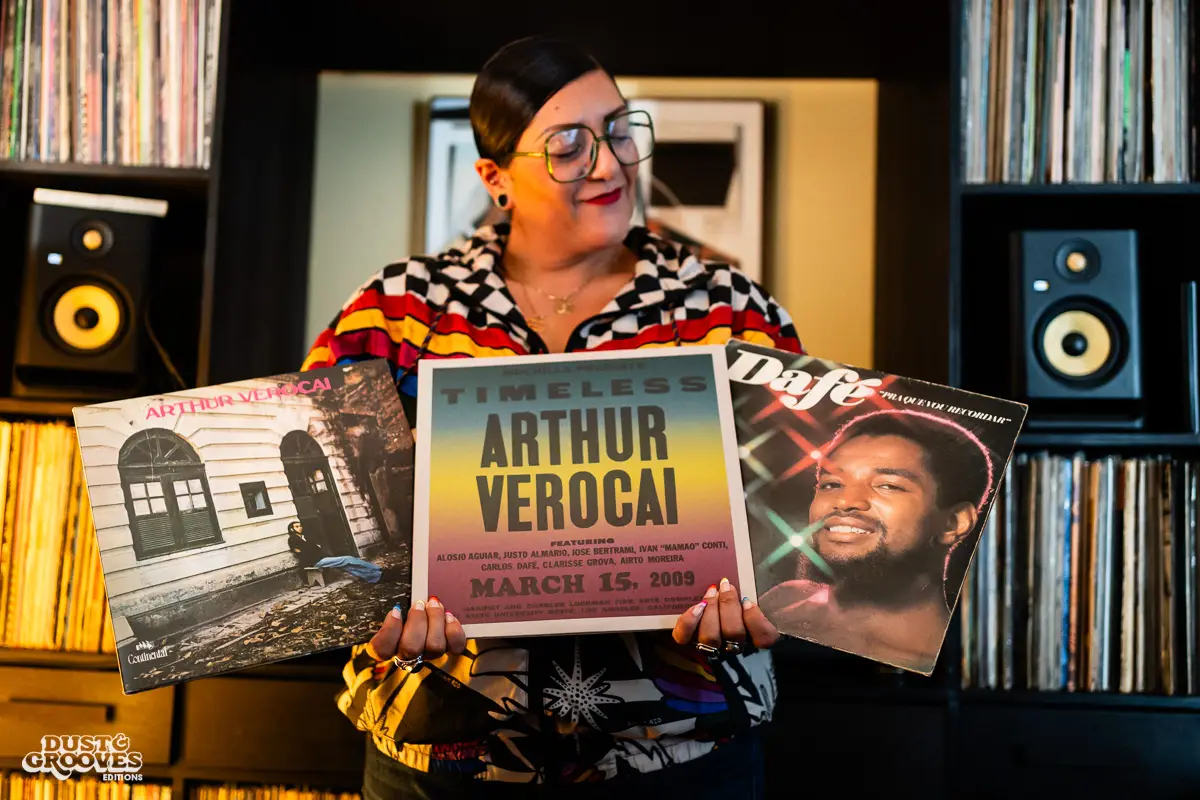
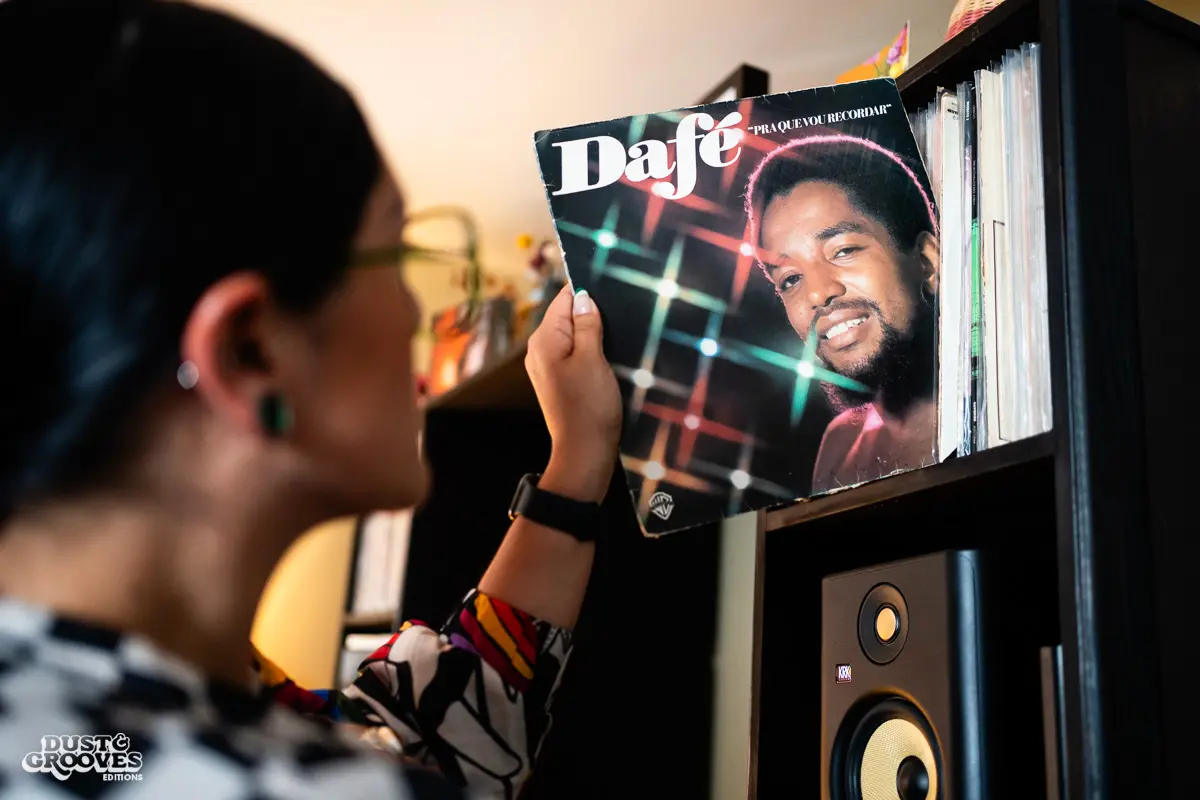
Arthur Verocai – Self-titled, Arthur Verocai – Timeless, Carlos Dafé – Pra Que Vou Recordar
“All three of these records are connected to my spirit. I met both Dafé and Verocai in 2009 when I was working with the photography/film/production company Mochilla. We produced Timeless: The Composer/Arranger Series in Los Angeles. Since then, Verocai and I have become friends. Every time I land in Rio de Janeiro, he’s one of the first people I call.”
You’re obviously pretty deep into Brazilian records. Do you have an artist that you always go back to, a kind of standard record that you feel everyone should know?
I play Jorge Ben Jor’s music in almost all of my live sets. In my opinion, he’s the GOAT. Record for record, hit for hit, he is unbeatable.
You seem to have a special attachment to Arthur Verocai and his legendary self-titled album, which is a truly rare record and considered by many to be a holy grail in the record-digging community. Can you tell us about your interactions with him?
Yes — I was part of the 2009 Mochilla/ArtDontSleep/VTech production Timeless: Arthur Verocai, and that experience became a deep lesson in sound, spirit, and scale for me. Verocai’s music was unlike anything I had heard from Brazil before — cinematic, emotionally rich, and beautifully dramatic, with an intensity that pulls your whole being into the moment.
Tracks like “Na Boca Do Sol” open with a horn section so bold it feels like a ceremonial call, demanding your full attention before the song even unfolds. His orchestral compositions are pure magic — lush strings intertwined with towering, fearless horns — creating a sound that feels both intimate and immense at the same time. To think a young musician was crafting something this daring in 1972 Brazil still leaves me in awe. It’s not just a rare record — it’s a powerful, timeless work of art.
Even within the vast history of Brazilian music, Verocai’s self-titled record is an outlier. What makes it special?
The record was different and ahead of its time. Verocai was on another vibration that didn’t fully resonate when it came out. No one was hiring large orchestras like he was. It was expensive but incredible and would ultimately stand the test of time because it wasn’t like anything else. His peers were diving into Tropicália, and some of them were getting exiled out of Brazil due to the military dictatorship, which changed their sound. He was listening to classical music and Wes Montgomery, and his compositions reflected that. The way that hip-hop sampled the record and brought it out of obscurity is truly a fairytale story.
You have since had a chance to become friendly with Verocai. Is he still composing? Are there other records that he worked on, back in the day or more recently, that you recommend?
He’s still composing. I love the work he’s recently done with BADBADNOTGOOD and Hiatus Kaiyote. He, like many musicians, has incredible unreleased music that will hopefully someday see the light of day. I wish I could share what I’m most excited about, but it’ll be worth the wait, I promise.

Carlos Dafé – Pra Que Vou Recordar. “I first became aware of Carlos Dafé while helping produce the Timeless series. I met him before I heard his music. His light is a bright one. Working with so many musicians and creatives is never a walk in the park, sometimes it can get gloomy and Dafé was always an ultra ray of sunshine. He would walk into the rehearsal space bright and early, smiling and singing, and would turn everyone’s frown upside down.”
Amazing. What can you share with us about Carlos Dafé?
I discovered Dafé through Timeless: Verocai, the arranger-composer series I’ve been talking about. I met him in person before I started looking for his solo records, which take you on a tropical, soulful, funky trip with a touch of disco. Dafé’s records are like his personality—they’re upbeat and happy. Perfect for the dance floor.
Can you tell me a little bit about your Nueve event? It seems a unique way to bring people together who share a love for music.
Carlos Niño had an event called 360 Degrees Around the Globe, and he would have it in different locations, sometimes in people’s houses. After a while, he asked me to take it over, and I said yes. Carlos welcomed me to change the name, so I decided to call it Nueve (nine in Spanish) because 3+6+0 is nine, and nine is completion in numerology. I also joke around that there are nine members in Wu-Tang and nine planets and nine months to make a baby—all these different interpretations. So I called it Nueve Record Potluck because it’s a nourishing sonic array of sounds, an evening soundtracked by the collective. I would invite people to bring and play nine records. And nine records is approximately 30 minutes; you could definitely curate a set and actually say something with your selections.
When I first started Nueve, the vast majority of records I had were jazz records. What really pushed me to step outside of that was a moment when Madlib came in and watched me spin for a while. He kind of poked me—not in a mean way, but in a playful, encouraging way—for only playing jazz. At that point, I didn’t actually own very many records, and I was still figuring things out.
But after that interaction, I felt genuinely inspired to broaden my horizons. I began digging deeper and exploring outside the jazz section with more intention. That moment helped me understand that Nueve could be a space to stretch a bit more—to try new sounds, expand my collection, and grow past the comfort zone I had in the beginning.
And now Nueve lives on Dublab. It’s a radio show with record collector, artist manager, record store owner, supreme cohost, PayRay, and it’s still vinyl only, and we invite guests to bring nine records. Usually PayRay will play nine records, I’ll play nine records, and our guest will play nine records, and then we’ll talk a little bit in between. And when it’s a live experience, it’s Nueve Record Potluck. For that one, there’s a sign-in sheet, and I basically will just text a few homies and encourage them to text their nerdy homies who have records they want to share. I’ve met so many incredible people, and heard so many amazing records over the years doing Nueve. It’s definitely the gift that keeps on giving.
“...one of the greatest lineups of one of the greatest groups of musicians in the world.”
Is there a particular record you can think of that exemplifies this long-running series for you?
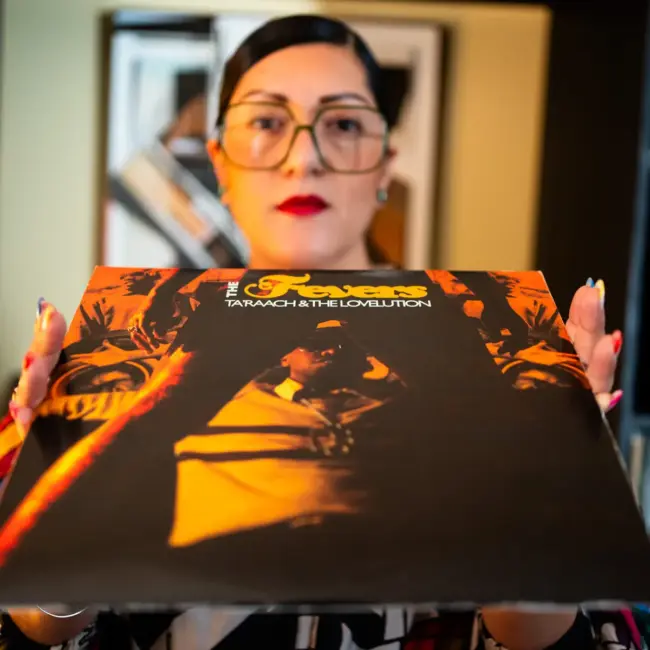
I’d have to go with Ta’Raach & The Lovelution – The Fevers. I love that record! A Nueve Record Potluck staple. Ta’Raach is a friend; part of the same music scene. We were all just hanging out in the early 2000s, going to and throwing after-hours house parties with instruments in every room, hosting jam sessions, and continuously creating. I love Ta’Raach’s lyrical technique and think he’s a very unique rapper—his articulation pattern, he’s an intentional and present spirit. So playing his music at Nueve was extra special.

Ta’Raach & The Lovelution – The Fevers. “Detroit is a magical place, and some of the musicians and wordsmiths from the Motor City really protected me, lifted my spirits, and held me up. When I first started playing records out in a public setting, I was hesitant to call myself a DJ, so playing ‘I Don’t Rock Parties’ always made me feel good — kept a smirk on my face. I was reminding folks that I wasn’t about the popular joints; I was about the deep digs, the cuts that got the party going, that made your wrist move.”
Further Adventures in Record Collecting
Dust & Grooves Vol. 2
Ro 'Wyldeflower' Contreras and 150 other great collectors are featured in the book Dust & Grooves Vol 2: Further Adventures in Record Collecting.
Do you have a philosophy of record collecting? How do you decide what to bring into your collection and what to keep?
My philosophy of collecting is all heart, all function — there’s nothing museum-style about it for me. I don’t collect just to possess; I collect to share. Every record has to earn its place by asking one simple question: Can I play this out? If it can move a dance floor, open someone’s ears, or shift energy in a room, then it belongs in my crates. Sample classics, dance-floor joints, the records that connect generations — that’s the core of my collection.
The one true exception is Brazilian music. I treat those records differently. They’re organized by first name — the way they do it in Brazilian shops — not by last name like the rest of the world. And they’re the only records I feel called to chase as first pressings. Everything else? I’m cool with a third pressing, a reissue, whatever — as long as it sounds clean and hits right. For Brazil, though, I need that original spirit pressed into the wax. It feels sacred to me.
At the end of the day, records aren’t meant to just live on shelves — they’re meant to travel. Owning them is beautiful, but taking them out into the world is the real magic. Dropping that needle in front of other people, watching their faces light up, seeing the room shift — that’s the fulfillment. I collect so the music can keep moving, just like the culture it comes from.
Do you get much of a chance to travel? And if so, do you always look for records when you are visiting a new place?
It kind of feels impossible for me to separate the two — travel and record digging always go hand in hand. Sometimes I’ll plan an entire trip around digging, like going to Brazil with that as the sole focus. Other times, I’ll realize I’m headed somewhere like London or Paris and think, Okay, let me see what’s cracking over here. Wherever I land, the record hunt naturally becomes part of the journey.
Brazil is the one real exception. There’s something extra there for me. I don’t know what it is — especially since I’m very Mexican, and both of my parents are Mexican — that was the music in the house. But Brazilian music has always felt magical and magnetic to me. Being there carries a different energy, a different vibration than anywhere else in the world. It feels special in a way I can’t quite explain, and that keeps calling me back.
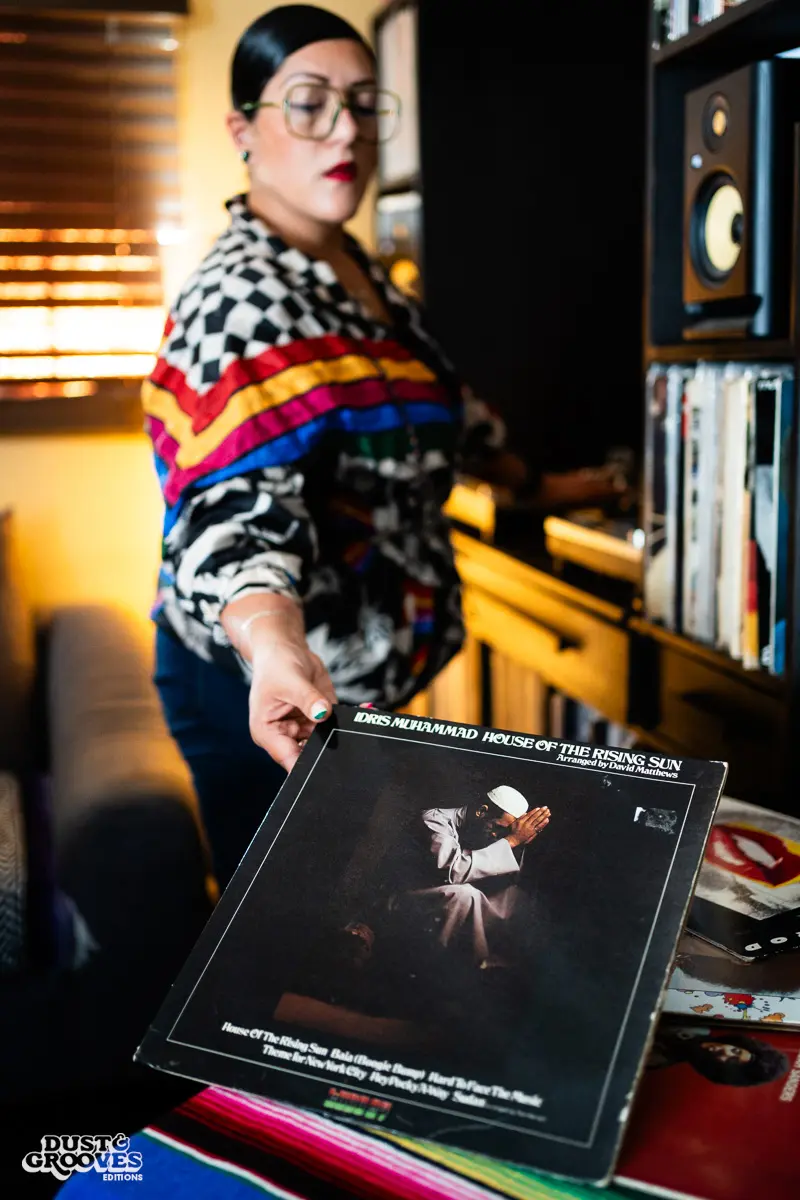
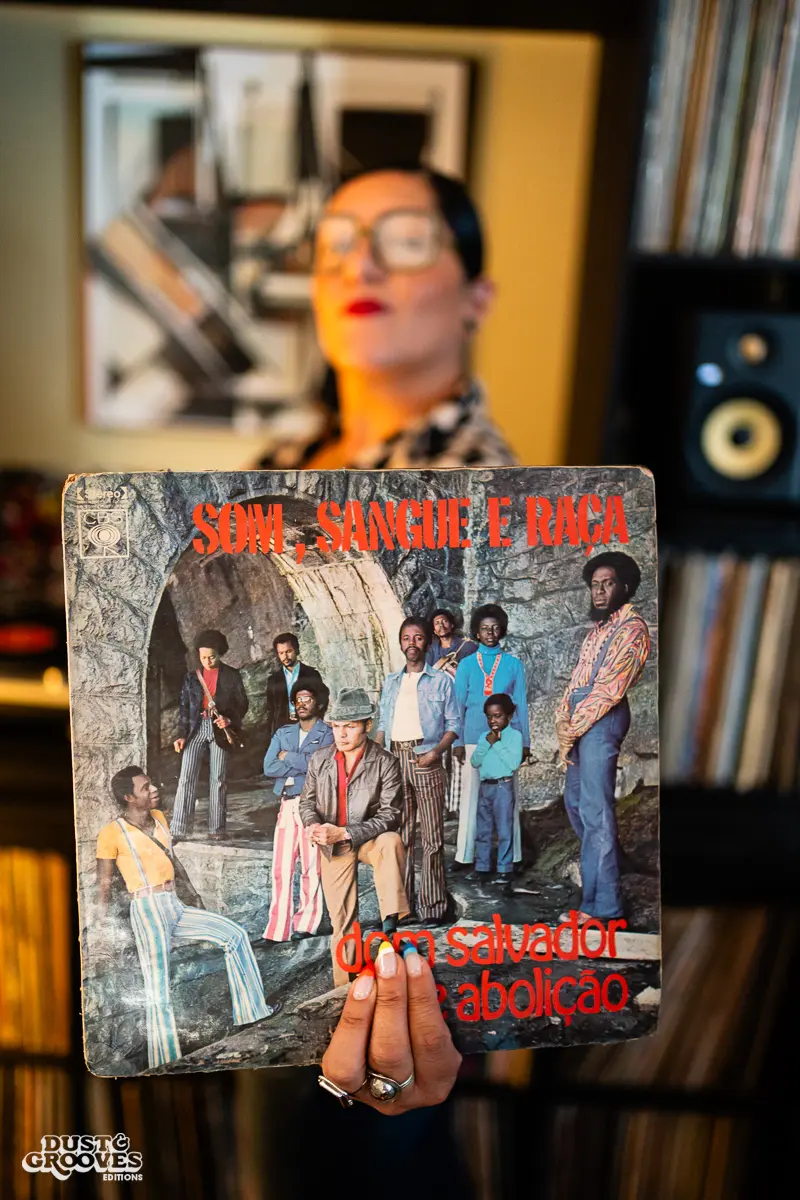
One more Brazilian joint before we move on. How did you acquire that Dom Salvador E Abolição Som, Sangue e Raça album?
Ah yes — that one came through Massa from Japan. He’s a friend of a friend who visited Rio, fell in love, got married, and never left. Total record nerd, longtime music soulmate.
I flew down to Brazil in November for a record fair — even though I’d already been there that spring — because I was fully locked in on finding this one album: Dom Salvador e Abolição – Som, Sangue e Raça. I’d chased it on past trips and came up empty every time, so I honestly thought my luck would be the same. But when it finally surfaced, I didn’t hesitate — I spent my entire record budget for the trip on that single LP. It was the one I came for, and thanks to Massa, it made its way into my hands at last.
“Brazilian music. I treat those records differently. They’re organized by first name — the way they do it in Brazilian shops — not by last name like the rest of the world. And they’re the only records I feel called to chase as first pressings.”
Record collecting is not all about crazy rarities and archaeological-level scores. Do you have a record you’re really into that’s a little bit more easily accessible?
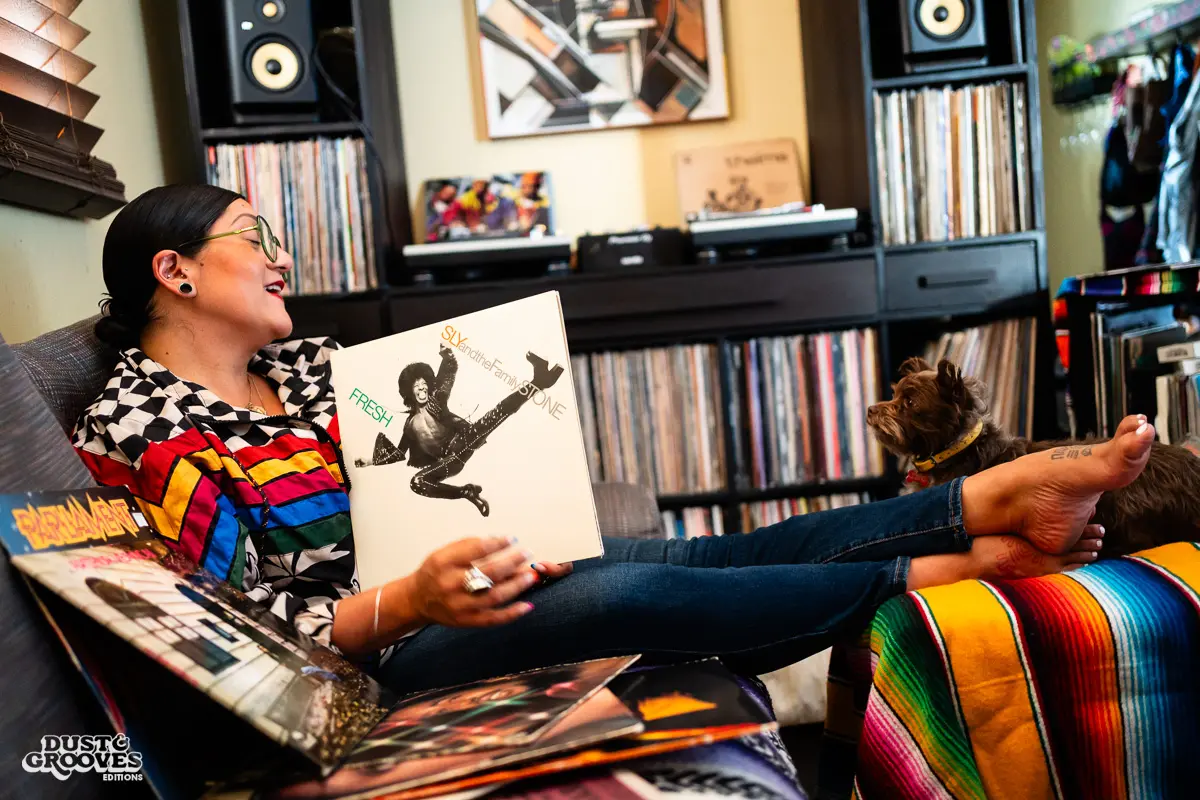
You truly can’t go wrong with Fresh by Sly and the Family Stone. Sly is one of the greatest to ever do it — full stop. I’ve watched every documentary, read the books, lived inside that catalog — and to me, Sly and the Family Stone is straight-up classic American music. Psychedelic, funky, radical, beautiful, raw — it’s the sound of freedom and friction all braided into one band.
My connection to Sly goes even deeper because I co-produced a live tribute production with Dr. Dexter Story called Higher! The Psychedelic Genius of Sly and the Family Stone (1966–1983), in collaboration with my dear friend Novena Carmel — who also happens to be Sly’s daughter and the host of Morning Becomes Eclectic on KCRW. Being part of telling that story, honoring that legacy up close, made the music feel even more sacred to me.
I remember finding my copy of Fresh at Poobah Records in Pasadena — holding it in my hands, staring at that cover like a quiet vow — thinking, Okay… I’m officially stepping into the lineage of the holy grails. It wasn’t some impossible-to-find rarity, but it didn’t need to be. It was accessible, timeless, perfect — one of those records that reminds you that the real magic isn’t always about the rarest score, but about the records that soundtrack your becoming.

Sly and The Family Stone – Fresh.
“One of the greatest records of all time. An absolutely perfect collection of tunes perfectly woven together. This is a top-five album for me. One of those records you’d take to a deserted island with you.”
You are a DJ on KCRW, the amazing independent radio station in L.A. How did you get involved in that? Was it always a dream of yours to be on the radio?
Honestly, it was never a dream of mine to be on the radio. If anything, this came from other people seeing something in me before I could fully see it myself. For about fifteen years before radio, I was producing art and music events — spaces meant to uplift elders, honor the giants, and celebrate the people who’ve shaped our culture. In a way, that curation mindset isn’t so different from record collecting: it’s all about storytelling through sound and honoring lineage.
I would invite Novena Carmel to some of those events, and I think she caught a glimpse of something I hadn’t quite claimed yet. At that time, I was focused on bringing other people’s visions to life — not stepping into the spotlight myself. But Novena kept gently nudging me, asking if I’d ever consider doing radio. She asked more than once before I finally said yes and made a demo.
I went into it with zero ego — I didn’t see myself as a radio host, just as a lifelong student of music. I’d been teaching myself since I was a kid, sitting on the floor with liner notes spread out, absorbing everything I could. I tried to channel that same spirit into the demo — that deep love of discovery and sharing.
Novena listened, showed me how to submit it, and I sent it in… and somehow, I got the gig at KCRW. What’s wild is that in the very same month, I was also offered Nueve on Dublab — so I went from having no radio shows at all to suddenly hosting two.
I really love the contrast between the two spaces. Nueve on Dublab is totally free-form — vinyl only, uncensored, super nerdy, deep-dive energy. KCRW feels like a different but equally beautiful mission: blending new and classic music, spotlighting artists who truly need to be heard, and connecting the dots for a wider audience. Both tap into what I’ve always been about — sharing music as a form of honoring community and culture.
What does it mean to you to have such a prominent platform?
I just recorded my 214th KCRW broadcast, including covering for other shows. I’ve hosted three times at the Hollywood Bowl, which I’m super, super grateful for. I’ve guest-hosted Morning Becomes Eclectic a few times. I’ve done the bigger time slots, like the Saturday and Sunday slots. I’ve pretty much done almost every single slot. I’ve just really loved it. I didn’t know I was gonna like it this much, you know. I surprised myself. Radio is a world that I really love.
Sometimes I reminisce about how my sister used to work for Art Laboe, taking down the dedications because she had very nice gangster handwriting—like a real chola—the best handwriting I’ve ever seen. And, you know, with my dad being in the music business back in the day as well, it just kind of makes sense.

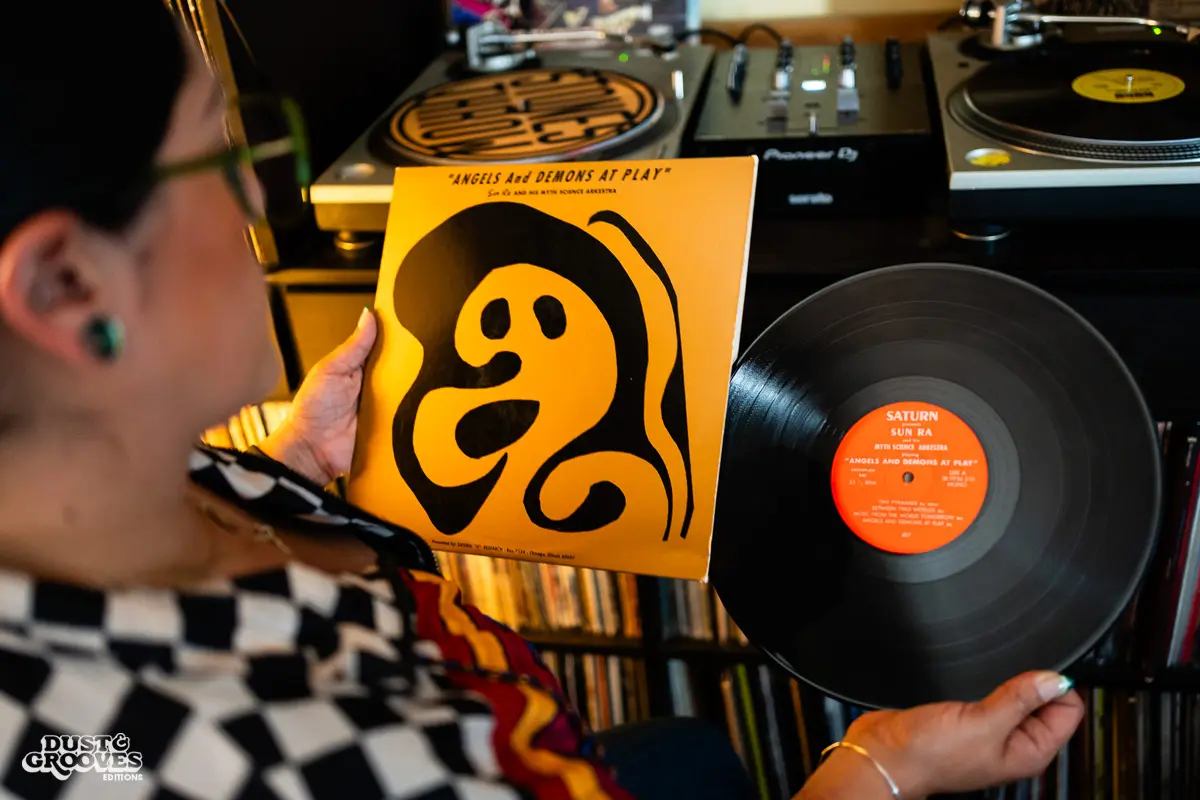
Sun Ra and His Myth Science Arkestra – Angels and Demons at Play.
“‘Tiny Pyramids’ is the song that pulled me into this record. The bass line is just magical, and it was one of those records that sounded so beautiful on a good sound system.”
Most of the records you selected are jazz or funk, or at the very least are all a part of the African diaspora in the broadest terms, stretching from the U.S. down to Brazil and back. This last record is something different. Classic rock singer-songwriter Paul Simon has a few drum breaks in his catalog, including this one. Great track, but definitely stands out among your selections here. What draws you to this record?
Funk, soul, Brazilian music, and jazz — those were the sounds I discovered on my own, crate by crate, in the record shop. Nobody handed them to me. I had to stumble into them, follow my curiosity, and let the records reveal themselves, so they carry this deeply personal imprint for me. At the same time, my older cousins were schooling me in Wu-Tang, and my graffiti crew put me onto Heltah Skeltah and Boot Camp Clik during the backpack era. Digging led me to Gang Starr and A Tribe Called Quest — and those records opened the doorway into jazz for me. And I always have to give flowers to Freestyle Fellowship, Leimert Park, and especially the World Stage — that space cracked my ears wide open to jazz as culture, as lineage, as a living breath.
When it comes to Paul Simon, though, this selection is straight-up sample syndrome. I actually heard the Platinum Pied Pipers’ version of “50 Ways to Leave Your Lover” before I ever heard the original — so when I finally tracked down Paul Simon’s cut, I was instantly locked in. That drum break pulled me backwards in time, and suddenly the song made perfect sense in my world too.
I grew up surrounded by a wild spectrum of sound — classic rock playing alongside mariachi from my Papa Oscar’s radio, banda drifting out of the kitchen while Mama Bella cooked. My uncles and cousins were spinning everything from The Beatles and The Doors to Depeche Mode and The Cure, Creedence Clearwater Revival and — somehow — Neil Diamond. So a record like 50 Ways never felt foreign to me. It belonged to that beautiful mash-up of music I was raised inside of.
For me, all of it connects — funk to jazz to hip-hop to classic rock — it’s just different accents of the same global rhythm. That Paul Simon track might look like the outlier on paper, but sonically and spiritually, it sits right in the pocket of my personal musical story.

“It makes me smile to remember that there was a time when I was obsessed with the song ‘50 Ways to Leave Your Lover.’ I drove my roommates crazy when I finally found it on vinyl and played it on repeat every morning for weeks.”
Right on. Any concluding thoughts as we wrap up?
I’d like to shout out the RTD bus that would get me from Pasadena to Leimert Park when I was in high school for being one of the greatest teachers and gateways to LA Jazz, Hip Hop, and graffiti!
Rocio “Wyldeflower” Contreras is a Los Angeles–based DJ, record collector, and KCRW radio host known for weaving jazz, funk, Brazilian music, and hip-hop across dance floors, airwaves, and community spaces. She is the co-host and creator of Nueve on Dublab and has produced orchestral concerts, live events, and music programs celebrating music from all over the globe, with a special emphasis on crate-digging culture.
kcrw.com/wyldeflower
instagram.com/wyldeflower
Further Adventures in Record Collecting
Dust & Grooves Vol. 2
Ro 'Wyldeflower' Contreras and 150 other great collectors are featured in the book Dust & Grooves Vol 2: Further Adventures in Record Collecting.
Become a member or make a donation
Support Dust & Grooves
Dear Dust & Groovers,
For over a decade, we’ve been dedicated to bringing you the stories, collections, and passion of vinyl record collectors from around the world. We’ve built a community that celebrates the art of record collecting and the love of music. We rely on the support of our readers and fellow music lovers like YOU!
If you enjoy our content and believe in our mission, please consider becoming a paid member or make a one time donation. Your support helps us continue to share these stories and preserve the culture we all cherish.
Thank you for being part of this incredible journey.
Groove on,
Eilon Paz and the Dust & Grooves team